Kyiv under fire, ceasefire odds stall: where the Russia–Ukraine war actually sits on 8 July 2026
A barrage of explosions in the early hours of 8 July, a renewed air-alert cycle over Kyiv, and a prediction market that still prices a 2026 ceasefire below coin-flip: the war's operational tempo and its political horizon have quietly decoupled.
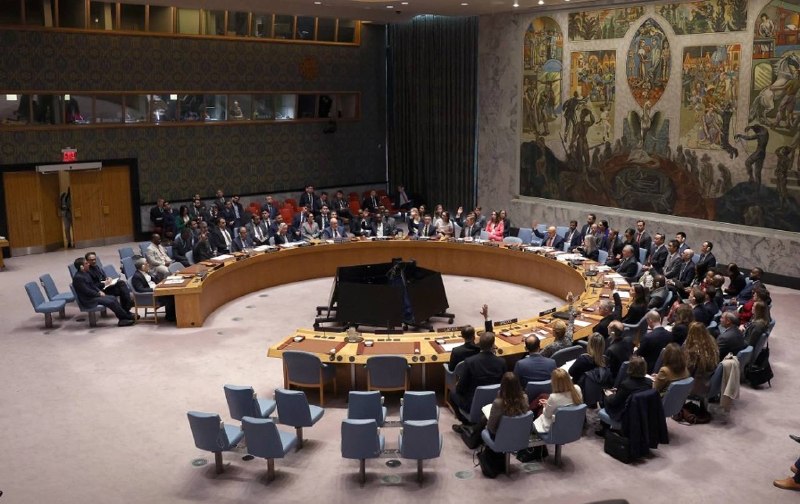
Just after midnight on 8 July 2026, a barrage of explosions tore through Kyiv. The South China Morning News wire moved the story at 00:35 UTC, framing the strikes inside the same news cycle as Ukraine's claim that its drones had hit vessels belonging to Russia's so-called shadow fleet — the loose network of tankers and cargo ships, mostly operating under opaque flags of convenience, that ferries Russian crude outside the G7 price cap and underwrites the Kremlin's war finance. Less than ninety minutes earlier, at 23:11 UTC on 7 July, the @wfwitness monitoring account had logged a renewed air-alert across the Ukrainian capital. By the time markets opened in Asia, the city had endured another full cycle of sirens, debris, and the political question that now hovers over every one of these nights: whether the fighting is moving toward a conclusion, or simply rearranging itself.
Read together, those three signals — the SCMP wire report, the witness alert, and a Polymarket contract pricing a 2026 Russia–Ukraine ceasefire at roughly 41% as of mid-afternoon UTC on 7 July — sketch a war whose operational tempo is intensifying even as its political horizon narrows. That decoupling is the story. The missiles are not stopping because the diplomats are talking; if anything, the inverse now looks closer to true. Both readings can be true at once, and the gap between them is where the next phase of the war will be fought.
A capital under continuous pressure
Kyiv's exposure in the first week of July is not new, but its rhythm is. The 8 July strikes, moving across the wire in the small hours, sit inside a pattern that has hardened since spring: salvoes timed to the overnight lull, deliberately straddling the city's air-defence rotation, calibrated to exhaust interception stocks as much as to damage buildings. SCMP's framing — pairing the Kyiv barrage with Ukraine's claimed strike on Russian shadow-fleet tonnage — is itself revealing of how the conflict is now being reported: the two stories are no longer separable. Ukraine's energy and budget base, and Russia's maritime revenue base, are both inside the same operational theatre.
The witness feed from @wfwitness, an open-source monitoring account that has tracked Ukrainian air alerts through Telegram for the duration of the full-scale invasion, registered the renewed alert at 23:11 UTC on 7 July. The granularity matters. Air-alert telemetry is one of the few streams that does not require a press officer's interpretation; it is a procedural fact, posted when the Ukrainian authorities push the public-warning signal. The SCMP wire then sequenced the explosive events in the capital shortly after midnight. Anyone reading the two together sees a city under near-continuous procedural alert, with the kinetic events clustering inside the alert windows.
This is, in plain terms, a war of attrition being run on two clocks. On the Ukrainian side, the clock is interception: surface-to-air missiles, drone-detection radar, generator fuel for the grid, all of it now supplied against a budget that Kyiv's Western backers must renew every few months. On the Russian side, the clock is revenue: every shadow-fleet tanker that reaches port with a sanctioned cargo is a budget line item restored. Ukrainian strikes on that fleet — claimed overnight, framed by SCMP against the Kyiv barrage as a single theatre of operations — are aimed directly at that revenue clock.
The ceasefire market as a political instrument
On 7 July at 15:40 UTC, the prediction market Polymarket listed a 41% implied probability that Russia and Ukraine would agree to a ceasefire before the end of 2026, on the contract page at poly.market/PjLkzrB. That number is doing a lot of work. It is below fifty — meaning the median trader still does not expect a halt to the fighting this calendar year — but it is far above zero, meaning the market does not treat a 2026 settlement as fanciful.
Prediction markets are not oracles. They are aggregations of what informed, financially exposed actors are willing to stake. A 41% reading is, in effect, a collective hedge: the participants know that any single round of US-brokered talks could move the number by ten points in an afternoon, and they are pricing the path rather than the destination. What the number does say, with reasonable clarity, is that the diplomatic channel is no longer treated as theatre. It has re-acquired the conditional credibility that it briefly held in the spring of 2022 and then lost for the next three years.
The interesting question is what would have to break for that 41% to climb toward 60 or 70. Three plausible triggers sit on the visible calendar. First, a US domestic political shift: a White House decision, driven by electoral arithmetic rather than strategic preference, to compress the timeline. Second, a Russian fiscal shock: the kind of budget stress that occurs when the shadow fleet is materially degraded and the price cap finally bites. Third, a Ukrainian battlefield inflection that makes continued resistance untenable at the negotiating table — or, conversely, so dominant that Moscow is forced to buy time. None of these is currently priced as imminent; the 41% is the market's view that all three are possible but not coalescing.
Two theatres, one battlefield
The reason the Kyiv barrage and the shadow-fleet strikes are sequenced in the same wire report is not editorial accident. Ukraine has, over the past twelve months, built a doctrine that treats Russian maritime energy exports as a legitimate military target. The shadow fleet — older tankers, often reflagged through a rotating cast of shell-company registries, insured through opaque mutual clubs, operating with transponders dark for parts of every voyage — exists specifically to launder sanctioned crude into international markets at prices above the G7 cap. Every shipment that clears is a contribution to the Russian federal budget.
Striking those vessels, or the ports and refuelling logistics that sustain them, is a Ukrainian attempt to collapse the gap between military pressure on the ground and fiscal pressure on Moscow. The Kyiv barrage, by the same logic, is a Russian attempt to demonstrate that the cost of that strategy can be exported. Two theatres; one battlefield; each side trying to make the other's chosen escalation more expensive than its own.
Western commentary has often framed the shadow-fleet campaign as peripheral — a sideshow to the land war. That framing understates what is at stake. If the fleet is degraded to the point that Russian seaborne crude exports fall materially below the volumes that fund the 2026 budget, the political constraint on Moscow's war-making becomes binding in a way that battlefield attrition alone has not achieved. If it is not, then the war's economics continue to favour the side with deeper fiscal reserves and a higher tolerance for civilian cost.
What the wire does — and does not — say
The SCMP wire item that moved at 00:35 UTC on 8 July is built around two verifiable claims: that Kyiv experienced a barrage of explosions in the early hours of the morning, and that Ukraine says its drones struck Russian shadow-fleet vessels. The first is corroborated procedurally by the @wfwitness alert at 23:11 UTC the previous evening and by subsequent visual reporting on open channels. The second rests, for now, on Ukrainian sources. Russian-aligned channels have, in past cycles, contested both the location and the scale of such strikes; their counter-claims tend to surface with a lag of several hours, and this article does not have a verified Russian-side rebuttal to weigh against the Ukrainian claim.
What the sources do not specify, and what the cautious reader should hold open, is the casualty footprint of the Kyiv barrage and the precise registry, tonnage, and operational status of any shadow-fleet vessel struck. The prediction-market figure is a snapshot, not a trajectory; it will move on the next substantive piece of US or European diplomatic signalling. None of these gaps should be papered over. The honest framing is that the operational tempo is verifiable, the political horizon is being actively priced, and the connective tissue between them — the doctrine that links maritime strikes to urban barrages — is the analytical claim that the available reporting makes most plausible without yet proving.
Stakes, in plain terms
If the trajectory of the past week holds — barrages in Kyiv, strikes on the shadow fleet, ceasefire probability oscillating in the high thirties to low forties — then the war continues to spend lives and infrastructure at a rate that outruns the diplomatic calendar. Ukrainian cities absorb the cost of Russia's attempt to demonstrate escalation dominance; Russian revenue absorbs the cost of Ukraine's attempt to break the war's fiscal engine. Neither side is paying a price high enough, yet, to force a re-rating.
The first side to feel that re-rating acutely will be the one whose underlying clock runs out first. On present evidence, the more fragile clock is Russian revenue under sustained maritime pressure, because it has fewer substitute channels than the West has for continuing to supply air defence. The more durable clock, in the near term, is Ukrainian urban resilience, because it is being subsidised by external appropriations that have, so far, been renewed on a cadence faster than the barrages have eroded the grid.
A 41% ceasefire probability is, in that reading, the market's acknowledgement that the more fragile clock may break before the more durable one does. It is not a forecast. It is a price on the conditional credibility of the diplomatic channel — and the live operational data from the night of 7–8 July is consistent with a market that still does not expect 2026 to be the year the fighting ends, but is no longer willing to call that an impossibility either.
Desk note: this publication sequenced the Kyiv barrage, the shadow-fleet claim, and the Polymarket ceasefire contract as a single analytical unit because the available reporting places them in the same news cycle; we have flagged the casualty and vessel-strike specifics as not yet corroborated by independent Russian-side or wire confirmation, and we will update when that confirmation arrives.
Wire provenance
This editorial synthesis draws on the following public wire/social posts:
- https://t.me/wfwitness
- https://t.me/SCMPNews