NATO's Rutte defends US strikes on Iran as 'absolutely necessary,' exposing alliance fault lines
NATO's secretary general publicly endorsed the latest US strikes on Iran, while President Trump simultaneously complained allies are not pulling their weight — a contradiction the alliance has not yet resolved.
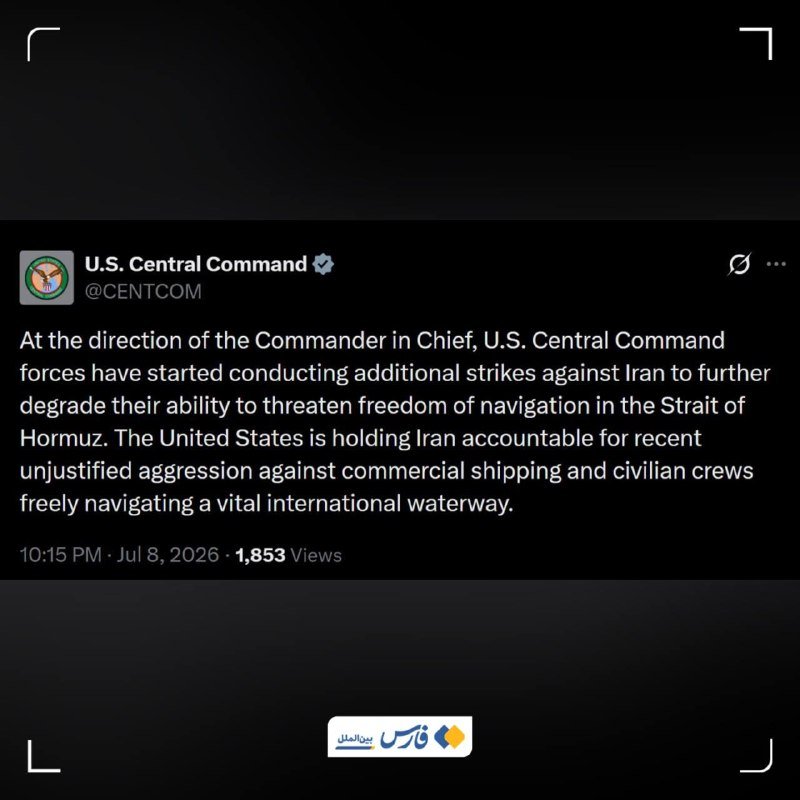
At a NATO summit on 8 July 2026, Secretary General Mark Rutte told reporters that the latest United States strikes on Iran were "absolutely necessary," citing what he described as Tehran's violation of a ceasefire. The comment, captured by a Euronews correspondent and amplified by the OSINTdefender channel, put the head of the Western military alliance on record backing an American operation that has divided European capitals and irritated members of the United States Congress. Hours later, President Donald Trump used the same summit platform to berate NATO allies for failing to match what he called trillions of dollars in US investment in the alliance over decades.
The juxtaposition is the story. The Atlantic alliance's two principals — the American president and the alliance's civilian chief — used the same gathering to deliver contradictory messages about the same war. One framed allied support as insufficient; the other framed allied endorsement of US firepower as essential. The contradiction does not resolve the underlying question of whether NATO is being asked to underwrite a war it did not design, in a theatre it did not choose, against an adversary some of its members would prefer to engage through diplomacy.
What Rutte actually said
The exchange was brief. A Euronews correspondent asked Rutte for his reaction to the recent US attacks on Iran. "I think it was absolutely necessary," Rutte replied. "Iran violates ceasefire." The statement, posted to the OSINTdefender Telegram channel at 05:45 UTC on 8 July 2026, is the most pointed endorsement by a sitting NATO secretary general of a US strike campaign against Iran on record. Rutte's framing — necessity, paired with an accusation of Iranian bad faith — mirrors the language used by the US administration to justify continued operations. It does not, however, explain which ceasefire was violated, by what specific action, or on what date the alleged violation occurred. The source material does not provide that granular detail.
The endorsement carries institutional weight beyond a single news conference. As secretary general, Rutte is the alliance's senior civilian official and its principal public voice. His language shapes how allied parliaments and defence ministries calibrate their own statements. By characterising the strikes as necessary, Rutte gave political cover to NATO members that have struggled to defend Washington's escalation in their own domestic politics.
The counter-narrative from Washington
The same summit produced a sharply different tone from the Oval Office. According to the OSINTdefender channel's report at 06:04 UTC on 8 July 2026, Trump expressed frustration over NATO allies not providing sufficient support despite what he characterised as trillions of dollars the United States has invested in the alliance for their protection. The complaint runs along familiar Trump-era lines — burden-sharing, allied free-riding, the cost of extended deterrence — but its timing is notable. It came as allied leaders were still processing the Rutte endorsement of US military action.
The two messages together produce a paradox. Washington demands more of allies, even as it conducts a strike campaign that some European governments view as reckless. Washington treats NATO as a venue to settle grievances, while the alliance secretary general treats NATO as a venue to legitimate American operations. Both readings are coherent. They are not, however, mutually compatible over the long run. An alliance that exists to deter external threats cannot simultaneously function as a vehicle for allied burden-balancing and as a stamp of approval for one member's discretionary wars.
What the structural picture looks like
The pattern here is not new. It is the recurring tension inside the Atlantic alliance between two roles: a defensive pact anchored in article 5, and a coalition that legitimises the foreign-policy choices of its most powerful member. European members have, in recent decades, carved out space to disagree with Washington on issues ranging from Iraq to Libya to the Iran nuclear file. What is striking about the 8 July exchange is the absence of any visible European offset. Rutte's endorsement closed the rhetorical space European capitals might otherwise have used to qualify, contextualise, or distance themselves from the strikes. The complaint from Washington landed on a table whose other occupants had just publicly aligned with US policy.
For the broader Middle East, the question is what "necessary" means in operational terms. The source material does not specify the targets of the latest US strikes, the location, or the claimed battlefield effect. The framing — Iran violating a ceasefire — carries an implicit diplomatic timeline that the public reporting does not detail. Until that timeline is reconstructed from primary US and Iranian statements, the assertion of necessity rests on assertion rather than established fact.
Stakes and what to watch next
The immediate stakes are political. European governments that wanted to defer judgment on the latest US escalation now have a NATO secretary general on the record backing it. That makes dissent costlier inside allied councils. It also raises the bar for European parliaments debating whether to extend operational or logistical support to US operations, including overflight rights, basing, or intelligence sharing.
The medium-term stakes are structural. An alliance that legitimises discretionary wars by its most powerful member — while that same member publicly demands more burden-sharing — risks compressing the political space available to its smaller members. The 8 July exchange suggested both directions of pressure are intensifying at once. Allied capitals will be watching for three signals: first, whether Rutte's "absolutely necessary" framing is repeated by NATO's military command or contradicted in subsequent briefings; second, whether the cited Iranian ceasefire violation is corroborated by independent observers or by allied intelligence summaries; third, whether the Trump complaint about burden-sharing produces specific demands at the summit's closing communiqué or fades into rhetoric.
What remains uncertain is whether the European offset to US Iran policy has effectively been foreclosed by Rutte's endorsement, or whether allied governments will surface quiet caveats in the days ahead. The source material available to Monexus is limited to the OSINTdefender and Euronews reports of the press exchange; the public diplomatic fallout, allied intelligence assessments, and Iranian responses will need to be tracked in subsequent reporting.
This article was framed from open-source reporting carried by the OSINTdefender and Euronews channels on 8 July 2026. Monexus has not independently verified the operational details of the cited US strikes or the alleged Iranian ceasefire violation; the piece reports what the available sourcing supports and flags what it does not.
Wire provenance
This editorial synthesis draws on the following public wire/social posts:
- https://t.me/s/OSINTdefender
- https://t.me/s/OSINTdefender/
- https://en.wikipedia.org/wiki/Mark_Rutte