The Smithsonian Report and the New Vocabulary of Cultural Warfare
A 162-page White House document accuses the Smithsonian of "anti-white activism." The language is novel; the political project behind it is not.
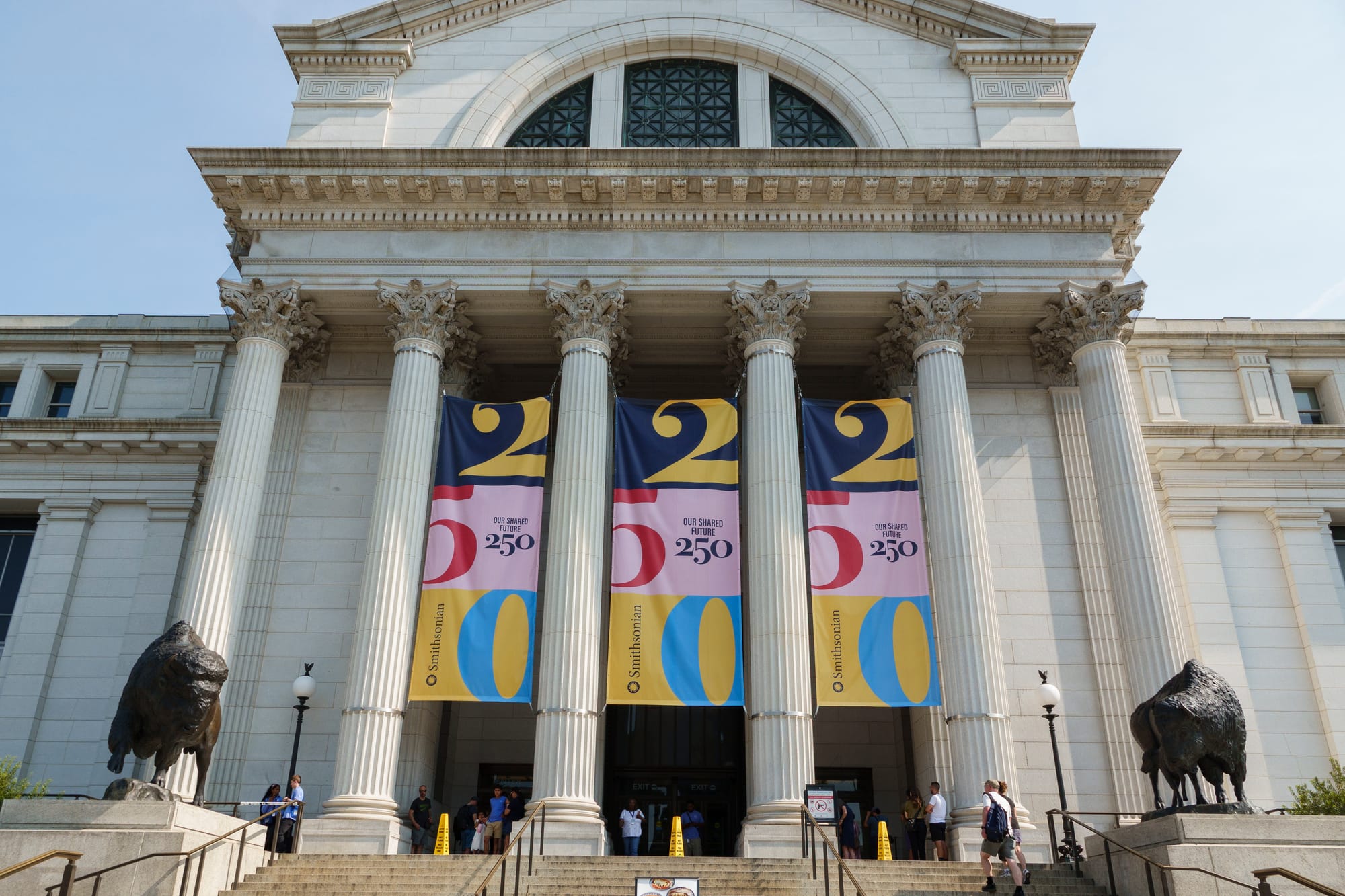
On 6 July 2026, the White House released a 162-page report accusing the Smithsonian Institution — the federally chartered museum complex that anchors the National Mall — of running an apparatus of "anti-white activism" inside its exhibitions and public programming. The document, summarised by Hyperallergic the same day, marks a sharpening of the language the administration has been using against the institution since the start of the year. Earlier coverage, including a 7 July Hyperallergic round-up of the widening campaign, frames the new report as the most aggressive iteration yet: a wholesale indictment of museum leadership, framed not as policy disagreement but as ideological capture.
The charge sheet moves the fight from funding to definition. By recasting curatorial choices as racial activism, the White House is no longer merely threatening to defund or audit; it is asserting that the institution itself is a hostile actor. That reclassification is the news — and it tells the story of how cultural-policy disputes are being repackaged, in Washington and elsewhere, into something closer to moral emergency.
What the document actually says
Hyperallergic's 6 July reporting summarises the 162 pages as a sweeping accusation: that the Smithsonian's leadership has promoted "extreme political activism," and that this activism takes a specifically anti-white form. The institution's curators are portrayed not as professionals exercising editorial judgment, but as foot soldiers in a racial project. The language is unfamiliar in mainstream American cultural politics. It is not unfamiliar in American conservative media, where the framing of museums, universities, and public broadcasters as racial grievance machines has been a recurring theme for years. What is new is the elevation of that framing into a formal document bearing the White House's imprimatur.
The report's specifics — which exhibitions, which curators, which public programmes — are not fully itemised in the source material available to Monexus. Hyperallergic's 7 July piece, which bundles the Smithsonian fight with an interview with the queer Cuban-American writer and performer Carmelita Tropicana, treats the report less as a programmatic text than as a signal of intent. The 162 pages function in part as evidence that the administration has the patience and the personnel to produce artefacts of this kind at scale.
The longer campaign
The Smithsonian is not the first cultural institution to face this kind of pressure, nor is it likely to be the last. The same 7 July Hyperallergic round-up describes the Smithsonian fight as part of a broader pattern of administration attacks on what it variously calls "woke" content in public-facing cultural venues. Museums are attractive targets because they are visible, federally entangled, and — crucially — institutionally cautious. A funded and licensed broadcaster can be leaned on through license renewal. A museum can be leaned on through appropriations, board appointments, and conditional grant language, all of which sit on existing federal rails.
The deeper pattern is the conversion of cultural-policy complaints into civil-rights vocabulary. When the White House accuses an institution of "anti-white activism," it is borrowing the rhetorical structure of mid-twentieth-century desegregation politics and inverting its direction. The terms "activism," "extremism," and "ideological capture" — all present in the Hyperallergic summary of the report — are taken from the toolkit of civil-rights-era enforcement. Their deployment against the Smithsonian reframes a curatorial dispute as the defence of a previously silent majority against an institutional aggressor. Whether or not one finds the framing persuasive, the strategic logic is plain: by owning the language of grievance, the accuser moves the moral terrain rather than the budget.
The stakes
If the reclassification holds, the practical consequences are wider than the Smithsonian. Other federally connected cultural institutions — the Kennedy Center, National Public Radio, the Corporation for Public Broadcasting's remaining reach, the National Endowments for the Arts and Humanities — sit on the same legal and budgetary scaffolding. A working theory of "anti-white activism" inside a museum complex is portable. The 7 July Hyperallergic framing implies as much when it situates the Smithsonian report inside a longer conservative critique of public culture.
For the institutions themselves, the near-term calculus is punitive. Boards will weigh which exhibitions to green-light, which fellowships to fund, and which corporate sponsors will tolerate association. Curators who have spent careers building programmes around histories of slavery, segregation, empire, and diaspora — material that any serious American museum now treats as core rather than peripheral — will have to choose between professional continuity and editorial honesty. The cost of those choices will not be borne equally; junior staff and contingent curators carry more of it than tenured directors.
For the public, the consequence is a slow thinning of what these institutions can show without provoking a federal complaint. The Smithsonian's encyclopedic remit has, for decades, functioned as a kind of national compact: the institution reflects the country's full self, including its contradictions. A reading of "anti-white activism" applied across that remit narrows what the compact can hold. The friction is not primarily about any given exhibition; it is about whether the institution can continue to do its job at all without internalised censorship.
What remains uncertain
The source material does not itemise which specific exhibitions, curators, or programmes the 162-page document targets, nor does it record the Smithsonian's official institutional response in detail. Hyperallergic's reporting — both the 6 July piece and the 7 July round-up — presents the report's contents in summary rather than verbatim form. The White House has not, as far as the available reporting goes, paired the document with a specific funding mechanism or enforcement action; whether one is forthcoming, and on what timeline, is not clear from the sources Monexus has read.
There is also the question of how the framing travels. The phrase "anti-white activism" reads as native to one corner of American political discourse. Whether it lands elsewhere — in the donor class, in Congress, in the courts if the Smithsonian chooses to litigate — depends on a reception that the available reporting does not yet measure. Carmelita Tropicana, the subject of the longer interview bundled with the 7 July round-up, is a useful counter-example: a figure whose career has been built on refusing the comfort of any single cultural authority, and whose presence in the same issue signals that the cultural field under pressure is broader, and older, than the fight between Washington and the Mall.
The honest reading is that the Smithsonian report is both a document and a deployment. It is a 162-page artefact, and it is also the second move in a campaign Hyperallergic has been tracking for months. The two registers will produce different outcomes, on different timelines, and possibly from different directions. That is worth keeping visible while the news cycle compresses the story into a single accusation and a single denial.
This Monexus piece reads the Smithsonian report less as a one-off political broadside than as the latest move in a longer campaign against federally connected cultural institutions. Hyperallergic's two pieces, published within twenty-four hours of each other, are the primary inputs; the institution's own response, and the operational specifics of the report, remain to be confirmed.