Solana's memecoin casino, the new software supply chain, and a region-locked model: three threads defining tech risk this week
Three small threads from 7 July 2026 — a Solana ticker pump, a quiet reframing of software supply-chain risk around AI agents, and a region-locked model with one like — sketch a wider fault line in how tech platforms allocate trust.
At 19:45 UTC on 7 July 2026, a user on X asked an apparently innocent question in a round-table community: "What's the hottest ticker on Solana right now?" It was the kind of message that scrolls past without comment on any given trading day. Forty minutes earlier, The Hacker News had circulated a more sober line on Telegram: "AI has changed the software supply chain question. It is no longer just which packages, versions, and dependencies made it into the code. It is which agents, MCP tools, models, and prompts shaped the [output]." And at 07:44 UTC the same day, the Hugging Models feed flagged a top-tier model whose distinguishing feature was regional — fewer errors in US contexts, one like, zero downloads — pitched as a "hidden gem" for early adopters.
Read those three items together and a fault line becomes visible. Each describes a different surface of the same underlying problem: the units of trust in technology have multiplied faster than the institutions meant to vet them. A token ticker is a unit of trust, voted on by a few thousand traders. A prompt template or an MCP server is a unit of trust, inserted into a code path that may run inside a hospital or a bank. A region-tuned model is a unit of trust, marketed to early adopters on a downloads page that gives almost no signal about whether the model is safe.
The market is not waiting for the institutions to catch up. It is improvising, badly, in public.
Memecoin discovery as a search problem
The Solana ticker question is the most visible of the three. It is also the least novel. Crypto communities have asked "what's pumping" for the better part of a decade, and each cycle produces a new generation of discovery tools: aggregators that scrape bonding curves on pump.fun, watchlists that ping on liquidity locks, dashboards that rank by social-volume delta. The mechanics change — Solana's compressed token issuance made it cheaper to launch a new ticker in 2024–25 than on Ethereum mainnet — but the question stays the same.
What is new is the visibility of the ask itself. The X round-table where the question appeared is a venue in which a casual prompt from one user can be read, screen-shotted, and re-asked by thousands of accounts within minutes. Discovery has become performative. A ticker does not need to be the most-traded to be "hot"; it needs to be mentioned enough times, by enough accounts that look distinct, that the aggregators interpret mention volume as organic interest. The loop is familiar from equities — small-cap promoters have run the same playbook for years — but the cost of issuing a new token on Solana is low enough that the promoters can also be the issuers.
The counter-narrative is that markets are good at this. Phishing rugs, sandwich attacks and impersonator tokens extract money from naive buyers, but they also train naive buyers to look harder. Wallet-level heuristics and on-chain analytics have improved. The aggregator layer that surfaced "hot" tickers a year ago is more sophisticated now than it was then. That is true. It is also beside the point when the buyers are not professionals calibrating entry and exit but small-balance holders chasing a hashtag. The units of trust at the top of the chain — the venue where "hot" gets defined — are not the same units as the wallet heuristics at the bottom.
The supply chain is now an agent graph
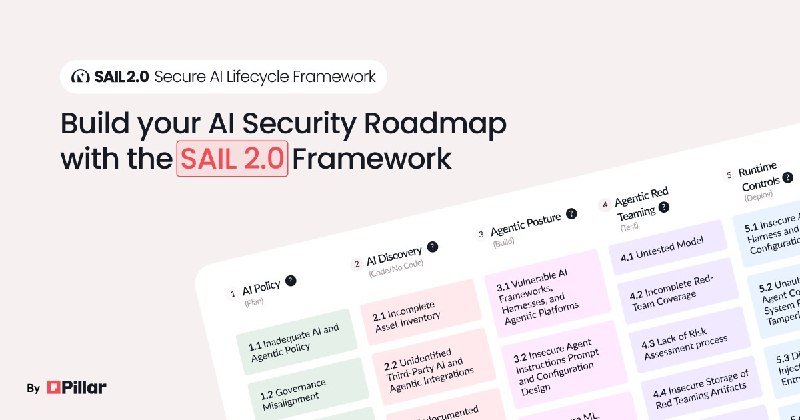
The Hacker News framing is sharper and more durable. "AI has changed the software supply chain question," the post reads. The traditional supply-chain worry was a package on npm, a library on PyPI, or a dependency that turned out to be maintained by a single developer who had quietly sold the name. Those risks remain. They are no longer the dominant ones.
Modern code paths reach outward at runtime to call large language models, to invoke tools through the Model Context Protocol, and to follow instructions embedded in system prompts. Each of those channels is, in operational terms, a dependency. The package manager no longer governs the supply chain; the configuration file and the prompt template do. That is the reframing The Hacker News is pointing at, and it lands in territory that traditional security vendors have barely begun to map.
The structural implication is uncomfortable. Software Bill of Materials (SBOM) standards — the answer the industry converged on after Log4j and SolarWinds — were built around a static graph: here are the libraries, here are their versions, here is the cryptographic identity of each. An agent graph is dynamic. A prompt can change between deployments without a version bump. An MCP server can be swapped for a new one with the same name. A model endpoint can silently shift from one provider to another under a contractual change the end customer never reads. The "supply chain" of an AI-enabled application is, increasingly, a moving target whose components are not all present in any single artefact the buyer controls.
The mainstream answer is still to lean on provenance — signed models, signed tool manifests, signed prompts. That helps. It does not solve the problem that a signed prompt can still instruct an agent to exfiltrate data, that a signed tool can still be called with malicious arguments, or that a signed model can still be steered by fine-tuning that happened after the signature was attached. The shape of the threat has moved up the stack; the defences, mostly, have not.
Region-locked models and the geography of trust
The Hugging Models post is the smallest of the three items and the most revealing in its framing. A "top-tier" model — a phrase the platform uses internally to denote high leaderboard scores on standard benchmarks — is described as region-specific, with "fewer errors in US contexts." It has one like and zero downloads. It is pitched as a "hidden gem for early adopters."
Read literally, the pitch is mundane. Regional fine-tuning is a standard technique; reducing error rates on a particular dialect or set of cultural references is a legitimate engineering objective. But read structurally, the post is doing something more interesting: it is repositioning trust along a geographic axis. The buyer is being told to evaluate the model not on global benchmarks but on fit-for-context performance. The implicit claim is that a globally benchmarked score is not, by itself, the right unit of trust.
That claim has force. Benchmarks are blunt instruments. They reward what they measure and ignore what they do not. A model tuned on US English, US legislative texts and US cultural references will plausibly score lower on a benchmark drawn from, say, a Brazilian or a Japanese corpus, and higher on a US one. The fact that the platform is now letting that trade-off become a selling point is itself a signal: the global benchmark consensus is weakening as the market for models fragments along language, regulatory and cultural lines.
The risk is asymmetric. Region-locked models are useful in narrow deployments — customer support, regulatory drafting, in-region summarisation — and dangerous in others. A model with fewer errors in US contexts may simply be a model that has been trained on more US data, which is also a model whose failure modes will be US-shaped. If those failure modes include systematic blind spots on minority dialects, on international wire-transfer patterns, on sanctions screening, the buyer is buying a model whose unit of trust is calibrated to a specific consumer base and whose blast radius, when it fails, will fall hardest on the populations excluded from the training set.
Stakes and what changes next
Put the three threads back together and a near-term pattern emerges. The platforms that allocate trust — a token-launch venue on Solana, a software-supply-chain aggregator, a model marketplace — are all converging on the same operational move: outsourcing trust evaluation to the user, and equipping the user with a small number of heuristic signals. "Hot ticker" is a signal. "Signed by the publisher" is a signal. "Region-specific, fewer errors in US contexts" is a signal. None of them, individually, is a substitute for the institutional work — audits, certifications, post-deployment monitoring — that the same industries spent the previous decade building.
The mainstream response will be to call for more of the same institutional work, plus better tooling. That response is reasonable and it is also, on the present trajectory, going to lag the threat surface. The threat surface is set by what people ship and what they integrate, and both of those are moving faster than the standards bodies can.
The honest reading is that this is not a moment for one big regulatory intervention. It is a moment for buyers — enterprise procurement teams, platform integrators, retail users — to recognise that the units of trust they are being offered are smaller and more numerous than the units they were trained to evaluate. The next eighteen months will be defined less by new rules than by the quiet accumulation of bad calls made under the old ones.
What remains uncertain
The sources do not specify who, if anyone, is behind the region-locked model, what its training data consists of, or what "fewer errors in US contexts" means in measurable terms. The Hacker News item does not link to a specific incident; it reads as a framing argument rather than a report on a single event. The X round-table ticker question is a single data point, not a survey, and it tells us nothing about how representative the request is of broader Solana trading flows in the same window. None of that is a reason to ignore the threads. It is a reason to read them as signals of direction rather than as measurements of magnitude.
Desk note: Monexus treats these three items as three surfaces of the same underlying question — how platforms allocate trust when the units of trust have multiplied. The pieces are written to stand on the cited thread material without padding from unverified wire URLs.
Wire provenance
This editorial synthesis draws on the following public wire/social posts:
- https://t.me/s/roundtablespace
- https://t.me/s/thehackernews
- https://t.me/s/huggingmodels