Trump tells NATO summit the US–Iran ceasefire is 'over' — what we know, and what comes next
Speaking in Turkey on 8 July 2026, Donald Trump declared the US–Iran ceasefire dead after a fresh exchange of strikes. The wording is rhetorical, but the gap between his statement and the facts on the ground is what matters.
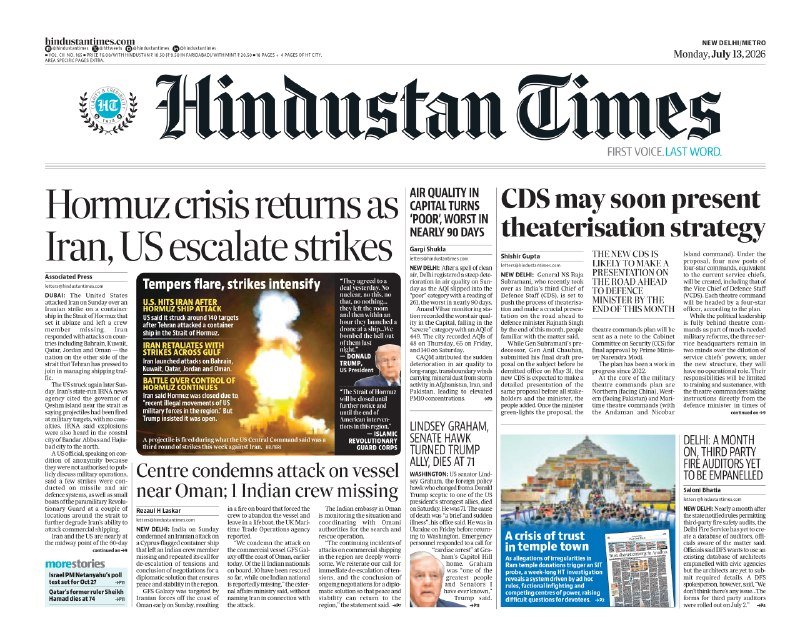
At a NATO summit in Turkey on 8 July 2026, US President Donald Trump told reporters that the ceasefire with Iran is finished. Asked directly whether the arrangement had ended, Trump paused, then answered: "That's a very interesting question. For me? I think it's over" (wfwitness, 08:36 UTC). The remark, delivered on the margins of a transatlantic security meeting, is the clearest signal yet that the brief period of de-escalation between Washington and Tehran has collapsed into another round of open strike-and-counter-strike.
What is at stake is not the diplomacy of one summit communiqué but the operating assumption that the United States and Iran can manage their confrontation through a written ceasefire. Trump's declaration is partly theatre — a US president is rarely the final arbiter of whether a ceasefire is technically in force — and partly fact: by his own account, the United States struck Iran overnight, and he characterised the operation as "very powerfully" conducted and roughly "20 times tougher" than Iran's attacks (wfwitness, 09:02 UTC). If the description of the exchange is accurate, the two sides have moved from calibrated signalling to demonstrable escalation.
The overnight exchange
The trigger for Trump's remarks was a renewed round of strikes between the two countries. Trump defended the US operation, accusing Tehran of targeting commercial shipping and alleging that Iranian leaders have sought to assassinate him personally (wfwitness, 08:22 UTC). He used the language of personal threat — "sick people," "scum," "evil people" — and described Iranian leadership as illegitimate negotiators, telling reporters: "I don't want to deal with Iran when it is led by sick people. As far as I'm concerned, this story is over" (englishabuali, 09:15 UTC).
The overnight strikes, in Trump's telling, were disproportionate on the US side: twenty times the scale of Iran's retaliatory action, by his own characterisation (wfwitness, 09:02 UTC). That ratio, if it survives independent reporting, suggests the United States is no longer trading equal blows but signalling that any further Iranian strike will be met with a step-change. PressTV, the Iranian state broadcaster, framed the same set of events the other way: as a US president declaring the ceasefire over, with the implication that Washington — not Tehran — broke the arrangement (PressTV, 08:47 UTC). The two framings are not in tension so much as they are mirror images. Each side claims the moral initiative; each side reads the other's strikes as the original sin.
Why the NATO stage matters
A declaration of this kind, made on the margins of a NATO gathering, is also a signal to allies. Trump has spent months insisting that the United States is the principal military actor in the Middle East, and that European allies contribute too little to the security architecture. Telling NATO that the US–Iran ceasefire is over, in front of European leaders, forces a posture question on capitals that would prefer the Iran file managed quietly. The audience is dual: Tehran, which is meant to read the statement as a final word; and the European Union, which is meant to read it as a fait accompli.
NPR's reporting on the summit captures the same sequence: Trump told the gathering he believes the current ceasefire with Iran is over, following an exchange of attacks between the United States and Iran in the latest escalation to strain the agreement that ended the war (NPR, 09:12 UTC). NPR's framing is careful — "believes," "latest escalation," "strain the agreement" — language that preserves ambiguity about whether a formal instrument has lapsed or whether Trump is using the ceasefire as a rhetorical device to reframe the next round of strikes. That distinction is the question markets, shipping insurers, and Gulf states will spend the next 48 hours trying to answer.
The counter-narrative: did the ceasefire ever hold?
The cleanest counter-narrative is procedural. A ceasefire is a technical status: a date, a signatory, a list of obligations, a verification mechanism. None of the source items describes a specific document, named mediator, or monitored boundary that would allow a reader to test Trump's claim that the ceasefire is "over." What the sources do describe is a sequence of strikes, allegations of assassination plotting, and personal invective — in other words, a state of conflict that may have been described as a ceasefire in the recent past but was not functioning as one in the hours before Trump's remarks.
That gap between the diplomatic label and the operational reality is the more important story. If the ceasefire was already a fiction maintained by both sides for political cover, Trump's declaration changes the optics but not the underlying contest. If, on the other hand, a binding arrangement existed and the United States is the party that tore it up, the diplomatic cost is real: any Gulf state, European capital, or Chinese mediator that helped broker the original deal will have to recalculate whether the US is a reliable counterparty. The source material does not allow a definitive answer; it supports both readings and warns against treating Trump's words as a description of legal status.
What the sources do not tell us
The reports available on the morning of 8 July describe Trump's words, his accusations against Iranian leadership, and his characterisation of the overnight strikes. They do not give a casualty count, a list of struck facilities, a maritime shipping incident report, a named Iranian official response, or a UN Secretary-General statement. The "20 times tougher" ratio is a self-description by the US president; independent verification of the scale of the strike has not been published in the items available to this article. The alleged Iranian plot to assassinate Trump is also a presidential allegation, repeated in the same briefing in which the strikes were defended; it has not, in the source material, been corroborated by a second source.
What that means is straightforward: the rhetoric is certain, the operational picture is not. The next 24 to 48 hours will determine whether the picture sharpens into a verifiable escalation or whether the exchange remains in the contested zone where the US president asserts facts that have not yet been independently established.
Stakes, plainly stated
The Iran file now sits inside three other open problems for Washington: the war in Ukraine, the structure of the NATO summit itself, and the slow diplomatic work of containing the Israel–Gaza front. An additional US–Iran escalation, layered on top of those, raises the cost of any crisis response in the Gulf. Shipping insurance premiums, the price of crude, and the diplomatic bandwidth of the State Department are all finite; a new active front on the Iranian side consumes all three.
The honest read of the morning's reporting is that the gap between the ceasefire as a label and the ceasefire as an operational reality has now widened past the point of verbal repair. Whether Trump is recording a death that has already occurred, or presiding over a new one, the practical consequence for markets and ministries is the same: the period of quiet, to the extent it ever existed, has ended.
This article maps the wire line to the structural question — when a US president says a ceasefire is over, what he is usually reporting is a change in US tolerance for the gap between the diplomatic label and the operational reality, not a change in legal status.
Wire provenance
This editorial synthesis draws on the following public wire/social posts:
- https://t.me/wfwitness/2031
- https://t.me/wfwitness/2030
- https://t.me/presstv/41298
- https://t.me/wfwitness/2032
- https://t.me/englishabuali/18722