Ceasefire over, strikes resumed: Trump declares Iran 'defeated' as the air campaign reopens
Within hours of declaring the ceasefire 'over', US forces hit dozens of Iranian targets and the president warned that bridges, power plants and desalination infrastructure could follow.
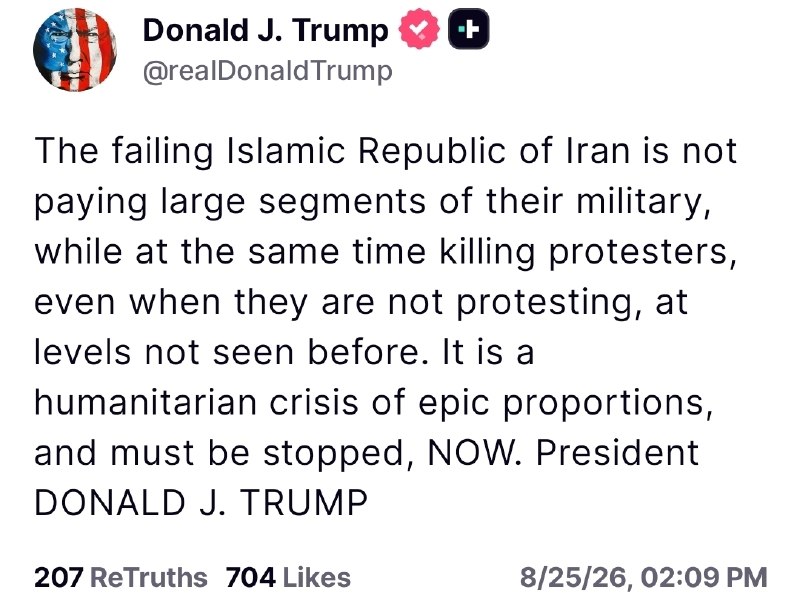
By 2026-07-08T20:42Z, the brief experiment in de-escalation between Washington and Tehran was functionally over. US President Donald Trump, speaking earlier in the afternoon, declared the ceasefire "over" and described further engagement with Tehran as "a waste of time", according to LiveMint's reporting on his remarks. Deutsche Welle, citing the same set of statements, noted that within hours the United States had carried out fresh strikes on dozens of Iranian targets overnight and again later on Wednesday, with France 24's live coverage confirming additional air operations underway as the US evening began.
The pattern is now established enough to be worth naming. A diplomatic opening is announced; rhetoric escalates; kinetic action follows within hours; the opening is declared dead. What is distinctive about this episode is the speed of the cycle and the explicit list of further targets the president named on camera — bridges, electrical generation, desalination plants — before the strikes themselves were even complete.
The day's escalation, in order
The first signal arrived at 2026-07-08T08:56Z, when LiveMint reported Trump's characterisation of the ceasefire as "over" and of further diplomacy as "a waste of time". By 2026-07-08T14:17Z the president had added, on his Truth Social feed and captured by the unusual_whales account, that the US would "hit Iran again tonight". At 2026-07-08T16:17Z he raised the temperature further: "I would hate to strike desalination plants in Iran, but may have to". Twenty minutes later, at 2026-07-08T16:37Z, the same channel carried his declaration that "Iran has been defeated".
The substantive exchange came at 2026-07-08T17:17Z: "In one day, we can knock down every single bridge in Iran. Their electric plants, where they make their electricity, if we have to, we'll take them out." At 2026-07-08T17:37Z Trump offered his most personalised assessment — "They're scum... They're sick people. They're led by sick people. They're viscous violent people. If they —" the post was clipped — followed at 2026-07-08T18:17Z by a striking personal line: "I may be gone too, because I'm their number one target."
By 2026-07-08T20:25Z France 24's live feed was reporting that the US military was carrying out fresh strikes against Iran, and by 2026-07-08T20:42Z Deutsche Welle had formally catalogued the escalation: US strikes on dozens of Iranian targets, overnight and again later that Wednesday.
What the president is actually threatening
Three categories of infrastructure sit in the rhetorical crosshairs. First, transportation and logistics — bridges. Second, electricity generation — the power plants on which civilian life, hospitals and water pumping depend. Third, and most unusually, desalination capacity — a public-health asset in a water-stressed country, the targeting of which carries obvious legal and humanitarian exposure under the laws of armed conflict.
The vocabulary matters. The threat to desalination was framed conditionally ("I would hate to… but may have to"), but the bridges-and-power remark was framed as a capability statement: "In one day, we can…" The framing is not deterrence in the classical sense — that is, signalling costs to deter an adversary's next move. It is closer to coercive bargaining through the explicit naming of civilian-adjacent targets, telegraphed in advance.
That posture has both defenders and critics in Washington's policy ecosystem. Defenders argue that maximum clarity on capability shortens wars by collapsing an adversary's calculation. Critics counter that the deliberate enumeration of civilian-linked targets invites war-crimes scrutiny under the principle of proportionality and that it gives Tehran a propaganda victory it would not otherwise have earned. Both readings are present in the source material; the dominant wire framing is closer to the second.
The counter-narrative Tehran is offering
Iranian state-aligned outlets have, in previous escalations of this kind, framed US strikes as evidence of American desperation — the argument being that Washington turns to force when its leverage fails. That counter-frame is not in today's thread but is structurally relevant: a posture in which a great power announces it may strike bridges, power plants and desalination plants is one that an adversary will read as either overwhelming confidence or compensated weakness. Which reading Tehran settles on will shape whether this cycle ends in a renewed ceasefire or in a longer war.
A separate counter-narrative, popular in non-aligned commentary, holds that the ceasefire's collapse was baked in by the original terms: that the deal, whatever its specifics, was constructed around a US domestic-political deadline rather than around durable mutual interest. The speed with which Trump reverted to maximalist language lends that reading weight. So does the personalisation of his framing — "scum," "sick people" — which a negotiator cannot easily walk back without losing face.
Structural frame: coercive rhetoric as escalatory instrument
The pattern on display — public enumeration of civilian-adjacent targets, conditional threats softened by "would hate to," and explicit declarations that the adversary has been "defeated" before the operation is complete — fits a recognisable recent model of coercive signalling in which the diplomatic register and the military register are deliberately run on parallel tracks.
Three features distinguish it. First, the rhetoric is committed to in real time on social media, where each statement hardens into a permanent record and shapes both sides' next moves. Second, the targets named are heavy civilian infrastructure rather than military command-and-control, which raises the political cost of continuation but lowers the operational cost of execution. Third, the framing of the adversary as defeated serves a domestic-audience function that is at least as important as any external signal.
The plain-prose version of the larger pattern: a state with overwhelming force advantage uses public statements to lock itself into an escalatory trajectory, betting that the certainty of punishment will produce capitulation faster than a quieter campaign would. The historical record on that bet is mixed. Where the adversary has a credible patron, the bet tends to extend the war; where it does not, the bet can shorten it. Iran's external position — partners including Russia and China, but with constraints on what either will do under direct US pressure — is the variable that determines which way this one breaks.
Stakes and the forward view
If the trajectory continues along the line drawn on 8 July, three outcomes become more probable. First, Iranian retaliation — direct or via partners — becomes harder for Tehran to refuse internally without appearing to have absorbed the strikes without response. Second, the legal exposure of US decision-makers expands with each named civilian-linked target, especially desalination. Third, the diplomatic off-ramp narrows: a president who has used the words "scum," "sick people" and "defeated" on the same day will find it politically expensive to climb back to a negotiating table within weeks.
What remains uncertain is the scale and duration of the current strike package. Deutsche Welle reports "dozens" of targets hit overnight and again later on Wednesday; that is a meaningful first wave but not, on its face, a campaign-onset tempo. France 24's live coverage as of 2026-07-08T20:25Z indicates that fresh strikes are still underway at the time of writing, so the total target count for the day is not yet known.
Also unresolved: whether any member of Trump's cabinet or senior military leadership has publicly affirmed, walked back, or refined the threats to bridges, power plants and desalination plants. The thread context contains presidential statements only; it does not contain Pentagon or State Department readouts that would indicate whether the rhetorical envelope matches the operational orders. That gap matters, because in past US air campaigns the gap between presidential maximalism and field execution has often been the variable that determines whether a campaign ends in days or in months.
Finally, a note on what this publication can and cannot say with confidence at 2026-07-08T20:42Z. We can confirm that the ceasefire is declared "over" by the US president, that strikes have resumed, and that specific categories of further targets have been publicly named. We cannot, from the source material available, confirm the precise target list, the casualty count, the duration of the current strike package, or whether the diplomatic track has any residual life. Reporting that exceeds those bounds would be invention.
Desk note: Monexus framed this as an open-ended escalation rather than as a concluded operation. The wire consensus is leaning toward the second reading; the open question is whether the gap between the president's rhetoric and the operational orders closes quickly or widens.
Wire provenance
This editorial synthesis draws on the following public wire/social posts:
- https://x.com/unusual_whales/status/
- https://x.com/unusual_whales/status/
- https://x.com/unusual_whales/status/
- https://x.com/unusual_whales/status/
- https://x.com/unusual_whales/status/
- https://x.com/unusual_whales/status/
- https://t.me/LiveMint/