A ceasefire he insists is already over: Trump, Iran and the rhetoric of escalation
Hours after telling reporters the fighting is finished, the president threatened to flatten Iran's bridges and grid. The contradiction is now the policy.
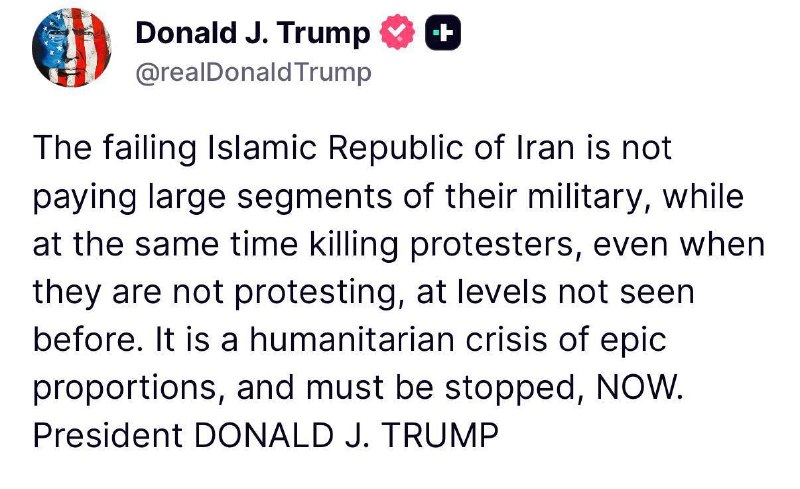
At 17:37 UTC on 8 July 2026, Donald Trump told reporters that a renewed conflict with Iran would end "very quickly," that he would not "deal with them anymore," and that the United States could, in a single day, "knock down every single bridge in Iran" and disable the country's power plants if it chose to. Within the same hour, the president told the same press pool that he considered himself "their number one target" — the words of a man who says the war is over and the war is unfinished in the same breath.
This is not commentary. It is what the public record now contains. The contradiction is the policy.
A ceasefire that declares itself
The starting point is the phrase the White House keeps returning to: that the fighting is essentially done. Polymarket's newswire reported at 18:39 UTC on 8 July 2026 that Trump "assures the renewed Iran conflict will be over 'very quickly'" — a formulation that does not name a date, does not cite a reciprocal commitment from Tehran, and does not square with the bellicose language the president used moments earlier.
What the public record actually shows is a one-sided declaration. The seven-word summary the president gave at 17:37 UTC — "To me, I think it's over" — is a personal verdict, not a treaty. There is no visible Iranian signature. There is no third-party verification. There is only a US president declaring satisfaction with a state of affairs he has not yet bothered to define.
The structural question this raises is older than the Iran file. When the party that wields the most firepower also claims the authority to declare the conflict resolved, the declaration functions as a fait accompli. The other side is left with two unappealing options: escalate and confirm the war, or comply and confirm the victor's narrative. Neither requires Tehran's consent.
The oil tail and the rhetoric head
The contradiction would be easier to dismiss as campaign atmospherics if the economic stakes were not visible in the same wire. At 19:57 UTC, the same day, Trump told the press that his administration would "make things safer for oil" and that "oil will be very free, very easy, very fast."
That sentence is doing more work than it appears to. It tells markets — and the producing states that price against them — that US policy is intended to compress the risk premium attached to Gulf crude. It does so without naming an instrument: no specific waiver, no sanctions tweak, no SPR release. It is a mood-setter, not a mechanism. In oil markets, a mood-setter from the Oval Office is itself a price signal, which is presumably the point.
The same afternoon, Polymarket's wire carried a separate item at 17:02 UTC: Trump declaring himself "number one on TikTok." That sentence is trivial on its face. It is included here because it illustrates the texture of the communications environment the Iran file now sits inside. Foreign policy, energy policy, and personal brand management are no longer running on separate tracks. They are sharing a feed.
The threat that lands last
The line that travels furthest is the one about infrastructure. "In one day, we can knock down every single bridge in Iran," Trump said at 17:17 UTC on 8 July 2026. "Their electric plants, where they make their electricity, if we have to, we'll take them out."
The statement is significant less for its content — US airpower has long possessed this nominal capability — than for its framing. It treats a nation's civilian infrastructure as a coercive instrument, to be used conditionally and rhetorically, in the middle of a press conference rather than a doctrine document. It puts Tehran on notice that any re-escalation will be met with what international humanitarian law classifies as attacks on objects indispensable to the survival of the civilian population.
The administration's defenders will argue this is bargaining talk, not planning. The administration's critics will argue that putting targets in the press pool makes them harder to walk back, because the other side now knows they have been publicly named. Both readings have merit; the evidence does not yet adjudicate between them.
The personalisation of deterrence
The most striking element of the day's record is the personal register. At 18:17 UTC, Trump told the same press gathering: "I may be gone too, because I'm their number one target." A president casting himself as the foremost mark of a hostile power is a particular kind of deterrent posture. It binds the nation's threat to one man's body. It also flatters an adversary by confirming that the highest-value response available is to remove the head of state.
This is not a new American pattern, but it is sharper than usual. Deterrence traditionally works by signalling capability and resolve at the level of the state: what the United States will do, not what will happen to the person occupying the Oval Office. When the personal becomes the strategic, every medical bulletin, every travel schedule, every photograph becomes a signal. That is not a comfortable position for the institutional military and intelligence apparatus that actually plans these operations.
The line also complicates any back-channel. Adversaries cannot quietly climb down from a posture aimed at one man without that climb-down reading as personal surrender. The personalisation of the rhetoric raises the political cost of de-escalation for both sides.
The other court, the other damages
It is worth marking, in the same day's record, the federal judgment issued in the E. Jean Carroll litigation. At 19:10 UTC on 8 July 2026, wire services reported that a federal judge had ordered that Carroll be paid the US$5 million a jury had previously awarded after finding Trump liable for sexual abuse and defamation. South China Morning Post carried the development at 20:33 UTC the same day.
The two stories do not connect causally, but they share an air. A president who tells the public a war is over, who names civilian infrastructure as a target, and who on the same day is the subject of a court order for damages he has been ordered to pay is operating in a register that the office was not designed to absorb. Each story would be easier to manage in isolation. Read together, they describe a presidency that is simultaneously a litigation target, a deterrent platform, and a brand.
The structural pattern is not new — late-twentieth and early-twenty-first century American politics has been here before — but the compression is. The legal calendar, the foreign-policy calendar, and the campaign calendar now run in the same week.
Stakes and time horizon
The immediate stakes sit in three places. The first is the oil market. The president's "very free, very easy, very fast" framing, if believed by traders, compresses the war premium in Gulf crude and tightens the room in which Iran and its customers can operate. If disbelieved — if the same day's bridge-and-grid rhetoric is taken at face value — the premium widens. Which reading wins depends on whether the next forty-eight hours bring a verifiable Iranian reciprocal gesture, which the sources do not document.
The second is the legal and humanitarian exposure of any follow-on strike. Once civilian grid and bridges have been publicly named as targets, the evidentiary record for any subsequent attack on those objects is unusually clean. International prosecutors, sanctions monitors, and allied foreign ministries will not need to infer intent from operational outcomes; the intent is in the transcript.
The third is the domestic electoral clock. The ceasefire that is "over" and the war that is "very quickly" finished are both claims that the voter will test against the news cycle. The TikTok line, the bridge line, and the damages line will all be on the same timeline. None of them age well if the underlying facts move.
What the sources do not yet show
Three uncertainties remain in the public record. First, there is no visible Iranian readout matching the US "it's over" framing. Without a reciprocal statement from Tehran — confirmed by an outlet on either side of the framing gulf — the ceasefire remains a US domestic political artefact, not a diplomatic fact. Second, the operational meaning of "safer for oil" has not been specified: no waiver, no sanctions instrument, no Allied coordination has been documented in the available wire. Third, the bridge-and-grid language has not been paired with an actual target list or a stated doctrine, leaving it in the bargaining-talk zone where reasonable observers can disagree about its intent.
The honest read is that the day produced more rhetoric than architecture. A president who declares a war over, names the next war's targets, and assures the oil market in the same news cycle has not so much ended a conflict as claimed ownership of its resolution. Whether that ownership is recognised by anyone else is the question the coming week will answer.
This publication tracks the Iran file against the live wire rather than the press release; the same-day Carroll damages order is included here as adjacent context, not as a separate story.
Wire provenance
This editorial synthesis draws on the following public wire/social posts:
- https://x.com/unusual_whales/status/
- https://x.com/unusual_whales/status/
- https://x.com/polymarket/status/
- https://x.com/unusual_whales/status/
- https://x.com/unusual_whales/status/
- https://x.com/unusual_whales/status/
- https://x.com/polymarket/status/