Trump tears up the Iran file and turns on Spain in a single news cycle
Within hours at a NATO summit in Turkey, the US president declared a memorandum of understanding with Tehran dead and publicly broke with Madrid — sending oil above 5% and exposing fresh fault lines inside the alliance.
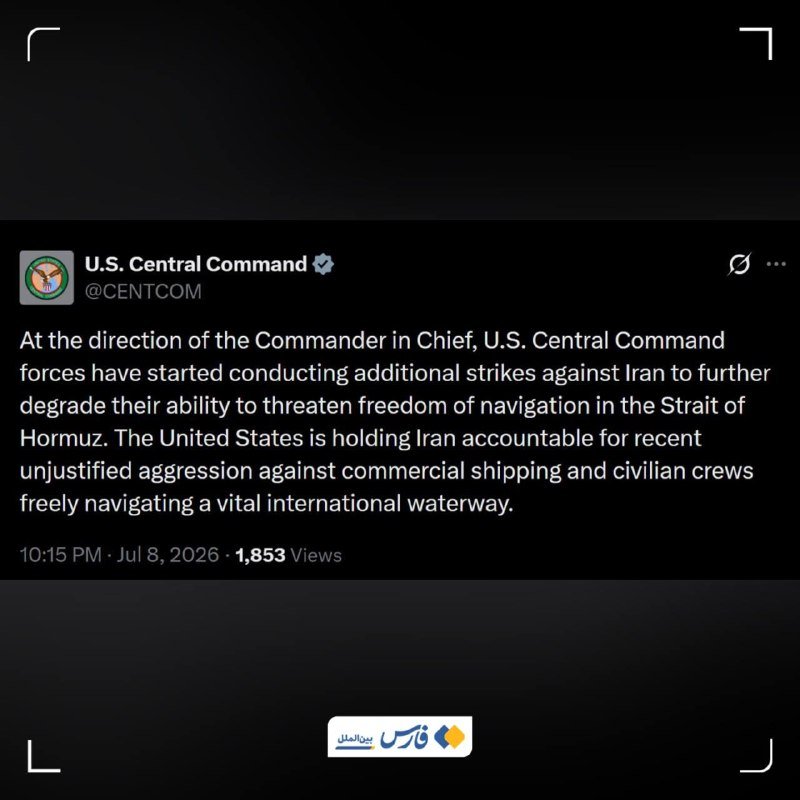
Donald Trump used a NATO summit stage in Turkey on 8 July 2026 to do what he has, on multiple files this year, refused to leave to diplomats: he personally declared a memorandum of understanding with Iran dead, then, by his own account on tape, told staff he wants nothing more to do with Spain. The two eruptions came within roughly an hour of each other in European morning hours and were processed in real time by an oil market that read the Iran comments first and the Spain comments second. Brent and WTI benchmarks each moved above 5% on the Reuters tape in the minutes after the Iran announcement, the largest single-session spike tied to a US presidential statement in months. The episode is a single day's news, but it is also a clean illustration of a pattern — US foreign policy increasingly executed in ad-libbed remarks, with downstream price and alliance consequences absorbed by everybody except the person speaking.
The sequence is worth fixing. At 09:12 UTC, NPR's news desk reported from the NATO venue that Trump said he believed the current ceasefire with Iran was "over," following an exchange of attacks between the United States and Iran in the latest escalation straining the agreement to end the war. By 09:14 UTC, the Telegram channel Intelslava, citing the president's remarks, posted that the memorandum of understanding was "over for him" and that he did not want to deal with the Iranians anymore, calling them "scum." At 09:29 UTC, Reuters's market desk carried the price reaction: oil up by more than 5%. At 09:33 UTC, a second cluster of items, from the channels englishabuali and abualiexpress, captured Trump telling his staff that Spain is "hopeless" and "bad people," with the instruction "I don't want to do business with them anymore. Don't even talk to them." The two policy moves travelled through the same morning, on the same trip, and to two very different audiences.
What Trump actually said, and what he didn't
The Iran remarks are the consequential ones. A memorandum of understanding is not a treaty; it is the kind of document that survives or dies on whether the principals on both ends are willing to be photographed in the same room. Trump has now said, on the record, that he believes the document is finished, and that he personally does not wish to deal with Tehran any longer. The previous ceasefire was already straining under reciprocal strikes; the presidential statement effectively certifies the strain publicly. The kill is rhetorical more than legal — there was no joint communique, no signatory from the Iranian side on the stage in Turkey, no reciprocal announcement from Tehran in the immediate window — but the market and US partners read the words as a US withdrawal of political cover for whatever remained of the de-escalation channel.
The Spain remarks are a different species. They were made to staff, not on camera, and they reach a Monexus reader through two channels that reposted the same quote. There is, at this stage, no Spanish government response in the items in hand, and no second US official corroborating the instruction. The remarks are also out of step with NATO's own choreography: a sitting US president at a NATO summit telling his team to stop talking to a member state is, on its face, an internal-alliance event with no obvious diplomatic upside and obvious downside. Madrid is a treaty ally; the alliance's southern flank runs through Spanish bases; the optics of an American president publicly delegitimising a NATO partner, in Turkey, while presiding over a meeting of the same body, will not have been lost on Ankara, Warsaw, or the EU institutions in Brussels.
The counter-narrative — and where it cuts
Two readings are available, and both are partly right. The first, the harder-line Washington read, treats the Iran comments as overdue honesty: the ceasefire was already failing in practice, the MoU was a fig leaf, and a clean US withdrawal allows Washington to reset on terms that are not built on a document the president has lost faith in. The oil move, on this reading, is a cost of telling the truth.
The second reading — the one more common in European and Gulf chancelleries — is that the remarks are a self-inflicted wound. By declaring the agreement dead in a NATO hallway, Trump (a) gives Iran no incentive to keep de-escalation channels quiet, (b) hands Tehran a propaganda win it can frame as American bad faith, and (c) imposes the price of the spike on every oil importer, including US allies, without a corresponding policy gain. The Reuters price tick, above 5% on a presidential statement alone, is the cleanest evidence that markets are pricing the second reading as at least as plausible as the first.
Both readings understate a third element: the kill was performed in remarks, not in a signed order. That matters. A presidential statement of belief that a document is "over" is reversible by a quieter statement of belief that it isn't. Iran's ability, and incentive, to test that reversibility in the next few days is high.
Structural frame — personal diplomacy, alliance pressure
Step back from the day's headlines and the pattern is familiar. US foreign-policy decisions in 2026 are being made, in significant volume, in ad-libbed remarks at summits, on Truth Social posts, and in conversations with staff that are then circulated by intermediaries. The decisions are not always durable, but they are loud, and they are processed by markets and allies in real time. The institutional infrastructure of US foreign policy — the State Department, the Pentagon planning staff, the NSC process — has not been visibly restored to a position where it pre-empts or even synchronises with the public statement. The result is a diplomacy in which the price of a presidential word is paid by everybody downstream, including the State Department, which then has to clean up.
The Spain dimension fits the same frame. NATO is, on paper, a consensus body in which the United States holds the largest share of capability and Madrid contributes meaningfully in the Mediterranean and on intelligence sharing. A US president publicly sidelining a member state during a summit is the alliance equivalent of a managing partner telling one of the firm that they are "hopeless" in front of the partners' meeting. The institutional cost — what other NATO members conclude about the value of their own commitments to alliance business when Washington picks targets in this register — is paid slowly, but it compounds.
Stakes — the next ten days
The next ten days will tell us how much of this is theatre and how much is signal. Three things to watch. First, whether the State Department publicly reaffirms the Iran MoU in any form, even the softest "diplomatic engagement continues" formulation; its silence would ratify the kill. Second, whether the Spanish government responds with a formal démarche, and whether Brussels weighs in; a NATO-summit insult to a member state that produces only a tepid European reaction tells its own story about alliance cohesion. Third, whether the oil move holds into the close, or fades as traders conclude that the rhetorical weight exceeds the policy content. A 5% move on a single quote is volatile; a 5% move that closes the week would mean traders have priced in a real supply risk, and the diplomatic cost of walking it back rises accordingly.
What remains genuinely uncertain, on the items in hand, is whether the Iran ceasefire is, in operational terms, already dead — the NPR framing of "latest escalation straining the agreement" suggests yes — or whether the document is still technically alive in the bureaucracy while the president has moved on. The two channels that carried the Spain quote do not name a corroborating US official, and the Spanish government's response is not yet in the public record. A reader should treat the Spain comments as established on Trump's own words and unestablished on their consequences. The Iran comments, by contrast, are established, priced, and now the responsibility of every oil-importing economy in the world.
Desk note: the wire reporting — NPR from the NATO venue, Reuters on the price move — is the load-bearing evidence in this piece. The Telegram channels are useful for capturing the exact wording of remarks that the president did not deliver in a written statement, but they are not, by themselves, sufficient provenance for any policy consequence claimed here. Where this article hedges on Spain, it hedges because the wire is silent; where it asserts on Iran, it asserts because the price tape and the NPR report converge.
Wire provenance
This editorial synthesis draws on the following public wire/social posts:
- https://t.me/intelslava
- https://t.me/gazaalanpa
- https://t.me/englishabuali
- https://t.me/abualiexpress
- https://t.me/englishabuali