Trump orders second wave of strikes on Iran as ceasefire collapses
A US ceasefire on Iran lasted less than a day before President Trump ordered fresh airstrikes, citing Iranian attacks on shipping in the Gulf.
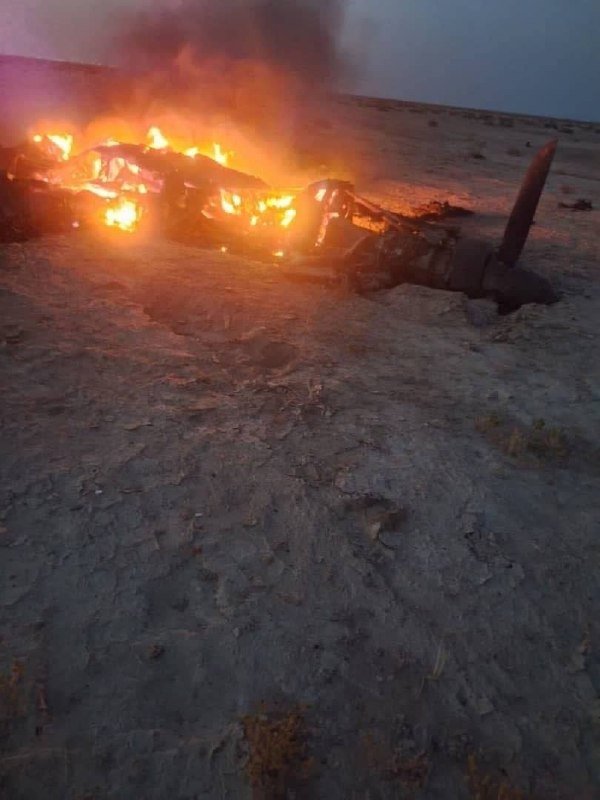
A ceasefire declared by President Donald Trump on 7 July 2026 did not survive the night. By Wednesday evening, U.S. Central Command (CENTCOM) confirmed that American forces had resumed airstrikes on Iran, the second wave inside 24 hours, after what the administration described as an Iranian attack on commercial vessels in the Persian Gulf. The relaunch was authorised by Trump personally and announced in real time on his Truth Social account.
The pattern is familiar, and that familiarity is itself the story. A US-Iran de-escalation holds for hours, then a shipping incident is cited, then the bombs resume. Within a single news cycle, the White House has both ended and restarted a war, and the world is being asked to keep up.
From ceasefire to second wave
DW reported on 8 July 2026 (20:52 UTC) that the United States had launched fresh strikes on Iran on Wednesday night, the second wave in 24 hours, and that the renewed campaign followed Trump's declaration that the ceasefire was over. CENTCOM's announcement, distributed via One America News, used identical language: the United States was "resuming airstrikes against Iran, acting on orders from President Donald Trump."
On Truth Social, Trump framed the relaunch as punishment for a specific incident. "This is in retribution for yesterday's bombing of ships by Iran," the post read. "If it happens again, it will get much worse!" Trump separately told reporters, in remarks relayed by the @wfwitness wire, that "retaliatory strikes will continue and will increase in intensity."
What that means in operational terms is not yet clear. CENTCOM's announcement as relayed by OANN identified the action but did not specify target packages, weapon types, or the duration of the resumed campaign. The U.S. has not, in the material reviewed by this publication, published a public target list for the second wave.
The shipping incident as trigger
The Trump administration's justification rests on an Iranian-attributed attack on commercial shipping in the Gulf, described only as "yesterday's bombing of ships." No vessel name, no flag state, no casualty count, and no independent attribution appears in the source material.
That matters. A credible retaliatory strike requires a credible triggering incident, and the public evidentiary record for the 7 July ship attack is, at the time of writing, thin. Iranian state media have not, in the materials reviewed, claimed responsibility for a strike on shipping on 7 July; Iranian-aligned outlets have not been named in the source set as confirming the attack. If the incident occurred and was Iranian, the case for retaliation is strong. If it did not, or if it was misattributed, the second wave was launched on an unverified premise.
This is the single most important uncertainty in the story, and it is one the wire services and the CENTCOM announcement have so far declined to close.
What the second wave actually is
Two data points anchor the scale claim that this is a "second wave inside 24 hours." DW's report places the new strikes on Wednesday night local time. The CENTCOM announcement, distributed via OANN on 8 July, uses identical framing. That phrasing rules out an isolated follow-on strike on a single target; it implies a deliberate re-tasking of U.S. air power across the Iranian target set.
The strategic logic, plain in the statements but unstated in policy terms, is escalation control through escalation. The first wave was framed as a discrete response. The second is framed as a deterrent: a message that further attacks on shipping will be met with an intensified response. That is a familiar U.S. playbook in the Gulf, applied in 1987-88, in 2019, and again in 2024.
What is unusual is the speed. The full cycle, ceasefire, collapse, trigger incident, second wave, has compressed into roughly 36 hours. In prior Gulf episodes, the interval between ceasefire and resumption was measured in weeks.
Stakes and what comes next
Iranian retaliation is the immediate downside risk. Tehran has, in past cycles, answered U.S. strikes with ballistic-missile attacks on regional bases and with attacks on Gulf shipping of its own. If the second wave triggers a third, the U.S. faces a choice between accepting escalation and widening the target set to include Iranian military and state infrastructure, a step that current public statements have not explicitly authorised.
For shipping, the calculus is already in motion. Even a single strike on a commercial vessel in the Strait of Hormuz raises war-risk insurance premiums and reroutes tanker traffic. If the pattern of tit-for-tat maritime attacks resumes, the global crude benchmark, already sensitive to the Strait, will move within days. None of that is in the source material as a confirmed impact; it is the obvious forward read.
For the Trump administration, the political math is also unstable. A successful short, sharp campaign that restores deterrence without further Iranian retaliation would be presented as a win. A protracted exchange that drives oil higher and produces American or allied casualties would not. The window in which the second wave remains an unambiguously dominant move is measured in days, not weeks.
What remains uncertain
Three things, all of them load-bearing. First, the identity and attribution of the 7 July shipping attack: which vessels, which flag, who did it. Second, the target set of the second wave: military, oil, or political infrastructure. Third, the Iranian response: whether Tehran treats the second wave as a continuation of an existing exchange, with proportionate counters, or as an escalation requiring a qualitatively different reply.
A reliable read on each of those will arrive within 48 hours. Until then, the second wave is best described as it appears on the public record: a presidential decision announced on social media, executed by CENTCOM, justified by a still-thin triggering incident, and sized by the administration's own language as a warning, not a finale.
Desk note: Monexus has foregrounded the evidentiary gap around the 7 July shipping incident because the wire services providing the headlines have not closed it. The Trump administration's framing has been reproduced verbatim where it adds information, and the CENTCOM announcement is treated as the institutional operational record.
Wire provenance
This editorial synthesis draws on the following public wire/social posts:
- https://t.me/wfwitness
- https://t.me/rnintel
- https://t.me/OANNTV
- https://en.wikipedia.org/wiki/U.S._Central_Command