Trump tears up Iran deal in single morning, oil spikes and NATO grows nervous
A single presidential statement pulled the United States back from the brink of an interim understanding with Tehran, sent crude up roughly 6%, and left European allies recalculating.
At 10:38 UTC on 8 July 2026, President Donald Trump declared the memorandum of understanding with Iran "over" and described the Iranian leadership as "sick people" he did not wish to negotiate with. By 10:50 UTC, the price of crude had jumped nearly 6% on the news, according to oil-market monitor WarMonitor. The episode, compressed into a single morning, has done more than scupper a fragile interim arrangement: it has reset the parameters around US posture in the Gulf, the cohesion of NATO, and the price of energy for every importer on the planet.
The pattern is familiar from the first Trump term. A presidential statement, delivered in passing, becomes the operative US position; markets and allies scramble to price the new line; the diplomatic paperwork that took months to assemble is treated as disposable. What is unusual this time is the speed — twelve minutes between a verbal declaration and a market reaction of that magnitude — and the fact that the agreement in question was a memorandum, not yet a treaty, which left it with little of the institutional protection a signed accord would have enjoyed.
The morning's timeline
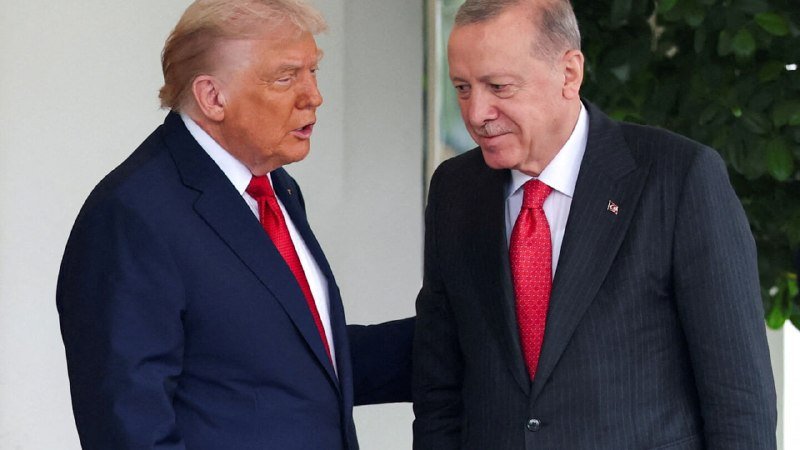
The day began with diplomacy, not rupture. According to a Telegram channel reporting the president's remarks, Trump met Turkish President Recep Tayyip Erdoğan for dinner the previous evening, rating the encounter "a 10, maybe a 12" — a number that, in the coded language of presidential flattery, signals an unusually warm exchange. A second channel flagged a White House social-media post at 09:56 UTC announcing that the president would provide an update on "U.S. Forces retaliatory strikes against Iran," suggesting that a kinetic episode had either occurred or was about to be acknowledged. The third channel, citing a White House URL, carried the same framing.
The pivot came at 10:38 UTC, when Trump told reporters the memorandum with Iran was finished. Twelve minutes later, WarMonitor reported the oil move. The sequencing matters: the market did not need to wait for a written revocation, a National Security Council memo, or a Treasury action. The president's words were the action.
The NATO overhang
What made the morning's events more combustible was the second story running underneath them. Earlier on 8 July, in remarks circulated by the WarField Witness channel, Trump made clear that his displeasure with the alliance persists even as he professed to value its current leader: "despite the fact that I'm very upset with NATO, uh, that we pay…" — a truncated quote that, in context, gestured at the long-running US complaint that European members do not carry their share of the burden.
The two stories are connected. An administration that has walked away from an interim understanding with Tehran is the same administration that views the alliance as a cost-sharing problem rather than a strategic asset. For European NATO members, the lesson is uncomfortable: the security architecture they rely on is being managed by a White House that simultaneously treats the Middle East as a venue for unilateral action. The Turkish dinner, warm as it was, does not change that arithmetic — Erdoğan is a transactional counterpart, not a strategic substitute for the European pillar.
Oil, the canary in the corridor
A 6% move in crude on a single statement is not, by historical standards, extraordinary. What makes it significant is the thinness of the underlying diplomatic scaffolding. The agreement Trump walked away from was a memorandum of understanding — the kind of document that requires political will to maintain and provides almost no legal recourse when that will evaporates. There is no treaty obligation, no UN Security Council resolution, no congressionally ratified framework to fall back on. The price action is, in effect, the market registering that the paper was always going to be worth only what the president's mood on a given morning permitted.
This is the structural problem with deal-making by declaration. The same volatility that allows a president to extract concessions quickly also allows the next statement — or the same one in a different mood — to undo them. Oil importers from New Delhi to Brussels are now repricing supply contracts on the assumption that the US-Iran track is not a reliable line of policy for the foreseeable future. Iranian crude, already heavily sanctioned, will find its way to market at a discount, and the premium on Gulf-routed barrels will widen.
What the counter-narrative gets right
A charitable read of the morning is that the president is responding to a genuine provocation — the White House social-media post about "retaliatory strikes" suggests an Iranian action that precipitated the response. Under that reading, scrapping the memorandum is not impulse but deterrence: a signal that escalation carries a cost, and that interim understandings are revocable when the other party's behaviour makes them untenable. There is something to this. The same administration that walked away from the JCPOA in 2018 is the one most likely to treat any successor arrangement as conditional on Iranian conduct.
The harder question is whether the statement was the right instrument for the message. A formal notification, coordinated with allies and oil-market regulators, could have delivered the same deterrent effect with a smaller price spike. The 6% move benefits no one — not US drivers, not European industries struggling with energy costs, not even the Iranian regime, which watches its own access to foreign exchange tighten as the global risk premium widens. The statement-first approach treats oil markets and allied governments as audiences for a domestic political message, not as stakeholders whose cooperation the policy needs.
The structural frame
What the day illustrates, in plain terms, is the gap between transactional diplomacy and institutional diplomacy. Transactional diplomacy — the kind that runs on personal relationships, memoranda of understanding, and presidential social-media posts — is fast, flexible, and reversible. Institutional diplomacy — the kind embedded in treaties, multilateral frameworks, and standing alliances — is slow, rigid, and durable. The Trump administration operates almost exclusively in the first mode. European allies, by training and habit, operate in the second.
The result is a recurring mismatch: Washington announces a position, markets move, allies are left to interpret what the announcement actually means for their own commitments. The memorandum with Iran was a transactional artefact, and so it died transactionally — a single statement, no paperwork. NATO is an institutional artefact, which is why Trump can voice displeasure with it without it collapsing; but the same institutional weight that protects the alliance also prevents it from adapting quickly to the president's preferred tempo.
Stakes over the next quarter
Three things to watch between now and October 2026. First, whether the 6% oil move sticks or retraces; that will tell us whether traders believe the revocation is rhetorical or operational. Second, whether European NATO members, particularly France, Germany, and Poland, begin to publicly hedge against US unreliability — for example, by expanding bilateral security arrangements outside the NATO frame. Third, whether Iran's response is rhetorical or kinetic; the White House post about "retaliatory strikes" suggests a cycle is already in motion, and the next Iranian move will set the floor under the next oil print.
What remains uncertain is the floor of the policy itself. The sources do not specify whether the memorandum has been formally withdrawn through diplomatic channels, or whether the statement is a negotiating posture that could be walked back. They do not name which Iranian actions prompted the president's language, nor do they specify the targets or effects of the "retaliatory strikes" the White House referenced. The morning's news is, in other words, both a market event and a message — and the gap between those two readings is where the next seventy-two hours of policy will be made.
This article traces the morning's events through publicly available Telegram-channel reporting and a White House social-media post. Where the wire context is thin — on the operational details of any strikes, on allied responses still being drafted, on the formal status of the memorandum — Monexus flags the uncertainty rather than infer it.
Wire provenance
This editorial synthesis draws on the following public wire/social posts:
- https://t.me/osintlive
- https://t.me/englishabuali
- https://t.me/ClashReport
- https://t.me/FirstpostIndia
- https://t.me/wfwitness