Trump's Iran Calculus: Endgame or Escalation?
President Trump insists Iran is defeated and warns that any further shipping attacks will be met with harsher retaliation. The evidence on the water and in the briefings tells a more complicated story.
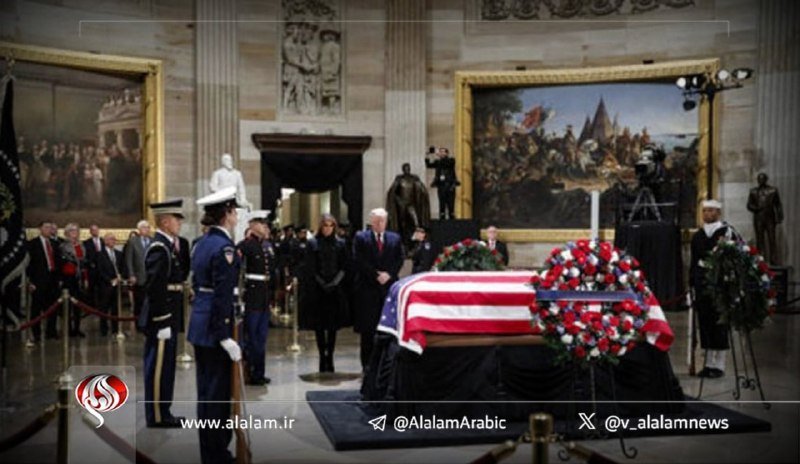
President Donald Trump spent Tuesday morning 8 July 2026 framing the United States' posture toward Iran in the language of victory and finality, telling reporters aboard Air Force One that Iran has been "defeated" or that an agreement has been reached "on multiple occasions." Asked whether he had plans to put American boots on the ground in Iran, the president was dismissive: "Why would I go in now?" Hours later, in remarks carried by Telegram-channel aggregator ClashReport at 21:46 UTC, he struck a harder tone — describing US action as "retribution for yesterday's bombing of ships by Iran" and warning that "if it happens again, it will get much worse."
The two registers are not contradictions. They describe a White House strategy that wants the Iran file closed on presidential terms while leaving open the option of further military pressure if Gulf shipping comes under attack again. The tension is between the political incentive to declare the crisis over and the operational reality that the underlying confrontation has not been resolved. As Reuters framed it in a 22:45 UTC headline: "Trump wants to leave the Iran war behind. That won't happen soon."
The victory claim
Trump's assertion that Iran has been "defeated" or that an agreement has been reached is the strongest version of a case the administration has been building for weeks. The pitch to voters, donors and regional allies is that sustained American military pressure — including strikes on Iranian-linked assets and a posture of credible escalation — has pushed Tehran to the table or to the edge of capitulation. The "multiple occasions" phrasing is telling: it is calibrated to absorb setbacks. Each round of diplomacy or kinetic action becomes, in this telling, another data point in a sequence moving in Washington's direction.
Asked by a reporter at 22:54 UTC whether he was aware of "credible threats by Iran," Trump replied that he hears threats constantly and added, "I am number one on their list. If I go, you go" — a pointed invocation of mutual vulnerability. The line is partly theatre and partly signalling. It tells Tehran that the US president regards any Iranian move against him as existential, with no off-ramp. It tells domestic audiences that the danger is personal and the stakes are not abstract. It tells Gulf partners that the United States understands the threat in personal terms, which is read in the region as commitment rather than detachment.
The escalation track
The "retribution" framing cannot be reconciled with the victory framing without contortion. If Iran has been defeated, attacks on shipping in the Gulf are a residual harassment problem. If Iran has not been defeated, those attacks are a probe of American resolve, and the warning that things will "get much worse" is a threat of further escalation rather than a closing statement.
The shipping dimension is the most concrete piece of the picture. Attacks on commercial vessels in the Persian Gulf and the Strait of Hormuz have been a recurring feature of regional tensions, and the US response has oscillated between diplomatic protest, naval escort operations and direct strikes on Iranian proxy assets. Trump's description of US action as retaliation for "yesterday's bombing of ships by Iran" places a specific incident in the public record and ties American policy to it. The conditional — "if it happens again" — is the lever. Each new incident becomes a self-justifying trigger for further US action.
What the diplomatic picture actually shows
Reuters's reporting on the gap between Trump's preferred narrative and the on-the-ground situation is consistent with a reading many in the Gulf and in European chancelleries have offered privately. Iran's nuclear programme, its network of regional proxies, and its missile and drone industrial base have not been dismantled. The Strait of Hormuz remains a contested corridor. Sanctions enforcement is uneven. The prisoner and deconfliction channels that prevent miscalculation from becoming war are functional but thin.
Iranian state media, for its part, has framed recent events as evidence that the United States is seeking a face-saving exit after failing to achieve its stated objectives. That framing is not neutral — Tehran has every interest in projecting confidence — but it captures a real structural point. The White House wants the issue off the front pages by the November midterm cycle. Tehran wants sanctions relief and a verifiable end to strikes. The intersection of those two preference sets is narrow.
Stakes and limits
If Trump's victory framing holds, the political upside is significant: a Middle East that looks quieter on cable news, lower gasoline prices through the summer driving season, and a talking point for an administration that has invested heavily in the perception of strength. The downside is that premature declarations of success can lock the United States into either ignoring attacks that should be answered or answering attacks that should have been prevented — the same trap that has caught every administration since 1979.
If the escalation framing is the operative one, the upside is deterrence by example. The downside is a slow-burn confrontation that pulls in Iraqi militias, Houthi forces in the Red Sea, and Lebanese Hezbollah, with shipping insurance premiums as the most visible real-time indicator. The Strait of Hormuz handles a fifth of global oil shipments by sea. Even a partial closure would feed directly into energy prices and, through them, into inflation and central-bank posture on both sides of the Atlantic.
The nuance that the day's coverage cannot resolve is whether Trump himself knows which framing is operative, or whether the two are deliberately held in reserve — victory for the base, escalation for Tehran. The president has shown a strong preference for improvised ambiguity, and his Tuesday remarks are consistent with that style. What the wire reporting does establish is that the Iranian file is not closed. The White House may want the war behind it. The evidence on the water and in the briefings argues otherwise.
Desk note: Monexus framed this piece around the gap between the White House's preferred narrative and the operational record, rather than treating either the "defeated Iran" or "looming escalation" claim at face value. The wire coverage of Trump's Tuesday remarks offered both registers in a single news cycle; this article holds them side by side.
Wire provenance
This editorial synthesis draws on the following public wire/social posts:
- https://t.me/ClashReport
- http://reut.rs/4wyhMx8
- https://t.me/osintlive
- https://t.me/ClashReport