Live Wire
16:53ZENGLISHABUThe advisor to the Supreme Leader of Iran, Ali Akbar Velayati:The verbal declaration of the cancellation of t…16:53ZINDIANEXPRBitter smoothies, a secret girlfriend: How police unravelled Hyderabad woman’s ‘murder’ in US via The Indian…16:53ZINDIANEXPRRam Temple Trust hands key role to new 3-member panel via The Indian Express https://ift.tt/q5ERjCK16:53ZINDIANEXPRDelhi air cleanest this year after rain, temperatures dip; yellow alert for Thursday via The Indian Express h…16:53ZINDIANEXPRFrom Canadian scrutiny to FBI’s Operation Hard Ball: How net tightened around Lawrence Bishnoi via The Indian…16:53ZINDIANEXPRFDA suspends licence of iconic Mumbai ice cream outlet K Rustom over food safety violations via The Indian Ex…16:53ZINDIANEXPRSourav Ganguly thanks Jay Shah, ICC for hall of fame induction via The Indian Express https://ift.tt/7QgZRjH16:52ZINDIANEXPRRemembering Shahrnush Parsipur, the Iranian feminist literary icon via The Indian Express https://ift.tt/xyKq…
Markets
S&P 500744.58 0.42%Nasdaq25,771 0.18%Nasdaq 10029,128 0.16%Dow522.62 1.10%Nikkei92.16 0.98%China 5033.5 3.11%Europe87.96 1.22%DAX41.28 1.83%BTC$61,976 3.31%ETH$1,733 4.05%BNB$565.35 3.48%XRP$1.08 4.43%SOL$77.19 6.05%TRX$0.3289 0.96%HYPE$67.48 5.82%DOGE$0.0723 4.11%RAIN$0.0146 2.16%LEO$9.45 0.95%QQQ$708.91 0.07%VOO$684.34 0.40%VTI$367.76 0.50%IWM$293.05 1.06%ARKK$79.56 2.01%HYG$79.65 0.14%Gold$372.51 1.32%Silver$52.37 3.84%WTI Crude$112.81 3.57%Brent$43.76 4.36%Nat Gas$11.63 1.15%Copper$36.95 1.18%EUR/USD1.1404 0.00%GBP/USD1.3348 0.00%USD/JPY162.49 0.00%USD/CNY6.8002 0.00%
OPENNYSEcloses in 3h 5m
The Monexus
Vol. I · No. 189
Wednesday, 8 July 2026
Saturday Ed.
Updated 16:54 UTC
  • UTC16:54
  • EDT12:54
  • GMT17:54
  • CET18:54
  • JST01:54
  • HKT00:54
← The MonexusSports

A golden generation ends on home soil: what the USMNT's Belgium loss actually exposed

A 4-1 defeat to Belgium ended the United States' home World Cup in the round of 16. The scoreboard tells one story; the deeper one is about a squad built on expectation, not chemistry.
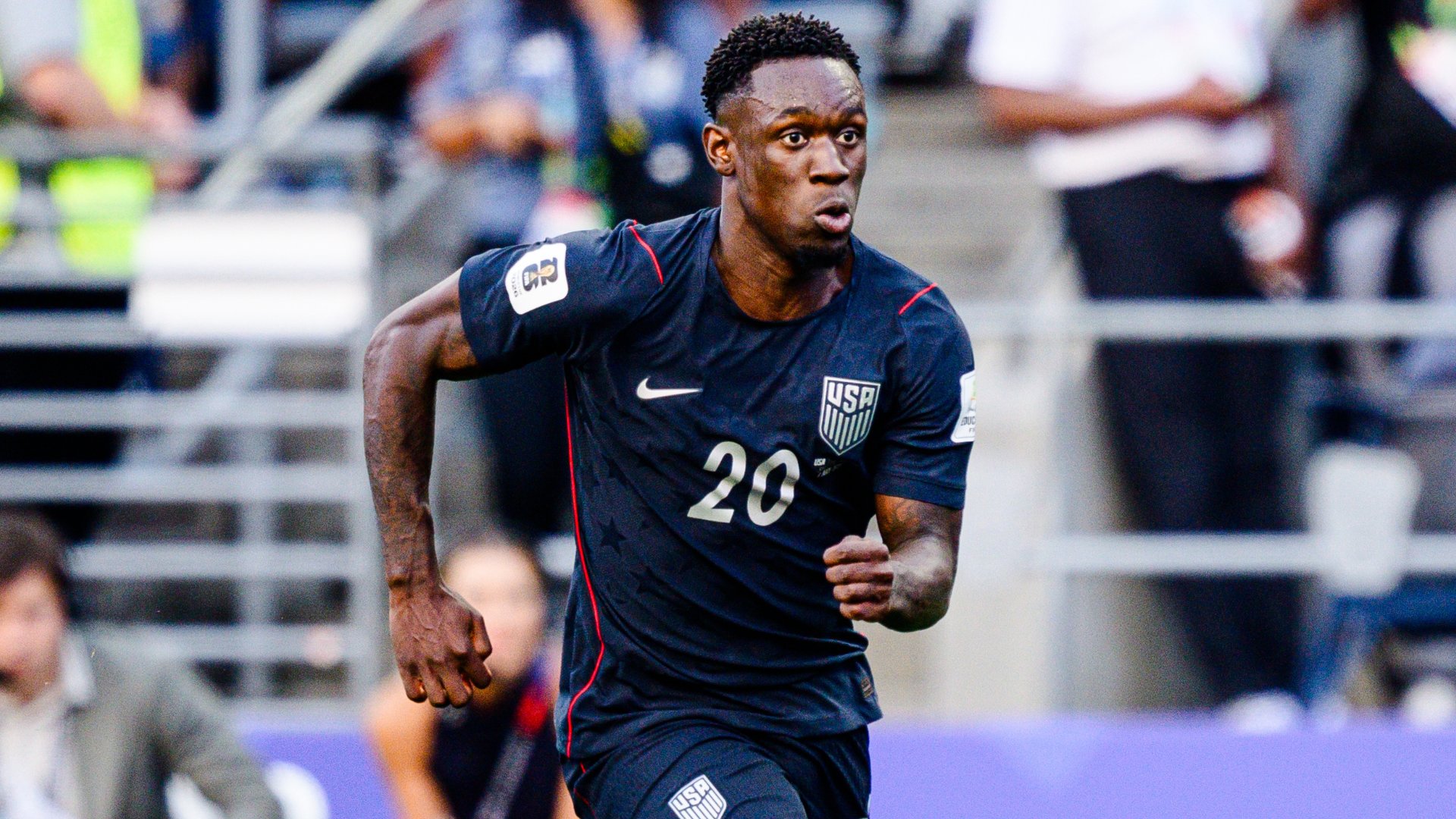
USMNT midfielder Malik Tillman during the round-of-16 loss to Belgium at the 2026 World Cup. CBS Sports

The United States men's national team walked off the pitch at the 2026 World Cup on Monday night having conceded four goals in a round-of-16 defeat to Belgium — a 4-1 result that ended the host nation's tournament on home soil and triggered a familiar, more pointed round of American soul-searching. By 06:40 UTC on Tuesday, the Spanish and Portuguese press had already written the elegies for Cristiano Ronaldo's final World Cup; by midday, the focus had shifted to the question American fans have now spent a decade asking themselves: why does a country with this much talent, this much money, and this much noise around its football project keep arriving at the same cliff edge?

The simplest read is also the most uncomfortable one: this was not a coaching failure. It was a roster failure in real time, masked for a year by the assumption that expensive talent and a famous manager were substitutes for a coherent team. Monday's performance — flat in midfield, soft through the middle third, and tactically out-manoeuvred by a Belgian side playing its own farewell tournament — suggested the substitution rate has finally run out.

What Monday night actually showed

The 4-1 scoreline is severe enough on its own. The shape of the defeat, though, is more revealing. According to CBS Sports' round-of-16 wrap, the USMNT "fell flat" in a lifeless performance that "raised major questions about the team's growth and mentality on the world stage" — language that reads less like a post-mortem than an audit of a development cycle that promised more than it delivered. Belgium's winners came in clusters, exploiting transitions the American midfield never recovered from. Belgium's players then trolled the U.S. online afterwards with a "🧌 'Overturn this'" social-media post, a juvenile gesture that nonetheless captured the mood: the underdog had walked into the host's house and left with the furniture.

The tournament itself had given the U.S. a manageable path until the knockouts, and the home-crowd effect had papered over the tactical incoherence that showed up in possession statistics and chance creation throughout the group stage. A home World Cup is supposed to compress those gaps; for the U.S., it magnified them.

The expensive-manager trap

ESPN's mid-tournament column put the knife in with unusual directness: the coach does not matter. The framing — that "U.S. fans expected more out of the USMNT's expensive, famous coach at the World Cup, but there was one problem: the players" — is deliberately provocative, but it lands because it matches what viewers saw. A Premier League-seasoned manager, parachuted in at elite compensation, was supposed to be the missing variable. Instead, the same structural weaknesses surfaced: a forward line that disappears in tight knockout football, a midfield that cannot control tempo against organised European sides, and a back line that gives up the kind of central penetration that becomes fatal against technically superior opponents.

That is not a verdict on the manager's tactical scheme in isolation. It is a verdict on a federation strategy that spent two cycles treating the head-coach hire as the primary lever, while the deeper pipelines — domestic league strength, second-tournament depth, positional coaching — were left to mature at the speed of a sport the country is still learning to take seriously.

The Portugal-Ronaldo coda

While the U.S. digested its own exit, the tournament also closed a chapter in the sport's recent history. Portugal's elimination by Spain on Monday ended Cristiano Ronaldo's self-declared final World Cup campaign. Sky Sports' framing — "The best to never win the World Cup, Ronaldo and Portugal must find new paths" — captures the strange duality of a career that rewrote goal records across leagues and tournaments while never lifting the one trophy that would have completed the argument. ESPN's parallel piece walked through each of Ronaldo's five tournament appearances, tracking the arc from teenage promise in 2006 to elder-statesman role in 2026.

The juxtaposition is instructive. Ronaldo's Portugal had its own structural ceiling — over-reliance on an ageing superstar, a midfield that never quite matched the attacking talent — but the country also produced a generation of supporting players who, in any given match, could lift the side past teams it had no business beating. The U.S. has the depth in raw talent; what it has not yet produced is the connective tissue.

What 2030 actually requires

CBS Sports' forward-looking roster projection — "Who are the 26 players that could lead USA soccer in next edition?" — frames the obvious next step. By 2030, several of the veterans who anchored this cycle will have aged out. The question is not only who replaces them, but whether the development environment around them has changed.

Three things would have to be true for the 2030 tournament to look different: a domestic league that develops rather than imports identities; a federation that treats youth-positional coaching as the primary investment, not the senior-team hire; and a national-team culture that can absorb a knockout-round goal against it without the visible panic that marked parts of Monday's second half. None of those are quick fixes. All of them are cheaper than the manager hire that did not work.

What the framing leaves out

The dominant American read — that this generation "let a World Cup moment slip away in cruel fashion," as CBS Sports' headline framed it — flatters the home side by implying it was within reach. The cleaner reading is that Belgium was simply a better football team on the night, with a deeper tournament pedigree and a midfield built for exactly the kind of match that broke open in the second half. A "cruel" exit implies an unlucky one; a 4-1 loss is not unlucky.

The other gap in the coverage is comparative. The U.S. hosted, drew record crowds, and exited at the round of 16. Hosts regularly do worse — South Africa in 2010, Russia in 2018 — without it being treated as a national crisis. The American frame treats a round-of-16 exit as failure because the federation had spent four years selling the tournament as a coming-out party. When the marketing outruns the programme, the scoreboard always lands harder.


Desk note: Monexus framed Monday's defeat not as a coaching failure or a refereeing question but as a structural one — a federation that spent two cycles buying the appearance of a senior-team leap while the connective tissue of the programme stayed where it was. The wire coverage has leaned on the "golden generation" framing; we read that as the story the federation preferred to tell, not the one the pitch supported.

© 2026 Monexus Media · reported from the wire