Bandar Abbas shakes again: the strikes the world is not being told about
Two waves of explosions inside Iran's largest Gulf port in a single evening underline how little western reporting infrastructure is left in the room — and how dependent we all are on a Telegram channel with a handle name.
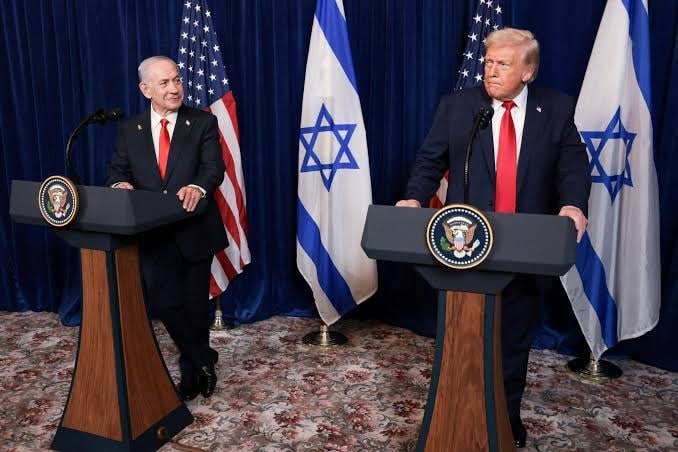
Explosions were heard in Bandar Abbas on the evening of 9 July 2026 in at least two distinct waves, the second coming roughly twenty minutes after the first, according to the Telegram channels intelslava and wfwitness, which posted initial reports at 18:16 UTC and 18:17 UTC respectively and updated again at 18:30 UTC and 18:35 UTC [intelslava, 9 July 2026, 18:16/18:30/18:35 UTC; wfwitness, 9 July 2026, 18:17 UTC]. None of the messages identifies the target, the weapon, the casualty count, or the operator. All four posts attribute the strikes to the United States and characterise them as a "renewed" action, suggesting an earlier bombardment in the same area. That earlier round, claimed in the same framing, is not separately confirmed in the material reviewed.
Bandar Abbas is not a marginal target. It hosts the bulk of Iran's commercial port throughput on the Strait of Hormuz, the chokepoint through which roughly a fifth of seaborne oil routinely transits. A strike there is not a strike at a military installation in some distant desert; it is a strike at the machinery of Iran's connection to the global economy. The lack of confirmed detail, combined with the speed of the relaying — single Telegram posts, reposts, then repeated waves — is itself the story.
What we actually know, and what we do not
Four data points. 1) Multiple explosions occurred in Bandar Abbas between approximately 18:15 UTC and 18:35 UTC on 9 July 2026 [intelslava, 18:16 UTC; wfwitness, 18:17 UTC]. 2) The same channels describe the event as a renewed US airstrike [intelslava, 18:30 UTC and 18:35 UTC]. 3) The Telegram post at 18:35 UTC cites Iran's Mehr News as the proximate source for "explosions heard in Bandar Abbas," which is consistent with Iranian state media reporting the event rather than denying it [intelslava, 18:35 UTC]. 4) Beyond that chain, the material under review contains no official statements from US Central Command, the Iranian Ministry of Defence, the Israeli military, the Iranian foreign ministry, or any major wire service [thread context, 9 July 2026].
What we do not know: target, weapon, casualty figures, infrastructure damage, whether oil storage, container terminals, naval facilities, or civilian neighbourhoods were hit. There is no photographic or video evidence in the reviewed thread. There is no comment from a named Iranian official carrying institutional weight. There is no comment at all from Washington. The reader is being asked to take the fact of the strike on the word of two Telegram accounts reposting each other and an Iranian state outlet, with neither the strike itself nor its consequences independently corroborated by the wire reporting apparatus that, a decade ago, would have been the first to land on the story.
Why the silence around it matters more than the strike
Even by the degraded standards of 2024–2026, when coverage of active US-Iran hostilities has dwindled to near-vanishing in mainstream western outlets, the absence here is conspicuous. Strikes on a major Iranian port are, in any prior news cycle, the kind of event that produces rolling Reuters and AP headlines within fifteen minutes, on-camera Pentagon briefings within hours, and a UN Security Council emergency session within a day. None of that infrastructure appears to have fired.
The likeliest explanations are two, and they are not mutually exclusive. Either a.) mainstream newsrooms in New York, London, and Dubai are now operating under explicit or implicit guidance to keep US-Iran kinetic exchanges off the front page — a routine editorial caution when Washington and Tehran are mid-negotiation — or b.) the underlying event, as it stands tonight, is still too thin in its evidentiary base for the wires to commit. Both reads point to the same place: the public record of what the United States is doing on the Gulf, and to what end, is being written largely in captions under Telegram reposts.
The structural cost of under-covered wars
A decade of coverage attrition leaves readers with a particular view of the world: that the wars which are easiest to write about are the ones everyone writes about, and the ones that get written about are the ones that shape policy. A US strike on the Iranian port through which a significant share of global oil moves should, on its face, produce a debate about escalation, about the legal architecture around it, about the Strait's status under the law of the sea, and about the Gulf monarchies being asked, once again, to absorb the kinetic consequences of a confrontation they did not choose. Instead, we have a Telegram thread.
That is not a complaint about intelslava or wfwitness, who are doing real-time relay work under difficult conditions. It is an observation about the information economy around kinetic Middle Eastern events: the more consequential the strike, the less the western wire apparatus seems willing to anchor it. The asymmetry travels in one direction. Iranian state media, cited inside the same Telegram frame, is reporting; the US side is not.
Stakes, and what we should be watching
Three things, concretely. First, confirmation of the strike from a US institutional voice — Pentagon, CENTCOM, State, or the White House — or a daylight denial. The window for it is hours, not days. Second, the trajectory of maritime insurance premiums for tankers transiting Hormuz; shipping markets price political risk in real time, and a port strike repricing the strait is a measurable, falsifiable signal. Third, the UN and IAEA response, or its absence, which will indicate whether the kinetic track is being treated as a discrete event or absorbed into a broader diplomatic process already underway.
What remains uncertain is basic. We do not know whether the four Telegram posts describe one strike or two, whether any earlier July bombardment took place, or whether Iran's Mehr News coverage today is itself a controlled framing of a domestic incident. That uncertainty is the point. A public that cannot locate a strike on a port in peacetime reporting infrastructure is a public that has, in effect, outsourced its situational awareness to channels whose editorial standards it cannot audit.
Monexus is publishing this on the basis of two open-source Telegram channels and one Iranian state-media citation. We will update as wire confirmation, official statements, or verified visual evidence becomes available.
Wire provenance
This editorial synthesis draws on the following public wire/social posts:
- https://t.me/intelslava
- https://t.me/wfwitness