France finishes the job but Morocco just rewrote what an African World Cup run looks like
Les Bleus are through to the semifinals. The more lasting story is Morocco — a side that refused to be a footnote and forced the sport’s old hierarchy to acknowledge it.
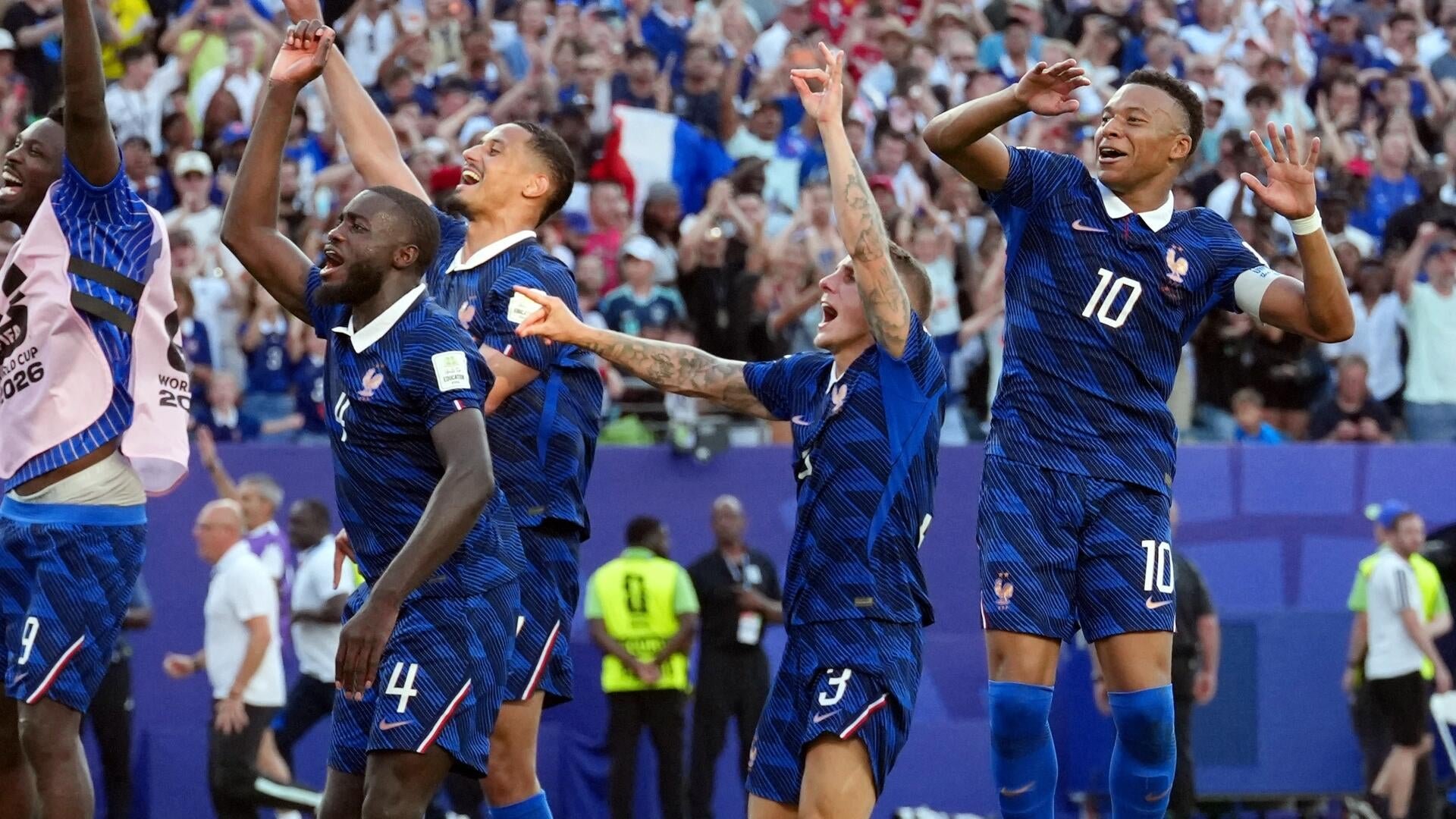
France beat Morocco on 9 July 2026 to book a place in the World Cup semifinals. The scoreline matters. The manner matters more. For long stretches of the second half, Morocco’s goalkeeper Bono stood between Les Bleus and a rout — turning over Désiré Doué after a surging solo run, palming a point-blank effort from Jean-Philippe Mateta, watching a Lucas Digue strike thunder back off the crossbar. France kept coming. Morocco kept answering. The result reflected the talent gap. The performance did not concede the point.
The temptation, after a quarterfinal like this, is to file it under the usual ledger: European pedigree, African pluck, an evening that confirms what we already knew. That ledger is wrong. Morocco did not arrive at this stage as a story of plucky resistance. They arrived as a side that had already done the structural work — qualifying top of a group that contained Belgium and Croatia, eliminating Spain on penalties, exporting a generation of European-trained talent who chose the Atlas Lions. Tuesday’s defeat ends a campaign that changed what an African World Cup run is allowed to mean.
How the night actually broke
The early exchanges belonged to France. The midfield rotated through balls that consistently found the channel behind Morocco’s right flank, and the combination play between their forwards and the overlapping full-backs opened shooting lanes that, on another evening, would have produced a third before the hour. Digue’s long-range effort, statistically a low-percentage attempt from that distance, became the headline moment because it deserved to: beaten goalkeeper, beaten trajectory, painted crossbar. Within two minutes, Mateta met a cross inside the six-yard box with the sort of connection that usually doubles a striker’s season tally. Bono turned it over. On a separate run, Doué drove thirty yards past two challenges before shaping his finish low and hard; again, the keeper read it. France generated the better chances for sustained periods. They also found a wall.
Morocco’s threat came in transitions and dead balls, with the centre-backs stepping into midfield to overload the second phase. Their best sequence came shortly after the restart, when a worked corner found a free man at the back post and the header drifted wide with the keeper beaten. By the closing minutes the pattern had settled into something close to a siege, with France committing numbers and Morocco absorbing them.
Why the dominant frame is incomplete
The standard read-outs — possession share, expected goals, shots on target — will favour France heavily, and that is honest. They were the better side for most of the ninety minutes. But the more telling statistic is the one that won’t appear in a highlights package: Morocco’s goalkeeper had the game of his tournament on a night when his team was, by design, defending in numbers. That is a function of the squad’s tactical identity, not the inevitable consequence of a talent disparity.
There is also the bracket. France progress to a semifinal, and the assumption will be that the road to the final opens from there. Morocco exit, and the assumption will be that the African contingent’s ceiling remains the last eight. Neither assumption survives contact with this campaign. Senegal and Tunisia went out earlier, yes — but Morocco beat a former world champion in the round of sixteen and pushed a France side loaded with Champions League starters to the final minutes. The continent’s football infrastructure is producing players who do not need an upset to compete; they need a sustained run of competitive fixtures against the best, which the World Cup provides once every four years and confederation play provides in between.
The structural shift hiding inside the result
What is being normalised, slowly, is that a North African side can arrive at a World Cup with a sporting identity of its own rather than borrowing a European one. Morocco’s players came through Lille, Sevilla, Paris Saint-Germain, Bayern Munich, Inter Milan, Chelsea. They were formed in those academies. They are not imitating France; they are products of the same global labour market that produced France’s squad, and they chose differently. That choice is the story — a generation of dual-national players deciding that the African jersey is the one worth wearing when the call comes.
The downstream effect matters for reasons beyond sport. Visibility at the highest level pulls investment into domestic leagues, raises the bargaining position of African federations in FIFA’s commercial architecture, and shifts the scouting footprint of European clubs further south. It also unsettles a media ecosystem that has historically described African football as a series of moral victories rather than measured performances. The wire copy after Tuesday’s match should have read closer to “France survive a major test” than “France ease past Morocco.” Subtle, but the difference is the whole point.
Stakes and what remains uncertain
The shortest-term stakes belong to France, who now have a semifinal to prepare for and a tournament that will be defined by whether their forward line can keep converting at the rate the quarterfinal demanded. The longer-term stakes belong to Morocco and to every federation that watched this run. The African game does not need another moral-victory narrative. It needs sustained quarterfinal and semifinal appearances, and the institutional backing — federation funding, league professionalism, dual-national eligibility rules — to convert a generation of European-trained talent into a continental pipeline rather than a one-off.
What the sources do not specify, and what the coming months will clarify, is whether FIFA’s expanded 48-team format and the 2030 World Cup’s three-continent hosting arrangement will accelerate that institutional shift or dilute it. The 2026 tournament has been a commercial and sporting success by every measurable indicator; whether it has been a developmental success for the federations that needed it most is a question the next cycle will answer.
This publication framed the result as a French victory inside a Moroccan campaign — not as a French victory over an African also-ran. The wire coverage, by contrast, tends to file these matches under European progression and treat African exits as the natural order. The result on 9 July 2026 confirmed the first; the performance called the second into question.
Wire provenance
This editorial synthesis draws on the following public wire/social posts:
- https://x.com/telesurenglish/status/1942873226479784277
- https://x.com/telesurenglish/status/1942873156113703360
- https://x.com/telesurenglish/status/1942869912492302548
- https://x.com/telesurenglish/status/1942869135729905957