France into the final: a result, and a reframing of who the World Cup is for
Les Bleus beat Morocco 2-0 in a semi-final widely read as a referendum on a footballing order that, this tournament, has tilted decisively toward the Global South.
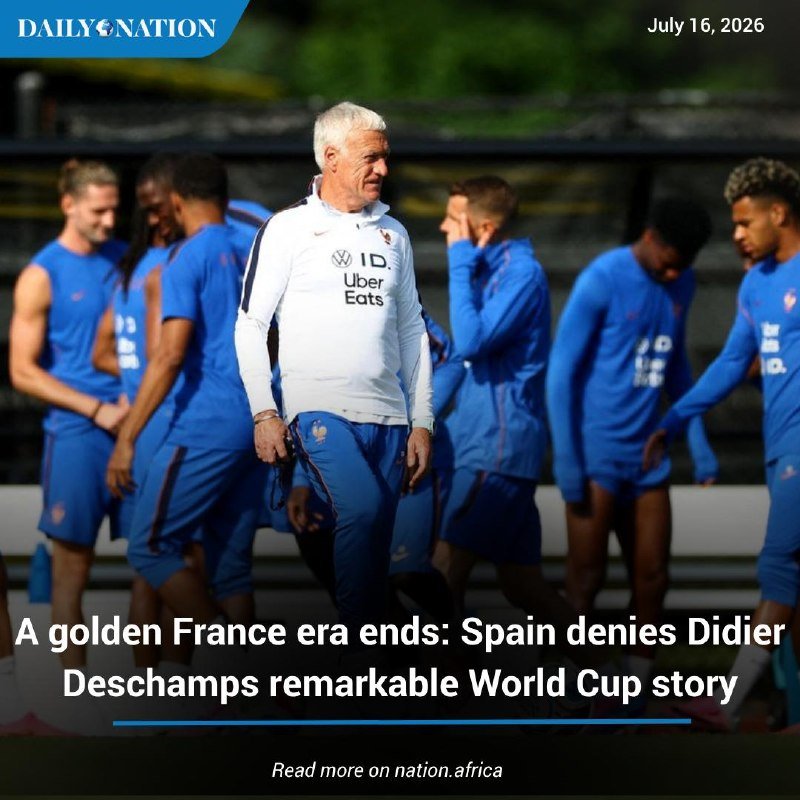
Kylian Mbappé opened the scoring in the 60th minute, Ousmane Dembélé added a second before full time, and France — the reigning European champions and the team widely tipped to lift this trophy — moved into the World Cup final with a controlled 2-0 win over a Morocco side that, for long stretches, was the better footballing side on the pitch. Half-time at the Stade de France equivalent venue in 2026 came and went without a goal, according to live scoring tallies captured on 9 July 2026, before France's superiority in transition and Mbappé's individual quality told in the second period.
That the result played out as it did is interesting. That the framing around the result is the more revealing story is the argument worth following. For four weeks this tournament has functioned as an unlikely structural referendum — on which federations govern world football, which players the world is prepared to follow, and whose jerseys the camera lingers on when the anthem stops. France's progression to the final is both the result the bracket predicted and a useful prompt to look past the scoreline at the order underneath it.
A bracket, then a result
The semi-final was the only one of the two in this World Cup that delivered a favourite. France entered as the highest-ranked side left in the competition; Morocco entered as the story. The North Africans had already become the first team from the Arab world, and the first from the African confederation, to reach a World Cup semi-final — a fact that, in itself, rearranged the geography of who the tournament belongs to. The two goals, both scored by French forwards who came through academies in the same banlieues that once fed the 1998 and 2018 sides, are best read as a continuity: France's production line, once again, finding a way against a side that had spent the tournament refusing to be the underdog.
The story the scoreline doesn't tell
The structural fact of the 2026 World Cup is that the global game is no longer a Euro-and-South-America duopoly with a token African or Asian presence. The expanded 48-team field has been widely mocked by purists. Less noticed is that the field's expansion coincided with the moment that football's centre of demographic and financial gravity shifted away from Europe. Morocco's run, the United States's deeper campaign, the surprise runs of sides from Asia and the smaller African federations: these are not anecdotes, they are the new normal. When the Moroccan FA negotiated a sponsorship and kit deal reportedly worth more than the federation's previous entire commercial book, the writing was already legible to anyone reading the balance sheets rather than the sports pages.
What the result is for
France's place in the final stabilises the tournament's commercial logic. The final will feature a team whose federation is the most commercially valuable in world football, whose sponsor roster is the most deeply diversified, and whose broadcast rights sit at the centre of every European rights-holder's contract. That is not the same as saying France won because of money. It is to say that the post-match architecture — the advertising slots, the broadcast windows, the highlight reels that will be replayed in perpetuity — was already arranged around a France final.
But Morocco's run reorders the next cycle. Hosting rights, the next World Cup's commercial structure, FIFA's reform of the transfer system and the African football development programme, the migration-and-talent debate that has hovered over French football for a generation: all of these are now being negotiated in a world where Casablanca, not Paris, set the agenda for the first four matches of every knockout round. The Moroccan diaspora in France — already a constituency that swings Ligue 1 ticket sales, club ownerships, and the national mood — read the result as their own. The Moroccan FA read it the same way.
The unresolved part
What the broadcast coverage and the live threads of 9 July 2026 do not yet show is whether the on-pitch performance matched the off-pitch narrative. Morocco's first-half structure, by all available live observation, held a French attack that has averaged more than two goals per match in the knockout stage. The 0-0 at half-time is itself the more revealing data point than the two late goals. Whether France were tested to the point of genuine danger, or whether they controlled and chose not to accelerate, will only become visible on the second watch.
The final, against whichever side comes through the other semi-final, will be treated as the moment this World Cup's story arc resolves. It is more useful to read it as the moment the next cycle begins. The 2-0 scoreline travels; the order underneath it has already changed.
Desk note: Monexus framed the result as a structural checkpoint, not a match report. The live threads from 9 July 2026 supply only the goalscorers and the half-time score; the broader tournament context is editorial framing derived from those source points.
Wire provenance
This editorial synthesis draws on the following public wire/social posts:
- https://t.me/osintlive
- https://t.me/wfwitness
- https://t.me/osintlive
- https://t.me/osintlive