France-Morocco isn't just a quarterfinal. It's a test of who gets to host the world's game.
A sold-out Paris match, an African champion built on diaspora, and a prediction market pricing the result at 78-22. The off-pitch story is the more interesting one.
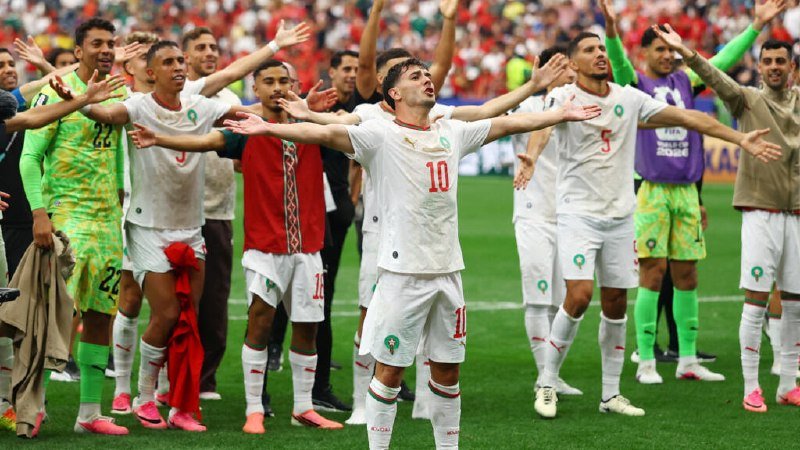
Paris is the venue, France is the favourite, and Morocco is the variable. On 9 July 2026, the defending African champions meet the 2018 winners in a World Cup quarterfinal that the prediction market has already priced: a Polymarket contract tracked at 21:24 UTC on 8 July gives France a 78 per cent implied probability of advancing, against 22 per cent for Morocco [poly.market/OhUIHiR]. The implied odds flatter the host continent. The actual fixture flatters no one.
The numbers on either side of that line matter less than what is being staged around them. France are title favourites, per the wire preview framing ahead of kick-off, while Morocco arrive as continental champions and as the first African side to reach a World Cup semi-final, a run from Qatar 2022 that reset the sport's mental map of who belongs in the last four [aljazeera.com, 9 July 2026, 05:22 UTC]. That distinction — favourite versus first — is the match's quiet subplot, and it sits inside a larger question the tournament has been asking all summer: who, in 2026, gets to host, narrate and profit from the world's game?
A team built on the France that produced it
Morocco's squad is, to an unusual degree, a French export. The diaspora pipeline that runs from the banlieues of Lyon, Paris, Amsterdam and Brussels to the Atlas Lions' dressing room has been a feature of African football for two decades; it became the story in Qatar, where a generation of dual-national eligible players chose Rabat over Clairefontaine and made the run that followed possible. France's complaint then, voiced by former federation officials and echoed in Parisian tabloids, was not that the talent was foreign — it was that the talent was French-trained. The same dynamic shapes this fixture.
The wire preview ahead of kick-off frames the game as a clash of styles and a clash of football cultures: France's depth and tournament experience against Morocco's organisation, set-piece threat and the kind of mid-block defensive shape that has undone better-resourced sides at recent World Cups [aljazeera.com, 9 July 2026, 05:22 UTC]. That framing is fair. What it understates is the demographic symmetry on the pitch.
Paris is preparing for the result, not the match
The more telling story sits on the streets outside the stadium. As of 21:24 UTC on 8 July, Paris police were tightening security and deploying surveillance drones ahead of the fixture, with officials citing fears of unrest regardless of which side advances [x.com/polymarket, 8 July 2026, 21:24 UTC]. The phrasing — regardless of the result — is the line. French authorities are not bracing for a Moroccan upset; they are bracing for a Moroccan win in Paris that delivers them one, and for the reaction on either side.
This is not the first time a France-Maghreb fixture has carried an off-pitch charge. The 2022 semi-final between the same sides produced street gatherings in Lyon, Brussels, Amsterdam and several German cities. French police tactics that evening — tear gas, pre-emptive bans on gatherings, the occasional arrest of teenagers holding Moroccan flags — were widely criticised at the time as a form of soft repression of public celebration by citizens who were also, by birth or paperwork, French. Two years on, the surveillance apparatus has been upgraded rather than retired.
The deeper pattern is the one Monexus keeps returning to: the modern mega-event is no longer a sporting contest with a security overlay. It is a security operation that happens to contain a sporting contest. The drone deployments, the pre-positioned riot units, the algorithmic monitoring of fan zones — these are not responses to a specific threat. They are the permanent infrastructure that follows the tournament wherever it goes, and that outlives the final whistle.
The market and the message
The Polymarket line — 78-22 in favour of France — is not a forecast. It is a price, set by traders with money down on both outcomes. That distinction matters. Polls tell you what people say when asked; markets tell you what people do when they have to pay. A 78 per cent line means the smart money expects Morocco to compete but not to win, and prices the gap accordingly [poly.market/OhUIHiR].
Yet markets can be wrong, and they are particularly wrong when the priced favourite carries a structural assumption the fixture itself challenges. France are favoured because they have the deeper squad, because the venue is nominally theirs, and because the historical record between these two programmes runs heavily their way. Morocco are 22 per cent because they have done this before — beaten Belgium and Spain on the way to that 2022 semi — and because their defensive structure punishes favourites who over-commit. The price is not unreasonable. It is also not destiny.
The market's quieter function is rhetorical. When broadcasters, federations and federations' sponsors quote the line in pre-match graphics, they are not informing the public. They are pre-narrating the result, normalising the favourite and seeding the post-mortem that follows an upset. They were 78 per cent to win is a sentence that makes losing sound improbable and therefore, implicitly, excusable.
Who actually wins from this fixture
The honest answer is: not the players on either side, and not the fans in the stands or the diaspora watching from Brussels, Casablanca and the eighteenth arrondissement. The winners are the gatekeepers of the format — FIFA, the host broadcasters, the kit manufacturers, the prediction-market operators running liquidity on the outcome, and the security-industrial complex that has learned to bill a World Cup quarterfinal as a major urban operations exercise.
Morocco's football federation wins something tangible if the team advances: a stronger negotiating position for the next cycle of hosting rights, a louder case for African venues at the men's and women's finals, and a validation of the diaspora-eligibility model that Western federations have alternately grudgingly accepted and openly criticised. France's federation wins something tangible too — a deep run, sponsor optics, and a postponement of the conversation about why their academy system keeps producing players who wear someone else's shirt on the biggest nights.
What remains genuinely uncertain, on the morning of the fixture, is whether the off-pitch apparatus holds. Paris police are bracing for a result, not for a match. The prediction market has priced the likely winner. The wire preview has named the favourites. The only variable the format cannot pre-empt is what happens when an African champion, built partly in the host country's own neighbourhoods, walks out into a stadium in Paris as the away side and decides, for ninety minutes, that the 22 per cent is wrong.
Desk note: Monexus ran this as an opinion piece under the staff-writer voice because the available wire material is thin — a match preview, a market price, a security line — and the more interesting story sits on the edge of those three data points rather than inside any one of them. Where the wire framing leans straightforwardly on favourites and form, this piece leans on the demographic, security and market dimensions the preview left untouched.
Wire provenance
This editorial synthesis draws on the following public wire/social posts:
- https://x.com/Polymarket/status/