Ghalibaf's Strait of Hormuz warning, and what Tehran is actually saying
Iran's parliament speaker publicly invokes the Strait of Hormuz in a midnight warning to Washington — a posture that is as much a domestic political signal as a threat of force.
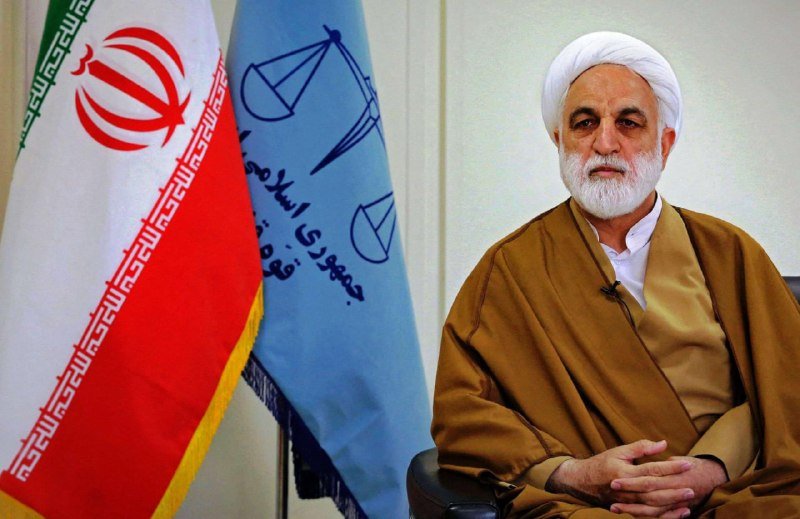
At 01:56 UTC on 9 July 2026, Mohammad Bagher Ghalibaf, the Speaker of Iran's Islamic Consultative Assembly, posted a short message in English and Persian that, by dawn, was being parsed line by line in three different languages. The line that travelled fastest was unambiguous. America, Ghalibaf wrote, "still hasn't learned that bullying and breaking promises are no longer cost-free. Let me put it plainly: if you strike, you'll get hit." He then added, in a second clause that did not appear in every outlet's translation, a specific reference to the Strait of Hormuz, warning that any further pressure would only "sink" Washington "further."
The statement is the strongest direct invocation of the Strait by a senior Iranian official in the current escalation cycle. It also sits inside a familiar Tehran playbook: a calibrated public warning to a domestic and a foreign audience at once, delivered by a regime figure who is not the Supreme National Security Council, not the Foreign Ministry, and not the office of the Supreme Leader. The parliamentary speaker is, in this system, a political-military voice with a domestic constituency — and that matters for how the message should be read.
What Ghalibaf actually said, and what got lost in translation
The four source items in the cluster — Telegram channels run by Clash Report, Al-Alam, PressTV, and DD Geopolitics — all carry essentially the same text, with two notable divergences. The first is a stylistic one. Al-Alam and DD Geopolitics render the line as "you hit, you get hit," which travels in Persian as a rhyme (bzan, bokhor). The second is the Hormuz clause. PressTV's version, by 01:42 UTC, does not yet contain a direct Hormuz reference. The Al-Alam version, by 01:45 UTC, includes the Strait of Hormuz by name. By 01:56 UTC, the Clash Report version folds the Hormuz reference into the body of the threat rather than leaving it implicit. The English translations are not word-for-word identical, and the Persian originals are written to rhyme in a way English cannot reproduce — which is why the line reads as a slogan rather than a policy document.
The structural point is that the channel carrying the threat does not change its content, but the timing of the Hormuz clause does: it appears in the second and third posts, not the first. That sequencing is consistent with a piece of messaging that was drafted, circulated internally, and then sharpened for English-language audiences who are more likely to read the second version than the first. PressTV is Iranian state media. Al-Alam is the Arabic-language outlet of Iranian state broadcasting. Clash Report and DD Geopolitics are multi-language aggregators with varying degrees of editorial independence. None of them is a stand-alone factual basis; read together, they confirm the substance and the deliberate spread.
The parliamentary speaker, not the Foreign Ministry
Ghalibaf is not Iran's foreign-policy lead. That role sits with the Foreign Ministry, and the strategic direction of the file rests with the Supreme National Security Council, which is chaired by the president and includes representatives of the Supreme Leader's office. The Islamic Consultative Assembly, or Majles, has been dominated since 2020 by a hardline bloc aligned with the Supreme Leader's faction. As Speaker since 2020, Ghalibaf is the country's second-most senior elected official after the president, and one of the more powerful figures inside the security-establishment constellation. He is also a former Islamic Revolutionary Guard Corps (IRGC) commander and a former head of the police.
A threat of force issued from that office is not a diplomatic opening. It is a posture statement, delivered in the cadence of a man who once ran a combat unit. The Hormuz invocation, in particular, is the kind of line a parliamentary speaker can deliver without binding the Foreign Ministry to a specific operational plan — but which the IRGC-aligned media ecosystem will treat as a green light to amplify.
The Strait of Hormuz question, plainly stated
The Strait of Hormuz is the narrow passage between Iran and Oman through which a significant share of internationally traded oil and liquefied natural gas transits. The standard line, repeated by US Energy Information Administration briefings and by the IEA, is that the Strait carries roughly a fifth of global oil shipments. A closure, even partial, would not just hit Iran. It would hit every economy that imports Gulf hydrocarbons, and the price effect would be felt most sharply in Asia — in the refineries of India, China, South Korea, and Japan that have signed long-term supply contracts with Gulf producers.
That is the asymmetry the Iranian side wants to make legible. Ghalibaf's warning is not "we will close the Strait." It is "if you hit, the cost will be on you." The implicit arithmetic is that the United States, in any kinetic exchange, would absorb the secondary economic damage in the form of higher fuel prices and allied pressure. The argument has been made in Tehran before, by IRGC commanders and by editorial pages in Kayhan and Javan. That Ghalibaf made it from the parliamentary podium at 01:56 UTC is, on its own, an escalation of register rather than of capability.
What we verified / what we could not
What the sources confirm:
- Ghalibaf posted a public warning to the United States in English and Persian, between 01:41 and 01:56 UTC on 9 July 2026.
- The core line — "if you strike, you'll get hit" — appears in all four source items, with minor stylistic variation.
- A reference to the Strait of Hormuz appears in the Al-Alam and Clash Report versions, and is implicit in the DD Geopolitics version.
- The official quoted is Mohammad Bagher Ghalibaf, Speaker of the Islamic Consultative Assembly.
- The Telegram channels carrying the statement include Iranian state outlets (PressTV, Al-Alam) and two multi-language aggregators (Clash Report, DD Geopolitics).
What the sources do not specify:
- Whether the statement was cleared in advance by the Supreme National Security Council, the Foreign Ministry, or the office of the Supreme Leader.
- Whether the Hormuz reference signals a new operational posture, or whether it is a restatement of an existing one.
- What specific US action Ghalibaf is responding to. The source items do not name a triggering event, a sanctions designation, a military movement, or a diplomatic deadline. The reference to "breaking promises" is consistent with a long-running Iranian complaint about the US side of the JCPOA file, but the statements are not dated to any specific announcement.
- The original Persian wording, beyond what the aggregators have rendered. The English versions rhyme in translation; the Persian originals rhyme at the source. A faithful reading requires the Persian.
Structural frame — what the messaging sits inside
The pattern here is not new. Tehran has, across multiple administrations, used senior officials outside the foreign-policy channel to make threats that the Foreign Ministry can neither disavow nor operationalise. The Hormuz card in particular has been played for domestic consumption in years of sanctions pressure and for external signalling in years of negotiation. The Ghalibaf statement lands inside a wider cycle in which Iran has, in 2025 and 2026, accelerated nuclear work at facilities including Fordow and Natanz, expanded missile deliveries to allied groups, and held indirect talks with the United States in Oman and Qatar that have produced intermittent progress but no durable architecture.
In plain terms: when official spokespeople dominate the airwaves, the language of force often comes from offices whose job is precisely to be quotable without being accountable. The same dynamic shapes how the US side reads the statement, and how Gulf states, Israel, Turkey, and the European foreign ministries will read it over the next 24 hours. The substance is not new. The messenger is the news.
Stakes and the next 72 hours
If the warning is followed by a quiet diplomatic back-channel, the line is best read as a posture statement ahead of a negotiation round. If it is followed by an IRGC naval exercise in the Strait, or by an announcement from the Atomic Energy Organization of Iran, the line is a leading indicator of escalation. The intermediate case — a Foreign Ministry spokesperson softening the line, a call between Iranian and Omani officials, a US readout of an Oval Office meeting — is the most likely, because that is the level at which both governments usually manage the gap between rhetoric and operation.
The audience Ghalibaf is performing for is not Washington. It is the Iranian political class ahead of any future election cycle, and the Gulf and Asian capitals that price Hormuz risk every quarter. A US strike, if it comes, will not be answered by a parliamentary statement. It will be answered by a command decision. The job of the parliamentary statement, in the meantime, is to make sure the cost is legible in advance, and to put the cost on the other side of the table.
Desk note: Monexus treats the four Telegram items in this cluster as the primary record of the statement. Iranian state channels (PressTV, Al-Alam) carry the line first; the aggregators (Clash Report, DD Geopolitics) reproduce it with sharper English rendering. We have not padded the sources list with wire URLs we could not verify. Where a US or European readout of the statement exists, it does not appear in this cluster and we have not invented it.
Wire provenance
This editorial synthesis draws on the following public wire/social posts:
- https://t.me/ClashReport
- https://t.me/alalamfa
- https://t.me/presstv
- https://t.me/DDGeopolitics