'Godzilla Minus Zero' trailer drops with a nuclear payload — and a franchise reckoning baked in
A new Godzilla trailer puts a nuclear bomb at the centre of the frame. The franchise's longest-running argument — with itself, and with the country that built it — comes with it.
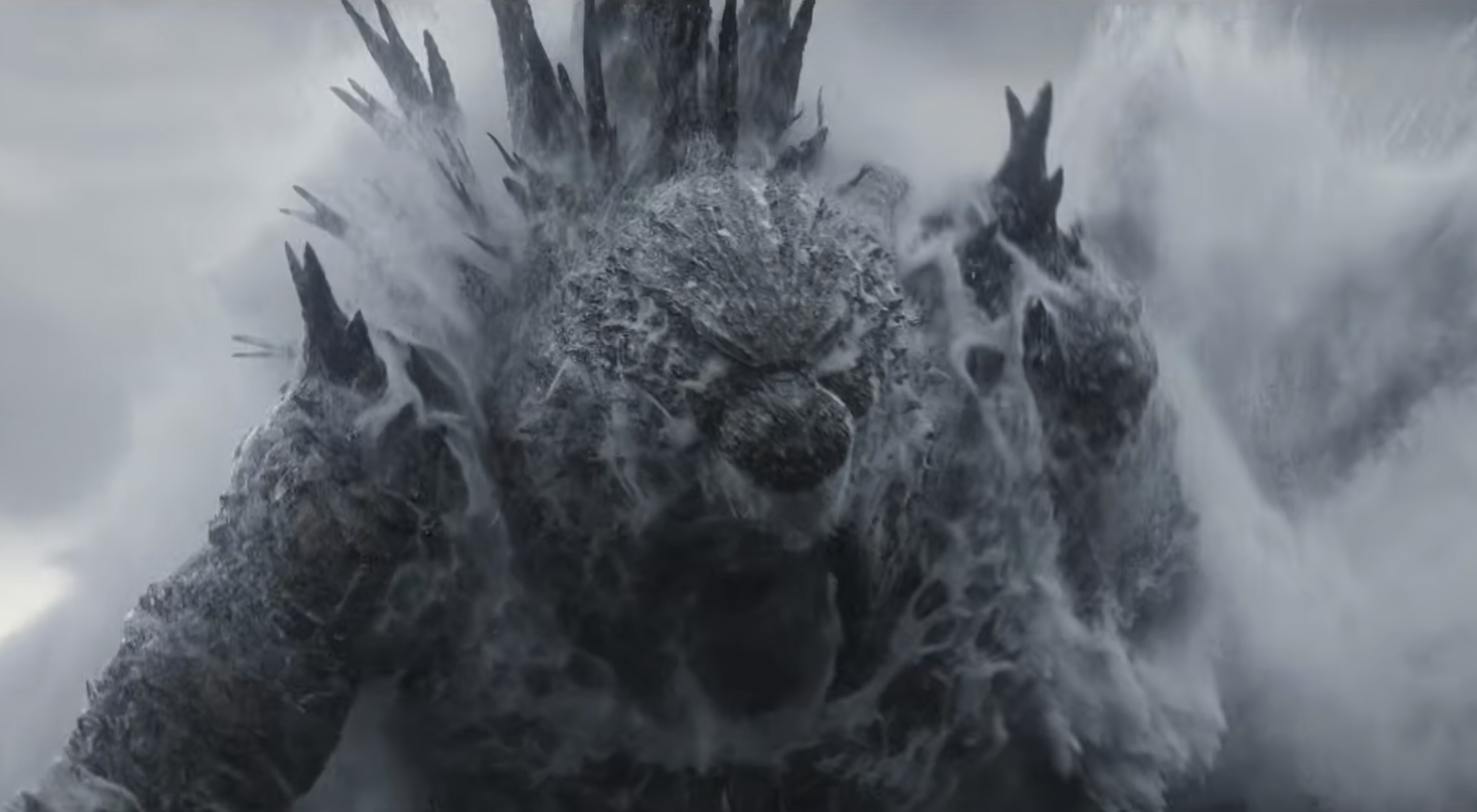
A new trailer for "Godzilla Minus Zero," released on 9 July 2026, places a nuclear bomb at the centre of its imagery: soldiers dropping ordnance on the title monster as it rampages through an unspecified cityscape. The film is being positioned by Toho and its production partners as a direct sequel within the studio's ongoing kaiju slate. The trailer's signal is unmistakable — the franchise is returning, deliberately, to its 1954 origins.
The provocation is not subtle. For seven decades Godzilla has carried the imprint of the bombings of Hiroshima and Nagasaki, of Lucky Dragon No. 5, of Bikini Atoll, of the Pacific Proving Grounds. A new entry that shows soldiers deploying a nuclear weapon against the monster — rather than the more familiar framing of nuclear anxiety as the monster — is a meaningful tonal shift. The bomb is no longer the wound the creature embodies. The bomb is what the humans have decided to use.
What the trailer actually shows
According to Variety's 9 July 2026 coverage, the trailer for "Godzilla Minus Zero" depicts soldiers delivering a nuclear weapon to Godzilla during a fresh rampage sequence. The film is described in the trade report as a direct sequel within the popular kaiju franchise, continuing the lineage of Toho's monster properties. The promotional artwork released alongside the trailer shows the creature in its recognisable silhouette, scaled against a destroyed urban horizon.
The decision to make the bomb a deliverable tool — visible, mounted, weaponised — is a reversal of the original film's moral economy. In Ishiro Honda's 1954 picture, the weapon is implied, mourned, and feared. The Oxygen Destroyer that kills the original Godzilla is a civilian scientist's desperate, suicidal act — the man who invented it uses it and dies with the creature, in part to ensure the technology does not survive him. The bomb is the thing that produced the monster, and the scientist's last act is to take the next escalation off the table. The 2026 trailer appears to be doing the opposite. The next escalation is on the table, in the soldiers' hands.
The franchise argument, in plain terms
Toho has spent the last two decades reasserting control over a property that, for most of its commercial life, lived with American licensees. Legendary Pictures and Warner Bros. delivered the MonsterVerse from 2014 to 2024, with "Godzilla Minus One" (2023) marking a sharp return to Japanese production, Japanese tone, and Japanese box-office primacy. That film won the Academy Award for Best Visual Effects and ran on a budget that, by Hollywood tentpole standards, was austere. Its success re-priced the proposition: a Japanese-made Godzilla, anchored in period drama and post-war grief, could out-perform the American-made version globally and at home.
"Minus Zero" inherits that inheritance. The move from "Minus One" — a film about the human cost of the bomb — to a sequel that puts a bomb back in the hands of soldiers is, in editorial terms, a course correction. Where "Minus One" looked backward at 1945 and the years that followed, "Minus Zero" is making a different argument about the present. The franchise is no longer processing historical trauma through allegory. It is staging an active confrontation between two nuclear-age actors: the country that built the bomb, and the country that received it.
This is, plainly, an argument that runs through Toho's house. The studio's commercial incentives — Japanese production, Japanese cast, Japanese box-office dominance — are not separable from the political reading the imagery invites. A monster born of nuclear testing, faced with soldiers deploying another nuclear weapon, in a city the audience is invited to read as Tokyo. The layering is not subtext. It is the assignment.
What the wider Japanese frame looks like
The "Godzilla" property has always been a vehicle for Japan's public conversation with its own twentieth century. The 1954 original was released nine years after Hiroshima and Nagasaki, in the same year as the Lucky Dragon incident, and weeks before the United States' Castle Bravo test at Bikini Atoll. The creature's first rampage is, in the film's own dialogue, a return — a punishment visited on a country that had experimented with forces it did not understand. The franchise has used that premise to process subsequent anxieties: the 1984 and 1990s entries, Shin Godzilla in 2016, and now the Minus sequence.
The new trailer's positioning — soldiers, bomb, city — is a tonal choice within an industry that has, in recent years, been unusually frank about the subject. Japan's security debate has shifted markedly since 2022, with the country committing to a substantial defence-buildup and explicitly naming China, North Korea and Russia as the strategic environment in which that buildup is occurring. The cultural register has followed. A trailer in 2026 that puts a bomb in soldiers' hands reads differently in Tokyo than a 1954 poster that put a dying fish on a beach.
The American MonsterVerse entries, for contrast, generally de-nuclearised the property. The 2014 American Godzilla, the 2019 "King of the Monsters," and the Legendary cycle overall treated the monster as a disaster-cinema protagonist — a force of nature to be survived, contained, or marshalled. The bomb, when it appeared, appeared as a setup for a bigger monster. The shift back to Japanese production is also a shift back to the bomb as the actual subject.
What remains uncertain
The trade coverage does not specify a release date, a confirmed director, or a release pattern for "Minus Zero" beyond the trailer drop. The production team, budget, and the degree to which the film will continue the period-drama register of "Minus One" — or break from it — are not addressed in the materials available. The promotional artwork, reproduced in Variety's 9 July 2026 report, shows the creature at a scale that suggests large-scale urban destruction, but the trailer's narrative specifics — who the soldiers are, what city is in frame, and what the bomb is supposed to accomplish — remain to be confirmed in subsequent material.
There is also an open question about how the film will land with the franchise's international audience. The MonsterVerse cycle made Godzilla a reliable global tentpole property for a full decade. "Minus One" out-performed expectations at the international box office while remaining unmistakably Japanese in register. Whether "Minus Zero" splits the difference — franchise-scale action on a Japanese tonal keel — or commits to one side, will be visible in the next round of marketing. The trailer is the studio's first move. The audience's reception is the second.
The stakes, plainly
The franchise has a choice to make. It can treat the bomb as a set piece — an escalation in a disaster-cinema escalation ladder, in the Legendary tradition. Or it can do what the 1954 original did, and what "Minus One" did again in 2023: place the bomb at the centre of the moral argument the film is having, and let the monster be the figure through which that argument moves. The 9 July 2026 trailer suggests Toho is choosing the second reading. The soldiers have a bomb. The audience has the original. The argument is seventy-two years old and not finished.
— Monexus framed this as a tonal and political story, not a marketing one: the trailer's imagery is doing the work the rest of the campaign will have to live up to. The trade wires are running the release beat; this publication is running the assignment.
Wire provenance
This editorial synthesis draws on the following public wire/social posts:
- https://en.wikipedia.org/wiki/Godzilla_Minus_One
- https://en.wikipedia.org/wiki/Godzilla_(1954_film)