Wavves and Say Anything Team Up on Cherry Soda — and a Claymation Funeral
Nathan Williams and Max Bemis release a joint album and lean on stop-motion for the first single's video — a small-format bet on physicality at a moment when the music industry's attention economy has moved elsewhere.
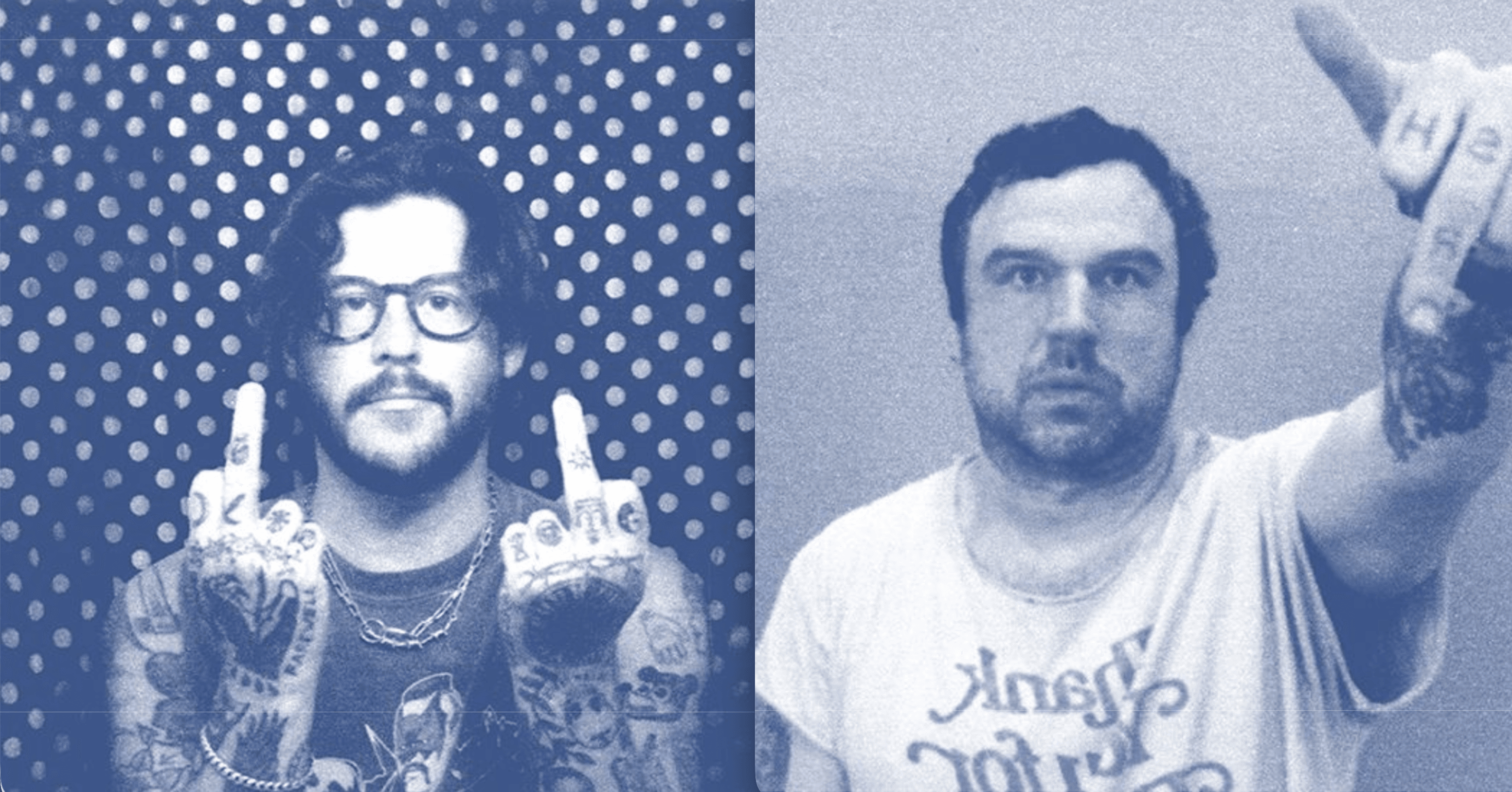
When Nathan Williams and Max Bemis began swapping demos in 2025, neither artist framed the project as a referendum on the state of indie rock. The result is Cherry Soda, a joint album by Wavves and Say Anything that arrives on 9 July 2026 with a deliberate aesthetic choice attached: the lead single "Deathx1k" has been paired with a claymation music video, the kind of slow, hand-shaped visual that streaming-era pop has largely abandoned in favour of performance clips, lyric reels, and vertical-format shorts.
The release lands in an attention economy that has moved on from album-as-event toward algorithmically fragmented singles. A full collaborative LP between two veterans — Williams fronting Wavves since 2006, Bemis leading Say Anything since 2000 — is a counter-programming move, not a passive one. It assumes an audience still willing to follow a unified record across a single release week, and a visual idiom patient enough to outlast the scroll.
The pairing, and why it tracks
Wavves and Say Anything have circled each other for the better part of two decades. Both bands cut their teeth in the mid-2000s emo and noise-pop underground; both have cycled through major-label and DIY phases; both have a documented reputation for hook-forward songwriting and self-deprecating humour. Pitchfork's coverage of the announcement, published 8 July 2026, frames the collaboration as a natural fit rather than a novelty crossover, noting that the two artists share a constituency of listeners who came of age during the MySpace-era blog-rock boom and have stayed loyal through long fallow periods.
The singles cycle has emphasised brevity and accessibility. "Deathx1k" runs under three minutes, and its claymation treatment — characters shaped frame by frame, a literal funeral procession staged in modelling clay — borrows the visual grammar of 1990s alternative video without nostalgia cosplay. The aesthetic is recognisably handmade at a moment when most music video output is either heavily CGI or shot in a single warehouse location.
The claymation choice, read structurally
Stop-motion music video production is among the most expensive and least scalable formats left in the industry. A claymation piece can require weeks of frame-by-frame shooting for a four-minute song. That a self-funded or modestly budgeted indie collaboration would spend there rather than on a vertical-friendly performance clip is a small but legible statement: the project is not optimising for TikTok-discoverability metrics in the conventional sense.
The broader pattern is worth naming without overstating it. As streaming royalties per stream have continued to compress, and as short-form video has come to dominate discovery for younger listeners, independent artists with established audiences have begun doubling down on formats that reward attention rather than volume — long-form video, narrative visuals, physical product. Cherry Soda sits inside that pattern. Whether the bet pays off depends on whether the band's listener base, much of it now in its thirties and forties, treats the album as a destination rather than background.
Counter-read: novelty, not strategy
The counter-narrative is straightforward and worth airing. A joint album by two nostalgia-coded acts is, at minimum, also a marketing decision: a one-off that reactivates dormant fan segments for both artists, generates press coverage from outlets that wouldn't otherwise cover a single release from either, and uses the surprise of the pairing as a discovery vector in itself. Read this way, the claymation video is a hook — distinctive enough to surface in feeds, quirky enough to be shared — rather than a philosophical position.
That reading is not inconsistent with the structural one. The same release can be both a calculated audience-reactivation play and a genuine artistic statement; the two are not mutually exclusive, and treating them as such would be reductive. What does follow from the counter-read is a tighter claim about expectations: Cherry Soda is unlikely to reset either artist's commercial trajectory, and likely isn't trying to. Its value is in maintaining relevance and giving two fanbases a shared object at a specific moment, not in launching either act into a new tier.
What the release confirms and what it leaves open
What is established by the announcement is the release date (9 July 2026), the title (Cherry Soda), the principal artists (Nathan Williams and Max Bemis), the lead single ("Deathx1k"), and the visual treatment (claymation). What remains to be seen — and what the available reporting does not address — is the album's runtime, track count, label arrangement, and whether the stop-motion treatment will be carried through subsequent videos or limited to the lead single. Pitchfork's 8 July 2026 piece functions as a launch announcement rather than a review; critical reception, streaming-platform placement, and any follow-up visuals are not yet on the record.
The honest framing is that Cherry Soda is a competent, recognisable collaboration between two artists with overlapping histories, treated seriously enough by its principals to merit a labour-intensive visual choice. Whether that seriousness translates into a wider commercial moment, or whether it remains a beloved item for a specific listener cohort, will be visible inside a release cycle rather than at announcement. What the announcement does establish is that both acts are still invested in album-shaped storytelling — a position worth noting in an industry that increasingly doesn't pay for it.
Desk note: Pitchfork's announcement led the wire for this release on 8 July 2026; Monexus treated the collaboration as a story about format and audience rather than about the two acts' prior discographies, which have been extensively covered elsewhere.
Wire provenance
This editorial synthesis draws on the following public wire/social posts:
- https://en.wikipedia.org/wiki/Wavves
- https://en.wikipedia.org/wiki/Say_Anything_(band)