Greenland, Kharg, and the Geometry of American Extravagance
Two declarations, 48 hours apart, expose the same operating logic: territorial acquisition by tweet, ceasefire by proclamation, and a foreign policy whose centre of gravity no longer sits in any one capital.
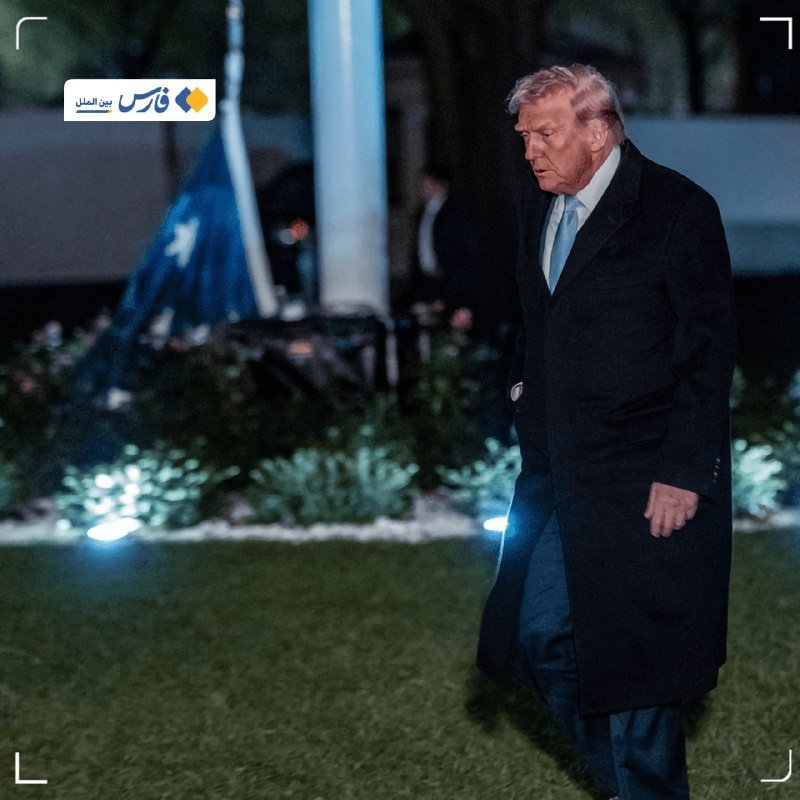
At 03:16 UTC on 9 July 2026, Donald Trump declared that any future drawdown of US forces in Europe would depend "a lot" on Greenland. Twelve hours earlier, he disclosed that Iran had called Washington and wanted to make a deal "very badly." Thirty-five hours before that, he told reporters the US "may take over" Iran's Kharg Island. The thread connecting those statements is not a strategy in the conventional diplomatic sense. It is a pattern of declared intent that treats the maps of three continents as a single negotiable surface.
The pattern matters less for any one announcement than for what the sequence reveals about how American foreign policy is currently being conducted: by short, declarative sentences issued from a podium, blog, or social feed, with no underlying text negotiated between institutions. Reporters chase the quote; allies react to the quote; markets reprice around the quote. The State Department, when it appears at all, appears as a downstream translator rather than a co-author of the line.
The Greenland thread
The Greenland linkage is the oldest of the three strands and the most institutionally entrenched. Trump has previously refused to rule out the use of force to bring the autonomous Danish territory under US control, framing acquisition as a national-security imperative tied to Arctic defence and to the footprint of US Space Command assets. The 9 July statement extends that posture into NATO force posture: the message to European allies is that the conventional guarantee — US troops forward-deployed on the continent — is now functionally contingent on a separate, unrelated territorial transaction. The credibility cost of conditioning a mutual-defence commitment on a real-estate demand is large, but the credibility cost of a US president explicitly tying the two is not offset by any stated alliance framework. It is asserted.
The Iran thread, hour by hour
The Iran track moves on a different, faster clock. On 8 July at 14:34 UTC, Trump said the US "may take over" Kharg Island — the terminal through which the overwhelming majority of Iranian crude has historically transited — as the most recent ceasefire collapsed. By 18:39 UTC, he was assuring the public the renewed conflict would be over "very quickly." At 22:35 UTC, a US official confirmed to CNN that the ceasefire had "at least temporarily ceased." By 00:14 UTC on 9 July, Trump was reporting that Tehran had called and wanted a deal "very badly." That is five materially distinct positions on the same question inside ten hours.
The plausible alternative reading is that this is posture, not policy — a negotiating style in which the threat of seizure and the offer of a deal are floated in the same news cycle to maximise Tehran's uncertainty about which way the wind will settle. The reason that reading only partially holds is structural: a posture that openly includes the seizure of a foreign nation's principal oil export terminal is no longer posture. It is a documented public statement by a head of state that force against another country's critical infrastructure is on the table. Even if no such operation follows, the statement itself has already moved the world price of crude and the calculus of every Gulf ministry of defence that watched it land.
What sits underneath
What connects Greenland and Kharg is not ideology. It is a view of the international order as a balance sheet of assets that the United States is entitled to reassign. Greenland is reframed from a Danish autonomous territory into an Arctic platform. Kharg is reframed from an Iranian export node into a chokepoint that, if held by Washington, would give the United States effective discretionary influence over Iran's revenue stream without the burden of formal occupation. In both cases the public framing is costless acquisition — the suggestion that strategic depth can be obtained without the long, grinding institutional work of alliance management or counter-insurgency.
This is not the first time a US administration has spoken openly about seizing foreign infrastructure, but it is the first time in the post-1945 period that such statements are issued without the surrounding architecture of a congressional authorisation, a UN Security Council route, or even a coherent inter-agency process publicly defending them. The alliance system was designed precisely to make such moves expensive in domestic political terms. The current sequence is testing whether that cost has eroded.
The stakes over the next twelve months
Three concrete trajectories follow if the pattern continues. First, European NATO members will continue to build redundant surveillance, cyber and rapid-reaction capacity independent of US enablers, accelerating a quiet decoupling that already runs through AWACS replacement, space-based ISR, and intra-European arms industrial consolidation. Second, Gulf states will treat the Kharg statement as a planning input: if the US can openly discuss seizing Iranian export infrastructure, the implicit threat to Saudi, Emirati or Iraqi equivalent nodes is non-zero, and hedging — toward China-brokered arrangements, toward expanded sovereign gold holdings, toward indigenous refining capacity — becomes the rational move. Third, the price of the negotiating style will compound: each cycle of declared seizure and offered deal burns credibility faster, which means the next Iranian administration — or the next Danish government, or the next Greenlandic independence referendum — has marginally less reason to treat the next US statement as the basis for a serious negotiation.
The counter-point worth holding is that the same pattern has produced concrete deals in the past, including in US–North Korea and US–Venezuela contacts, where maximalist opening rhetoric preceded quieter, technical arrangements. The structural reason to discount that precedent now is that Iran's regional depth — through partners in Iraq, Syria, Lebanon and Yemen — is not North Korea's, and the second-order effects of a collapsed ceasefire reach further, faster, than any of the earlier analogues.
What remains genuinely uncertain, on the evidence available at 03:16 UTC on 9 July, is whether the Kharg statement is a negotiating opening, a distraction, or the prelude to a kinetic operation. The sources do not specify. What they do specify, repeatedly, is the tempo: a tempo at which declarations travel faster than diplomacy and any country's strategic planners must price the worst sentence, not the average one.
Desk note: Monexus has read this thread against the wire in real time and chosen to foreground the connective tissue between three announcements rather than the substantive merits of any one — on the working assumption that the tempo itself is the story.
Wire provenance
This editorial synthesis draws on the following public wire/social posts:
- https://t.me/s/polymarket/