A fellowship at Karlovy Vary gives a Swiss-Korean director room to write — and a venue's quiet bid to court global cinema
The Swiss-Korean filmmaker Hae-Sup Sin has been named the first Allwyn Residency Fellow at Karlovy Vary, a corporate-backed prize that signals how lottery money is moving into European arthouse pipelines.
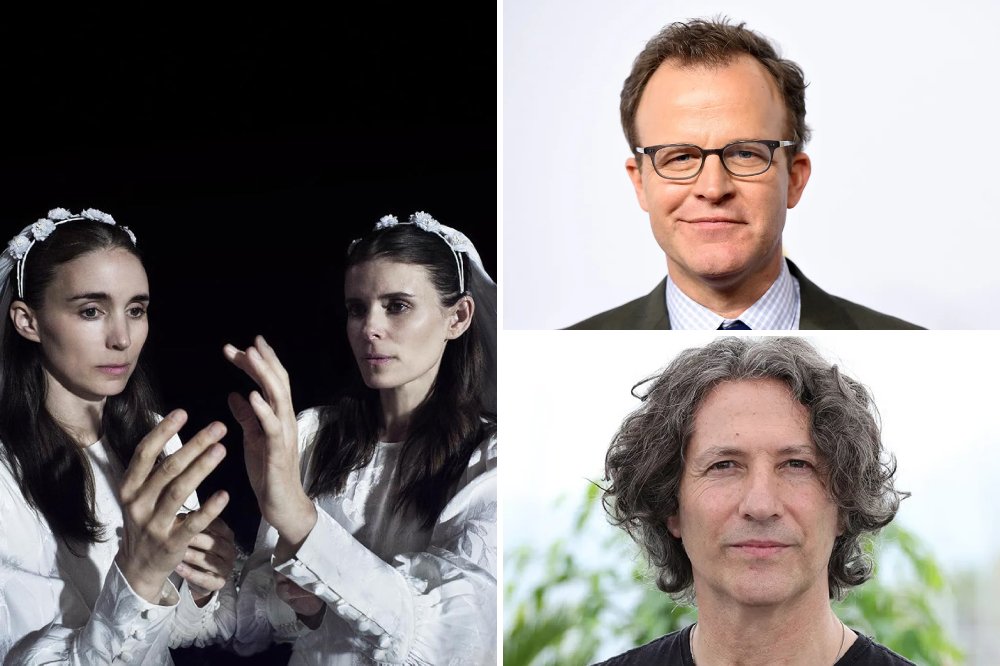
The Karlovy Vary International Film Festival announced on 9 July 2026 that the Swiss-Korean director Hae-Sup Sin has been awarded the inaugural Allwyn Residency Fellowship, a prize attached to the festival's Future Frames programme for emerging European cinema and bankrolled by the Czech-headquartered lottery and gaming group Allwyn. The fellowship, formally titled the Allwyn Residency Fellowship, places Sin at the centre of a structure that film festivals across Europe are increasingly building: a paid residency, a guaranteed screening platform, and a corporate backer that gains both a tax-efficient cultural credential and a year-round relationship with the director whose project it underwrites (Variety, 9 July 2026).
The fellowship is the kind of soft infrastructure that does not show up on a red-carpet photo but quietly decides whose voices get a next film. Sin is the named beneficiary, but the winners include the festival, which gains a headline for its 2026 industry programme; Allwyn, which secures a credible arts partnership under the new name it adopted after the 2022 rebranding from Sazka Group; and the Future Frames platform, which was launched in 2015 to surface European directorial talent outside the better-known festival circuit.
A prize aimed at the script, not the screening
Future Frames, the umbrella programme inside which the fellowship sits, has historically functioned as a launchpad: directors selected for its strand receive mentorship, industry access and exposure to sales agents during Karlovy Vary. The Allwyn Residency adds a longer horizon. Fellowship recipients are given a sustained, paid block of time to develop a feature script, with the festival and its corporate partner retaining visibility across the writing period rather than only at the moment of premiere.
For Sin, the fellowship lands at a specific professional moment. Sin is a Swiss-Korean director whose work has moved between the two national cinemas in ways that have made him, in industry shorthand, exactly the kind of figure European festival programmers are under pressure to surface: a filmmaker working across European co-production structures, with a body of work that resists tidy national-branding. The Variety report on the announcement, dated 9 July 2026, frames Sin's selection around his trajectory rather than a single breakout title — a presentation choice that signals the festival is investing in the director as a continuing author, not buying a one-off premiere.
The residency was presented at Karlovy Vary in the presence of Allwyn chief executive Robert Chvátal, according to Variety's coverage of the event. Chvátal's presence matters: Allwyn is the rebranded Czech lottery operator that, after its 2022 corporate restructuring, has actively sought out pan-European cultural sponsorships as part of a broader brand repositioning. Putting a CEO on stage at a film festival is not, in itself, unusual. The pattern is.
The corporate-funder question, taken seriously
Lottery companies funding cultural institutions is older than most of the directors they now sponsor. Britain's National Lottery has underwritten British film for two decades; the Dutch and Belgian lotteries support their national film funds; France's Centre national du cinéma draws on levies that include gaming revenue. Allwyn's move into Karlovy Vary sits inside a recognisable European model in which gambling-derived margins are recycled into prestige cultural goods.
The case for that arrangement is straightforward. Lottery operators are, in most jurisdictions, state-licensed monopolies or tightly regulated oligopolies with mandated contributions to public-good causes. Spending a portion of that contribution on film festivals is defensible: the same logic that pays for museums pays for residencies. The case against it is equally straightforward and rarely aired in the press releases. A fellowship funded by a gaming group creates a structural dependency: the programmer is answerable, in some practical sense, to a sponsor whose business model depends on consumer behaviour that public-health authorities across Europe are increasingly treating as a harm-reduction problem. The director who wins the fellowship is not compromised by that fact. The ecosystem that selects the fellowship's winners is.
There is no public evidence that Sin's selection was anything other than artistic. The relevant question is whether the category of prize — a corporate-titled fellowship inside a festival's emerging-talent strand — is one European cinema wants to keep adding to.
A festival in a small Czech spa town thinking like a platform
Karlovy Vary is the second-largest film festival in the Czech Republic after Zlín's animation-focused event and the most prestigious in central Europe. Its industry programme has, over the last decade, oriented itself less around competitive glamour and more around being useful: sales agents attend because the festival surfaces projects they cannot easily find elsewhere; national-film-fund delegates attend because Future Frames reliably produces a cohort of co-production-ready directors.
The Allwyn fellowship should be read inside that orientation. Karlovy Vary is not buying a star; it is buying a workflow. The festival's pitch to Allwyn — and to whichever sponsor follows Allwyn — is that a residency gives the backer a measurable, named, year-round association with a specific European creative, in a period when cultural sponsorship is increasingly judged on attribution rather than mere logo placement. For the director, the pitch is the inverse: a fellowship attached to a recognised festival's industry track buys time, which is the resource the rest of the industry is least willing to provide.
What that arrangement produces in five years is the open question. Residencies can ossify into credits-padding that signals nothing about the work that follows. They can also produce the kind of mid-career film — the third or fourth feature — that European national-film funds consistently struggle to finance because it has neither a debut-talent hook nor a bankable name.
Stakes, and what to watch
The practical test of the Allwyn fellowship is whether Sin's next project, developed under the programme, reaches production with the festival's continued involvement, and whether the fellowship itself produces a second and third recipient whose selection criteria are public and defensible. Variety's reporting does not specify the financial terms of the residency or its duration, and Allwyn has not, as of the announcement, published a programme description beyond the title and the named fellow. That opacity is normal for newly launched prizes and worth noting.
For European cinema more broadly, the larger question is whether corporate-titled fellowships at A-list festivals become a routine layer in the development ecosystem, sitting between public-film-fund first features and private-equity late-stage gap financing. The pattern in the United States, where streamer-branded fellowships and brand-sponsored writers' rooms have become routine, is the relevant precedent. Whether the European version will carry the same trade-offs — sponsor input on project selection, soft editorial constraints, the slow substitution of corporate for public funding — is the thing to watch over the next two festival cycles.
Sin's selection is a plausible artistic choice made inside an increasingly financialised development architecture. Both facts can be true at once, and both deserve to be named.
Desk note: This article leads with Variety's 9 July 2026 announcement and frames the fellowship as a structural question about European cultural sponsorship rather than as a profile piece on the director. The single-sourced factual base is acknowledged in the body; readers seeking further detail on Allwyn's broader sponsorship portfolio or on Karlovy Vary's industry programming should treat this as a starting point, not a survey.