Live Wire
08:47ZPRESSTVPress TV's Farzaneh Ashoorioun says the US and Israel remain convinced they can force Iran into capitulation…08:46ZTASNIMNEWSLabik or Sidmjetbi was echoed by the Turkish caravan in Mashhad#Badarqa_Aghai_Shahid_Iran#must_rise08:45ZAMKMAPPINGIsraeli strikes reported in Hadatha, southern Lebanon08:45ZWFWITNESSIsraeli demolitions reported in Hadatha, southern Lebanon08:45ZALLAFRICAZimbabwean Man Sought by UK Police Over Alleged Murder of Wife, Two Daughters08:44ZTWOMAJORSRussian 255th Motor Rifle Regiment UAV operators share combat footage from Konstantinovskoe direction08:44ZDDGEOPOLITPower outages reported in Kyiv08:42ZTHECRADLEMAmnesty International documents indiscriminate air strikes in Lebanon, says evidence shows disregard for civi…
Markets
S&P 500747.03 0.22%Nasdaq25,871 0.20%Nasdaq 10029,253 0.27%Dow523.28 0.10%Nikkei92.64 0.10%China 5033.22 0.66%Europe88.26 0.09%DAX41.31 1.76%BTC$62,932 1.19%ETH$1,755 0.89%BNB$572.49 1.65%XRP$1.1 1.44%SOL$78.19 1.57%TRX$0.331 0.94%HYPE$68.18 0.41%DOGE$0.0729 1.99%RAIN$0.0145 1.75%LEO$9.49 0.82%QQQ$715.84 0.62%VOO$686.66 0.20%VTI$368.62 0.10%IWM$294.31 0.28%ARKK$80.5 0.42%HYG$79.66 0.00%Gold$376.92 0.66%Silver$53.53 1.33%WTI Crude$110.46 1.56%Brent$42.87 1.61%Nat Gas$11.57 0.26%Copper$37.07 0.00%EUR/USD1.1404 0.00%GBP/USD1.3348 0.00%USD/JPY162.49 0.00%USD/CNY6.8002 0.00%
CLOSEDNYSEopens in 4h 40m
The Monexus
Vol. I · No. 190
Thursday, 9 July 2026
Saturday Ed.
Updated 08:49 UTC
  • UTC08:49
  • EDT04:49
  • GMT09:49
  • CET10:49
  • JST17:49
  • HKT16:49
← The MonexusOpinion

The 48 hours that broke the ceasefire and reset the Iran file

Within a single news cycle the Trump administration has gone from declaring Iran defeated to floating the seizure of Kharg Island — and back to claiming Tehran is begging for a deal. The contradictions are not noise. They are the policy.
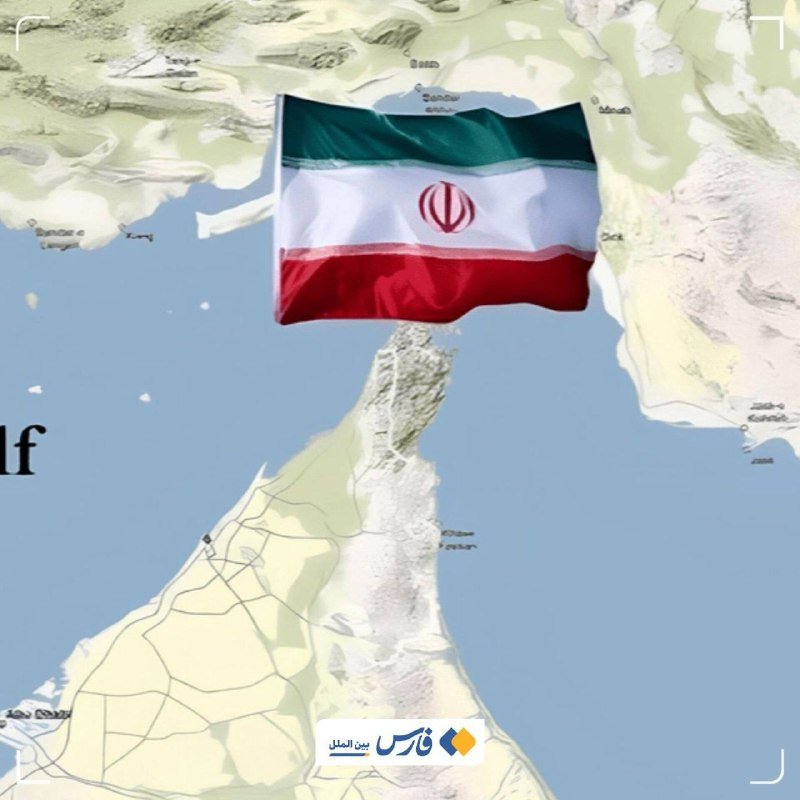
@mehrnews · Telegram

On the morning of 8 July 2026 the President of the United States declared that Iran had been defeated. By mid-afternoon the same day he was floating the possibility of striking desalination plants and, on his own account, “taking out” Iran’s electric plants and bridges inside a single day. By the early hours of 9 July his envoys were claiming, through the Polymarket-affiliated X account that broke the line, that the ceasefire had "at least temporarily ceased," that Iran had called Washington seeking a deal "very badly," and that the United States had struck 170 targets across the country in the previous two nights, per a Telegram channel citing US Central Command.

Strip away the contradictory statements and a coherent operating doctrine is visible: maximum coercive pressure, no fixed end-state, and an off-ramp that can be opened or shut on the president’s own schedule. That doctrine is now colliding with the strategic geography of the Strait of Hormuz and the oil markets that price it.

The shape of the escalation

The trigger for the current cycle was not Tehran. It was Washington’s decision, on or around 7 July, to resume strikes after what had been presented as a working ceasefire. By 06:02 UTC on 9 July a Telegram channel that tracks BRICS-aligned reporting — @BRICSNews — was carrying a US military claim of 170 targets hit across Iran in the preceding forty-eight hours. The figure has not yet been independently verified by CNN, Reuters or the BBC in the items reviewed for this piece, and CENTCOM has not, in those same items, published a target list.

The diplomatic channel did not close during the bombing. Per Polymarket’s wire at 00:14 UTC on 9 July, the President stated that Iran had telephoned and “wants to make a deal very badly.” That call has not been confirmed by Iran’s foreign ministry in any source item available to this publication, which is the first thing any serious reader should note: the American side is the only side on the record about who is asking for what.

What the President is actually saying

The Polymarket feed and the Unusual Whales feed — both operating as quasi-official stenographers of the President’s remarks — captured a remarkable sequence within roughly four hours on 8 July. At 16:37 UTC: "Iran has been defeated." At 17:17 UTC: "In one day, we can knock down every single bridge in Iran. Their electric plants, where they make their electricity, if we have to, we’ll take them out." At 17:37 UTC: "To me, I think it's over. I don't want to deal with them anymore. They're scum." At 18:39 UTC: the conflict will be over “very quickly.” At 21:31 UTC: "I don't think the Iran war will start again." At 06:02 UTC the next morning, 170 new targets had been struck.

The phrase that should concentrate minds is the one that appeared at 16:17 UTC, almost as an aside: "I would hate to strike desalination plants in Iran, but may have to." Civilian water infrastructure is not a battlefield target under any serious reading of the laws of armed conflict. Naming it as conditional leverage is a different kind of signal — and one that the IAEA, ICRC and the UN humanitarian coordination office will be obliged to address even if Western wire desks do not.

The Kharg question

By far the most consequential disclosure in the current cycle is the Polymarket line at 14:34 UTC on 8 July: the President revealed that the United States “may take over” Kharg Island as the ceasefire collapsed. Kharg is not a symbolic target. It handles the substantial majority of Iran’s crude exports, and its terminal sits roughly twenty-five kilometres off the Iranian coast in the northern Persian Gulf. Seizure or sustained bombardment of Kharg would, on the day it happened, take somewhere between 1.5 and 2 million barrels a day of Iranian supply off the board and almost certainly close, or near-close, the Strait of Hormuz to commercial traffic for the duration of any operation.

The oil market has not priced this. Front-month Brent, in the limited pricing signals available in the source feed, has not yet registered the kind of dislocation that a credible threat to Kharg would normally produce. Either the market does not believe the threat, or the market is about to be very surprised.

The structural frame

What we are watching is a coercive-bargaining posture operating without a single, stable senior interlocutor on the American side capable of converting battlefield tempo into a written agreement. Iran, for its part, returns to the table only when the cost of refusal exceeds the cost of accepting terms that will be presented domestically as victory. Each side needs the other to lose faster than itself; neither has the luxury of an open-ended fight.

The pressure point is energy. A US administration that simultaneously suppresses Iranian exports, threatens the desalination infrastructure on which Iranian civilian life depends, and floats the seizure of the export island that monetises Iranian hydrocarbons is not pursuing a negotiation. It is pursuing capitulation, with the diplomatic channel held open in case capitulation becomes possible on cheaper terms than the military bill. The repeated, almost ritual use of personal invective — "scum," "sick people," "viscous violent people," in the 17:37 UTC transcript — is consistent with that read. It is the rhetoric of a principal who has decided the other side is not a negotiating partner but a target.

What remains uncertain

Two things the public record does not yet settle. First, whether Iran has, in fact, requested a deal in the terms described, or whether the claim is American political theatre aimed at financial markets and a domestic audience that has grown visibly tired of the file. Second, whether the 170-target figure represents the opening of a new air campaign or a continuation of strikes that were already underway under the previously announced operation — the source items do not disaggregate. Both questions will be answered, one way or another, in the next seventy-two hours. Until then, traders in crude, diplomats in the Gulf, and civilians in Tehran and Bandar Abbas are all pricing the same uncertainty.


This publication led with the contested ceasefire-collapse line and the Kharg Island disclosure rather than the rhetorical flourishes. The 170-target figure and the alleged Iranian request for talks are both, for now, single-sourced claims originating with the US side; we have flagged them accordingly.

Wire provenance

This editorial synthesis draws on the following public wire/social posts:

  • https://t.me/s/BRICSNews
  • https://en.wikipedia.org/wiki/Kharg_Island
© 2026 Monexus Media · reported from the wire