Iran buries a 'martyr leader,' and the frame goes to work
State-aligned coverage of a senior figure's funeral is a study in the controlled image — and in what the chosen camera angles leave out.
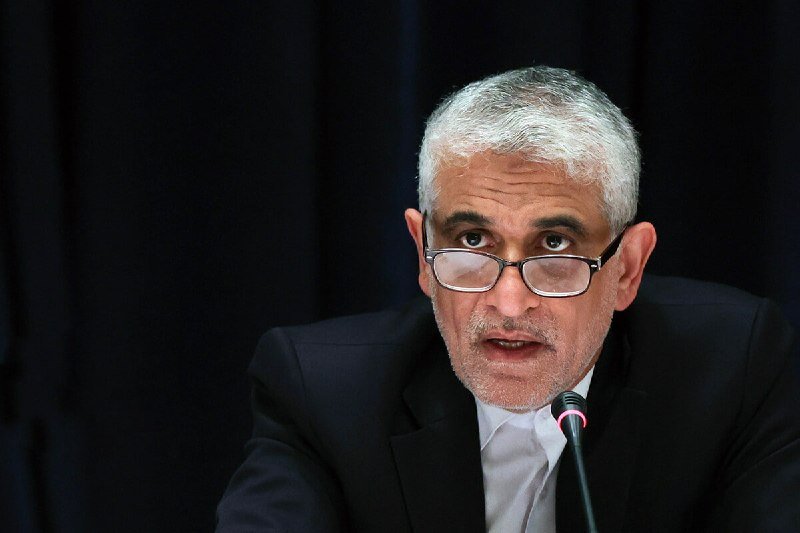
The cameras were already in place by the time the first wave of mourners arrived at the Dar al-Zakr portico on the evening of 9 July 2026. By 19:20 UTC, Tasnim News was running the tagline: "Mr. John Iran, this time people are crying for you." By 20:09, the family was filing in to say goodbye. By 20:20, the camera was trained on a portico described, in Tasnim's own caption, as "the burial place of the martyr leader of the revolution" and the regular prayer site of a senior figure identified by the shorthand "Shahid Pakpour." It is the kind of sequence that runs in Iran several times a year, and it is worth reading carefully — not for what it says, but for what the framing asks a foreign audience to take for granted.
Funerals in the Islamic Republic are not private affairs. They are state productions with a vocabulary, a cast, and an intended viewer. The vocabulary is fixed: shahid (martyr), rahbar (leader), and the devotional hashtag infrastructure that travels with the broadcast. The cast is institutional. The intended viewer is split — domestic, for whom grief is a civic duty, and foreign, for whom the images are meant to project resolve in the face of assassination, sanctions, and the long, grinding attrition of the June 2025 war's aftermath.
The controlled image, and what it omits
What the wire does well, and what it intends to do, is the obvious part. Tasnim's three Telegram posts between 19:20 and 20:20 UTC on 9 July 2026 build a continuous scene: a venue, a body of mourners, a family farewell, a man referred to as "Shahid Pakpour" whose regular prayer-place is being consecrated as a tomb. The hashtags — #Badarqa_Aghai_Shahid_Iran, #must_rise — are not decoration. They are a script for the next day's coverage, an instruction to readers about how the death is to be understood.
What the framing omits is more revealing. There is no medical or forensic account of how the figure died. There is no chronology of his service, his role, or the operation in which he was killed. There is no acknowledgement of the regional security environment that produced the death in the first place — the Israeli strike campaign that has, since the summer of 2025, removed successive layers of the IRGC's senior command; the US and European sanctions architecture that constrains succession; the internal succession politics of the Islamic Republic itself. The wire is not lying. It is curating. And the curatorial choice is itself a political act.
The counter-read, from the other side of the camera
Western wires covering the same death will run it as a counter-terror story. The framing there is also curatorial: a "senior Iranian commander" killed, a "blow to Tehran's regional network," a number of rocket or proxy attacks attributed to his tenure. Israeli outlets will tend toward the language of account-settled. The structural point — which neither side will write in so many words — is that the killing of senior figures on either side has become a routine instrument of policy, and that the funerals on one side and the briefings on the other are both forms of the same announcement: the war is ongoing, and the next round is already being prepared.
A second reading, less polite and more honest, treats the entire event — the strike that killed him, the funeral that mourns him, the wire that packages both — as part of an escalatory loop neither capital currently has the incentive to break. The Iranian state benefits from the cult of the martyr. The Israeli state benefits from the periodic decimation of an adversary's command. Both audiences are served. The civilians caught between them, as ever, are not in the frame.
What the framing is for
The point of an editorial like this one is not to adjudicate which frame is correct. Tasnim's coverage is not "propaganda" in the crude sense; it is the working language of a state with an active stake in how its senior dead are remembered. Western coverage is not "objective" in the crude sense; it is the working language of states with their own active stakes. The honest report sits in the space between: it names the camera angles, identifies the hashtags as the load-bearing rhetoric they are, and refuses to let either side's vocabulary do the reader's thinking.
That posture matters more now than it did a year ago. The June 2025 war ended without a settlement. The assassinations of senior Iranian figures have continued. The sanctions architecture has tightened rather than loosened. Against that backdrop, every state-aligned wire posting — whether it comes from Tehran, Tel Aviv, or Washington — is doing double duty. It is reporting a death. It is also pre-writing the next conflict's justification.
The stakes, named plainly
If the escalatory loop holds, three things follow. First, the command layer on the Iranian side continues to be attrited faster than it can be reconstituted, with consequences for the IRGC's operational reach that will become visible over eighteen to thirty-six months, not weeks. Second, the shahid frame, far from weakening under pressure, intensifies — each funeral becomes a recruitment poster and a policy brief in one. Third, the foreign-policy space for a diplomatic off-ramp continues to narrow, because neither side can afford, domestically, to be seen as the one that blinked.
What remains genuinely uncertain is the answer to a question neither wire is asking: how many more of these productions the regional system can absorb before the loop produces an outcome neither camera was set up to film.
The Monexus desk notes that this piece treats Tasnim's thread as a primary artifact of state-aligned framing rather than a neutral news report, and treats Western wire language with the same scrutiny where it applies. The Iranian state has a legitimate interest in how its dead are remembered; the foreign reader has a legitimate interest in being told which camera angle they are looking at.
Wire provenance
This editorial synthesis draws on the following public wire/social posts:
- https://t.me/tasnimnews_en/
- https://t.me/tasnimnews_en/
- https://t.me/tasnimnews_en/