A coffin returns to Mashhad: what the Tasnim mourning broadcasts reveal about Iran's security elite
Three Tasnim dispatches from Mashhad on 9 July 2026 — converging on the airport arrival of a cleric's body and the presence of Quds Force commander Esmail Qaani — sketch a moment when Iran's religious-security establishment stages itself in public.
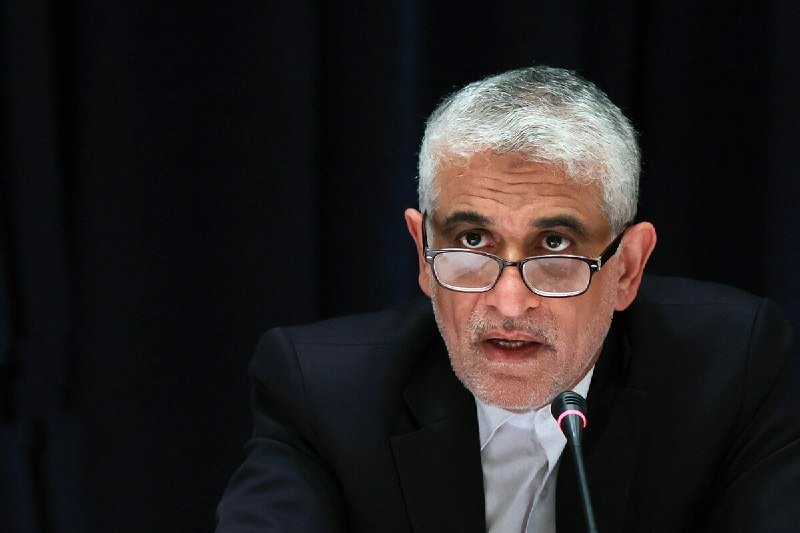
At 09:32 UTC on 9 July 2026, Iran's Tasnim News Agency posted a short, almost banal dispatch from Mashhad airport: the arrival of the holy body of a man identified only as "Imam Martyr" — and the simultaneous presence, on the same tarmac, of "Sardar Qaani." Two follow-up posts at 09:35 and 10:11 UTC filled in the surrounding ritual: a thousand red flags in the hands of mourners, the unceasing crying of the "Messenger Ummah," a martyr whose name Tasnim renders with the honorific #Badarqa_Aghai_Shahid. The three messages, read in order, sketch a single afternoon in Iran's holiest city — and, more usefully, a single posture of the Islamic Republic's security-religious establishment at a moment when that establishment is visibly tense.
The political significance of the day lies less in the cleric being mourned than in who turned up to mourn him, and in which outlet the choreography was broadcast. The cleric's specific identity, name, and cause of death are not disclosed in the three Telegram items reviewed; the framing leans entirely on the honorific and the hashtag. The reader is not asked who died. The reader is asked to register that a martyr is being received at Mashhad's airport, and that the man standing there to receive the coffin is the head of the Islamic Revolutionary Guard Corps' extraterritorial Quds Force.
The choreography of public grief
The sequence Tasnim publishes is unusually disciplined for a regional wire. Item one: a martyr's body lands at Mashhad, the country's spiritual capital and the shrine city of Imam Reza. Item two, three minutes later: a thousand red flags raised by mourners. Item three, thirty-nine minutes after that: the Quds Force commander is on the tarmac. Tasnim's English-language channel then amplifies the hashtag #Badarqa_Aghai_Shahid_Iran and a slogan — #must_rise — across all three posts.
None of this is investigative journalism. It is staged political theatre, and it is staged in the language of mourning rather than in the language of policy. The choice of Mashhad rather than Tehran, of a coffin rather than a podium, and of a martyr rather than a working minister, signals that what is being communicated is not a decision but a posture: the regime is in grief, the security establishment is present at the grief, and the faithful are expected to rise.
Why Qaani's footprint matters
Esmail Qaani has commanded the Quds Force since January 2020, when his predecessor Qassem Soleimani was killed in a US strike near Baghdad's airport. Qaani's appearances have grown rarer and more ritualised since the Hamas-Israel war began in October 2023; Iranian state-aligned outlets tend to confirm his location either when he is meeting allied factional leaders in Beirut or Baghdad, or when the regime wants to demonstrate continuity of command at home. A tarmac reception in Mashhad, hours after a coffin arrives, falls into the second category.
The choreography reads as a controlled answer to a question the regime's adversaries keep asking: is the IRGC's senior command intact, does it still hold the loyalty of the clerical base, and can it project that loyalty into a population that has spent two years on a war footing? Tasnim is answering yes, and it is answering in the only idiom that carries weight inside the Islamic Republic's political grammar — the idiom of martyrdom and return.
A media signal, not a confession
A reasonable counter-reading is that this is simply a cleric who died and was buried at a major shrine, and that Qaani's presence was administrative. Mashhad is the country's largest pilgrimage city; senior officials regularly attend funerals there. The Tasnim framing, in that reading, is no more political than the BBC's coverage of a British cabinet minister at a state funeral.
That reading does not survive contact with the outlet's own editorial choices. A standard clerical funeral does not generate three Telegram posts in forty minutes on the agency's English-language channel, does not deploy a #must_rise hashtag, and does not coordinate the arrival of a serving Quds Force commander with the landing of a coffin. The political signalling is in the volume, not the venue.
What this tells us about Iran's current operating mode
What Monexus sees in the three dispatches is a regime that is publicly rehearsing one of its core stories — the death of a martyr, the mourning of the faithful, the loyalty of the security elite — at a moment when the cost of that story is rising. The story carries a price only when there is a reason to tell it. The presence of red flags, the slogan, the tarmac choreography: these are the working vocabulary of a state that wants to be reminded, and to remind its allies, of its own coherence.
The open questions are also worth stating plainly. Tasnim does not disclose the cleric's name, the cause of death, or the date of death. Western wires have not, in the material reviewed here, picked up the story. The #Badarqa_Aghai_Shahid hashtag does not, in the items available, resolve to a verifiable biographical record. Until that record emerges, the most that can be said with confidence is that on 9 July 2026, a state-aligned outlet broadcast an image of senior IRGC leadership standing beside a coffin in Mashhad, and asked the audience to rise.
Monexus framed this as a study of political theatre rather than a news event in its own right. The wire outlets we monitor have not, as of this writing, carried the cleric's name or cause of death; we have not invented them.
Wire provenance
This editorial synthesis draws on the following public wire/social posts:
- https://t.me/tasnimnews_en
- https://t.me/tasnimnews_en
- https://t.me/tasnimnews_en
- https://en.wikipedia.org/wiki/Esmail_Qaani