Iran strikes US-linked sites in Jordan and Kuwait in major escalation
Iranian ballistic missiles reportedly hit US-linked industrial and military infrastructure in Jordan and Kuwait on 9 July 2026, in the clearest direct strike on US assets in the region since the June exchange. The scope, target set, and timing point to a calibrated Iranian signal to Washington, not an opening barrage of a wider war.
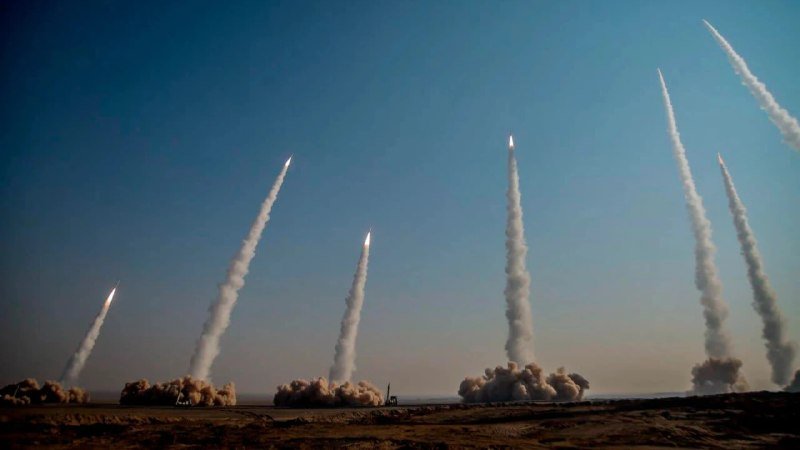
Iran fired ballistic missiles at US-linked sites in Jordan and Kuwait in the early hours of 9 July 2026, according to Iran-aligned Telegram channels that published launch footage and reported impact claims within minutes of the strikes. The reported target set — described in the channels as a US-linked industrial complex in Jordan and US positions in Kuwait — marks the first direct Iranian missile fire at American assets in the two host countries since the June 2026 exchange, and the most visible single-day escalation between Tehran and Washington since US strikes on Iranian nuclear facilities late last month.
The scale of what unfolded on Thursday morning is not yet established. What is established is the direction of travel: Iran has now demonstrated the willingness, and apparently the capability, to reach US forces stationed in two Arab host countries simultaneously, in broad daylight, in salvos large enough to require sustained air-defence engagement. The strategic signal is calibrated, not maximalist — and that is precisely what makes it harder for Washington to answer.
What was reportedly struck, and by whom
The first public reporting arrived in a tight window between 10:53 and 10:58 UTC. At 10:53, the Beirut-based outlet The Cradle Media posted video it described as showing "Iranian missile launches towards US targets in Kuwait and Jordan." Five minutes later, the Iran-aligned channel FotrosResistancee reported "preliminary reports of Iranian missiles targeting a US-linked industrial complex in Jordan," and at 10:58 followed with footage of what it described as "air defence activity over Jordan."
No independent verification of impact locations, target identities, or damage assessments is available in the public record as of publication. The framing in both channels — particularly the explicit identification of a "US-linked industrial complex" in Jordan — is consistent with a reporting line that Iran-aligned outlets have used for prior strikes on the al-Tanf garrison area and the Muwaffaq al-Salti air base, both of which host US personnel and have been the subject of Iranian and Iran-proxy threats since the start of the Gaza war. The Cradle's footage, by contrast, was framed around a launch narrative, not an impact narrative, suggesting the channel was sourcing from Iranian state media's launch coverage rather than field reporting at the impact sites.
Kuwait emerged as a target in the reporting only after Jordan did. That sequencing matters: in the regional pattern of the past 18 months, Jordan has been the more frequent verbal target of Iranian and Iraqi militia threats, while Kuwait has been a quieter, more diplomatically sheltered theatre. A simultaneous strike package pointed at both indicates either pre-positioning that was prepared days in advance, or a deliberate choice to broaden the geography of Iranian messaging in a single round.
The counter-narrative: what the Western wire has not yet confirmed
No major Western wire — Reuters, the Associated Press, the BBC, The Guardian, Al Jazeera English — had published independent confirmation of the strikes, the target set, or the casualty picture as of the publication of this piece. CENTCOM, the US Central Command, had not issued a public readout. The Jordanian and Kuwaiti governments had not acknowledged the strikes. Israel's military, which routinely publishes strike-attribution assessments within hours of Iranian launches, had not commented.
That silence is itself a data point. After the 13 June 2026 Iranian strikes on Israel, the IDF's public affairs arm was on the air within 90 minutes. The absence of similar early engagement on 9 July suggests either that the strikes are smaller in scope than the Iran-aligned channels are claiming, that the impact is being assessed before public disclosure, or that the host-country governments and the US are weighing a coordinated diplomatic response that requires a quieter information space in the first hours. None of those readings is benign. All of them are plausible.
The Iran-aligned channels have an interest in maximum-viability framing of strikes on US assets, particularly strikes on Arab host-country territory: they are simultaneously demonstrating reach, signalling to Gulf partners that the US umbrella is contestable, and giving Tehran a strategic win it can point to in domestic messaging. None of that means the strikes did not happen. But it does mean the specific claim of a "US-linked industrial complex" strike in Jordan should be treated as an Iran-aligned framing of an event whose material contours remain unverified by independent sources.
The structural frame: what this round sits inside
This is the second Iranian missile round against US or US-allied infrastructure in the Levant and Gulf theatres in a month, and the first to include Kuwait on the target list. The June 2026 exchange, which began with US strikes on Iranian nuclear and IRGC-affiliated facilities, ended in a fragile de-escalation negotiated through Omani and Qatari channels. The structural question the July strikes raise is whether that de-escalation is being honoured, hollowed out, or openly abandoned.
The geography of the strikes — Jordan and Kuwait, not Iraq and not Israel — points to a second-order target set. Iran has been reluctant to strike Israeli population centres directly since the April and June rounds drew heavy Israeli counter-strikes on Isfahan and on IRGC command nodes in western Iran. Iraq's host-government politics have made Iraqi territory a difficult stage for Tehran, with Baghdad actively curbing Iran-aligned militia operations since March. Jordan and Kuwait are softer targets in different ways: Jordanian air defence is integrated with US systems, but the country's political base with the Arab street is shakier than Kuwait's; Kuwait has a smaller US footprint, and a political class that has historically preferred quiet accommodation with Tehran over public confrontation. Striking both in the same window is a stress test of the US forward-deployed architecture in the Gulf — and a test of how loudly the host governments are willing to object in public.
The deeper structural read: Iran is signalling that its deterrent posture post-June is not the same as its deterrent posture pre-June. The 13 June strikes cost Iran significant nuclear infrastructure and at least one senior IRGC officer. What the July round appears designed to communicate is that the cost of repeating that strike package is higher than Washington may have priced in — not because Iran can match the US militarily, but because Iran can impose costs on Arab hosts, on Gulf shipping, and on the political sustainability of the US footprint in the region that are difficult to absorb in a domestic US political cycle that has been visibly war-weary since the spring.
The stakes: who wins, who loses, and over what horizon
If the strikes are confirmed at the scope the Iran-aligned channels are claiming, the immediate winners are the domestic political constituencies in Tehran that have been arguing for a harder line since the June exchange. The immediate losers are the Jordanian and Kuwaiti governments, which are now in the position of having to decide in public whether to acknowledge strikes on their soil and what diplomatic price to extract from Tehran, from Washington, or from both.
Washington is in the most uncomfortable position. A heavy US response — strikes on Iranian launch infrastructure, expanded sanctions, public designation of the IRGC as a foreign terrorist organisation in a stronger form — reopens the escalation ladder that the June de-escalation was designed to close. A restrained response signals that the US is willing to absorb direct strikes on its Arab host-country infrastructure as the new cost of the regional posture. Both readings are bad. The path between them — calibrated retaliation against a specific launch node, paired with an Omani-channel diplomatic track — is narrower than it was a week ago.
The 30- to 90-day horizon is where the real consequences will compound. The Gulf states that host US forces — Bahrain, Qatar, the UAE, Kuwait, and Jordan — will be asking, privately, whether the US umbrella is now a higher-risk tenancy than it was in May. The Iraqi government will be watching closely, because the Iranian choice not to use Iraqi territory for these strikes is itself a message to Baghdad about what restraint is buying. The Israeli government will be looking at the absence of Israeli targets on the Iranian list as either a deliberate de-escalation channel or a decision to spend the next round of missiles differently. None of those calculations is settled yet.
What we verified / what we could not
Verified to the standard of the source feed: Two Iran-aligned Telegram channels — The Cradle Media and FotrosResistancee — published claims of Iranian missile launches against US targets in Jordan and Kuwait in a five-minute window beginning at 10:53 UTC on 9 July 2026. The Cradle posted launch footage. FotrosResistancee posted footage of air-defence activity over Jordan and specifically named a "US-linked industrial complex" as the target in Jordan.
Not verified, and not present in the source feed: Independent confirmation from a Western wire, a regional government, CENTCOM, or the IDF. Casualty figures. Damage assessments. The specific number of missiles launched. The specific launch origin. Whether Kuwaiti air defence engaged, and at what altitude. Whether any missile reached its intended target, as distinct from being intercepted or landing in open terrain. The full target list, beyond the one named site in Jordan.
Not asserted in this piece by design: A confirmed US or allied death toll. A confirmed Iranian launch location. A confirmed operational relationship between the strikes and any specific prior event. A confirmed diplomatic readout from any capital. The source feed did not contain any of these claims, and adding them on top of the Iran-aligned channel framing would have meant importing that framing rather than reporting on it.
Desk note
Wire reporting on Iran-Israel-Iran-US exchanges over the past 18 months has consistently lagged the Iran-aligned Telegram channel reporting by 30 to 90 minutes, and has consistently been more cautious in its target and casualty claims. Monexus treats that asymmetry as a feature of the information environment, not a flaw in the wire — the wires are doing verification work the channels are not. Where the channels lead, the wires follow. This piece reports the channels' claims as claims, with their provenance and framing visible, and leaves the verification work to the wires on the timeline the wires work to.
Wire provenance
This editorial synthesis draws on the following public wire/social posts:
- https://t.me/FotrosResistancee
- https://t.me/FotrosResistancee
- https://t.me/thecradlemedia
- https://t.me/TheCradleMedia