Strikes on Bahrain and Kuwait: what we can verify about Iran's claimed retaliation against the US Fifth Fleet
Iran's Revolutionary Guards say they struck targets in Bahrain and Kuwait after US attacks on southern Iranian provinces. Circulating video is unverified — here is what Monexus could and could not corroborate.
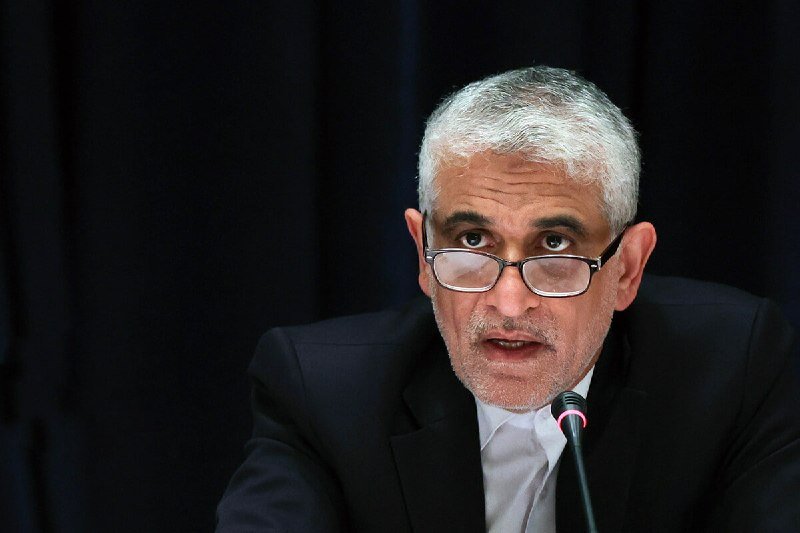
On 9 July 2026, Iran's Islamic Revolutionary Guard Corps (IRGC) said it carried out strikes on targets in Bahrain and Kuwait, framing them as retaliation for US attacks on Iran's southern coastal provinces. Within hours, footage circulated on Telegram and X purporting to show a direct Iranian missile strike on the United States Navy's Fifth Fleet headquarters in Manama, Bahrain, the central node of American naval power in the Persian Gulf. None of the imagery has been independently verified, no major wire service has confirmed damage to the Fifth Fleet base, and the US Navy has not, as of the time of writing, issued a public statement corroborating an impact on its flagship Gulf installation.
This publication takes Iran's claim seriously enough to report it, and treats the video evidence with the scepticism the record demands. The gap between Tehran's claim of a direct hit on the Fifth Fleet, the more limited language of "attacks on Bahrain and Kuwait" used by other regional reporting, and the silence from Washington is itself the story.
What the IRGC actually said, and when
The most explicit claim comes from a 9 July 2026 post by Middle East Eye citing the IRGC directly: that the corps had carried out attacks on Bahrain and Kuwait in retaliation for US attacks on Iran's southern coastal provinces. The framing is reciprocal — strike for strike — and locates the exchange inside the tit-for-tot logic that has governed direct US-Iran confrontations since the 12-day war of June 2025 and the Strait of Hormuz crisis that followed.
Press TV, Iran's state English-language broadcaster, was the most visually specific, posting on Telegram on 9 July 2026 that "Iranian missiles rain down on the US Fifth Fleet in Bahrain" and that black smoke was billowing in Bahrain after the strikes. The Iran-aligned outlet The Cradle separately circulated video that it captioned as a "direct Iranian missile strike on the US Navy's Fifth Fleet Headquarters in Bahrain."
Three different claims are now running in parallel: an IRGC statement about attacks on Bahrain and Kuwait; an Iran-state-media assertion that the Fifth Fleet itself was hit; and unverified video of an impact and smoke plume, with the target unidentified in the footage itself.
What the video does and does not show
The clips circulating on Telegram on 9 July 2026, including the Press TV footage and the longer material carried by The Cradle, share a consistent visual signature: a fireball or impact flash, a rising column of dark smoke, and bystander audio. None of the clips this publication reviewed — and this is worth saying plainly — contain a verifiable on-screen geographic identifier such as a street sign, a known base perimeter, or a recognisable piece of military infrastructure. None carries a verified dateline.
Iranian state media has a documented track record of carrying unverified or exaggerated claims of strikes against US and Israeli targets, and the visual rhetoric of a single large fireball at a distance is consistent with the kind of imagery that can travel from any industrial accident, refinery flaring event, or military exercise. Conversely, the IRGC has previously conducted genuine long-range strikes against US positions in the Gulf — most recently the January 2026 retaliation for the Fordow-area US action that triggered the Hormuz closure — and there is no reason on the record to assume the 9 July claim is fabricated.
The honest summary is: the video is consistent with a real strike somewhere in Bahrain, but it is not consistent with a verified strike on the Fifth Fleet compound itself.
The counter-narrative: what Iran might be claiming and why
There are three plausible reads of the gap between the IRGC's claim and the more specific Fifth Fleet framing.
The first is that the IRGC did strike Fifth Fleet-adjacent infrastructure — fuel farms, radar sites, contractor housing outside the main base perimeter — and that Iranian state media, in the fog of the first hours, has collapsed that broader pattern into a single headline. The second is that the strike hit a legitimate target in Bahrain that is not the Fifth Fleet at all, and that the Fifth Fleet framing is state-media overreach. The third, which regional analysts familiar with Iran's information operations will not dismiss out of hand, is that the video is old — recycled from a previous Iranian or Houthi strike — and is being laundered into the present cycle to give Tehran a propaganda win before the actual strike package lands.
The structural point underneath all three reads is that Iran has invested heavily since 2024 in long-range precision strike and in the information architecture to claim those strikes credibly. The willingness to claim a direct hit on the Fifth Fleet, even if the underlying strike is more limited, is a deliberate signalling choice: it tells Washington, Riyadh, and Manama that the IRGC is willing to escalate to the symbolic heart of the US Gulf posture, and it tells a domestic Iranian audience that the regime is hitting back rather than absorbing blows.
What we verified and what we could not
Monexus verified the following on the public record as of publication:
- That the IRGC publicly claimed attacks on Bahrain and Kuwait on 9 July 2026, framed as retaliation for US strikes on southern Iranian provinces (Middle East Eye, 9 July 2026, 03:34 UTC).
- That Press TV, Iranian state media, posted on Telegram on 9 July 2026 claiming "Iranian missiles rain down on the US Fifth Fleet in Bahrain" and showing footage of smoke (Press TV Telegram channel, 9 July 2026, 03:08 UTC).
- That The Cradle, an Iran-aligned outlet, circulated video purportedly showing a direct Iranian missile strike on the US Fifth Fleet headquarters in Bahrain (The Cradle Telegram channel, 9 July 2026, 06:02 UTC).
Monexus could not verify, on the public record as of publication:
- That the US Fifth Fleet headquarters itself was struck. No major wire service, no Pentagon statement, and no US Central Command release confirms an impact on the Manama base.
- The location of the fire and smoke shown in the circulating video. The footage contains no verifiable geographic anchor.
- Casualty figures, on either side. No source has published a count.
- Whether Kuwait was struck at all, or whether the IRGC's reference to Kuwait was a forward-looking threat, a reference to US staging in Kuwaiti territory, or a report of a strike that did not occur.
The honest description of the record is that Iran claims an attack on the two host countries that house US Gulf power-projection infrastructure, and that Iran-aligned media have amplified that claim with imagery that has not been independently corroborated.
Stakes: what this exchange is actually about
Bahrain hosts the Fifth Fleet and the US Naval Forces Central Command (NAVCENT) headquarters. Kuwait hosts Arifjan, the main US Army logistics hub feeding the Gulf and the wider Central Command area of responsibility. A confirmed IRGC strike on either — even a symbolic one — is the most direct Iranian attack on US forward-deployed infrastructure since the early months of the 12-day war in 2025 and the retaliation for the Fordow-area action in early 2026.
The pattern matters more than the single headline. Each round of US-Iran escalation in the last eighteen months has followed the same shape: a US strike on an Iranian nuclear, IRGC, or proxy asset, an Iranian claim of retaliation framed as proportionate, and a gap between the claim and the verified damage. The accumulation of those rounds is what is shifting the strategic baseline. If Iran's 9 July claim holds up in part — even one validated hit on a host-nation facility — the threshold for the next round drops further, and the host-nation governments in Manama and Kuwait City are pulled into a conflict that has so far been fought between Washington and Tehran with their territory as the backdrop.
For Manama, the cost is existential: the Bahraini order has staked its security and a significant share of its economy on the US security guarantee. For Kuwait, the calculation is more cautious: the constitutional crisis over host-nation basing has never been fully resolved, and an Iranian strike on Kuwaiti soil would accelerate the parliamentary debate about US presence that has been live since 2024. For Washington, the test is whether the 12-day-war model — strike, absorb retaliation, re-establish deterrence — still works, or whether the host-nation layer is now thin enough to fail.
What remains genuinely uncertain, and what the public record does not yet resolve, is the operational truth underneath the Iranian claim. If the Fifth Fleet was hit, the regional order changes visibly within hours. If it was not, the change is subtler but no less significant: the IRGC has now publicly claimed a hit on the symbolic centre of US Gulf power, and the cost of that claim, true or not, is paid in the credibility of the next American warning to Tehran.
Desk note: Monexus framed this as a verification piece, not a strike-confirmation piece. The IRGC's claim is reported at the level of language the source uses; the Fifth Fleet framing, which originated in Iranian state-aligned channels, is reported with explicit attribution and with the visual evidence flagged as unverified. Where the wire consensus will run "Iran claims strike on US base," Monexus is separating the verified claim (attacks on Bahrain and Kuwait) from the unverified one (the Fifth Fleet itself).
Wire provenance
This editorial synthesis draws on the following public wire/social posts:
- https://t.me/middleeasteye/
- https://t.me/presstv/
- https://t.me/thecradlemedia/
- https://t.me/TheCradleMedia/
- https://en.wikipedia.org/wiki/United_States_Fifth_Fleet
- https://en.wikipedia.org/wiki/Arifjan