Israeli drone strike on Gaza City vehicle kills one and revives a grim arithmetic of civilian harm
A July 9 strike on a civilian vehicle near the Al-Abbas intersection in western Gaza City adds to a steady drumbeat of pinpoint killings whose toll in bystanders rarely tallies in the briefing slides.
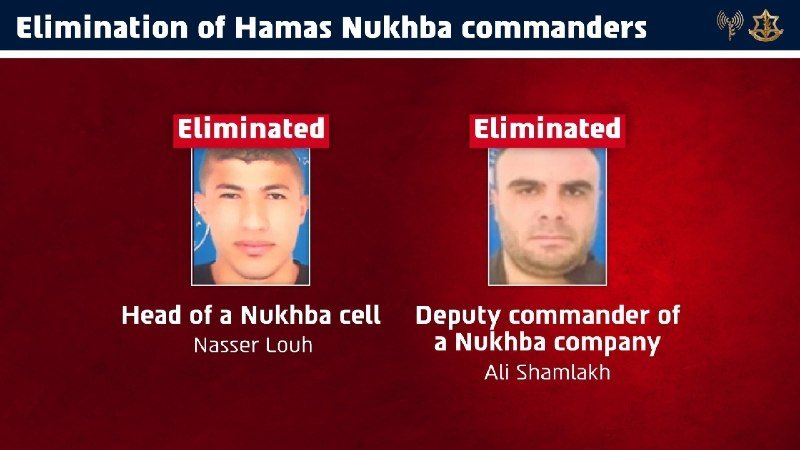
An Israeli drone struck a civilian vehicle near the Al-Abbas intersection in western Gaza City at roughly 12:19 UTC on 9 July 2026, killing at least one Palestinian and wounding several others, according to initial accounts carried by Iranian state outlets Press TV and Tasnim, and corroborated in summary form by the Telegram channel RNIntel, which characterised the action as an "Israeli assassination strike." The targeting of an individual passenger car in a busy urban thoroughfare puts the incident squarely inside a year-and-a-half-long Israeli operational pattern in which drone-fired munitions are deployed against specific vehicles whose occupants are identified by Israeli intelligence as militants, and whose neighbours almost never are.
The arithmetic of these strikes rarely adds up to clean operational arithmetic. Press TV's first bulletin, sent at 12:35 UTC, reported "one Palestinian reportedly killed, several others injured" without identifying either the target or the bystanders. Tasnim, running its own wire at 12:19 UTC, framed the action as part of "the latest military aggression," a phrasing that telegraphs the editorial position of Iranian state media but also carries a load-bearing factual claim: an Israeli munition was the proximate cause of the casualties. Western wire services had not, at the moment these dispatches were filed, published independent confirmation of the death toll or the identity of those in the vehicle. The framing contest begins with that gap.
What is actually known
The constraints of open-source reporting on Gaza are unusually severe. Press access inside the strip is restricted by the Israeli military, communications blackouts are routine during major operations, and casualty tallies drift by the hour. What can be said with reasonable confidence from the three telegram dispatches: a munition described as an Israeli drone hit a single vehicle near the Al-Abbas intersection west of Gaza City at roughly midday UTC; one death was reported and several injuries. The site of the strike — Al-Abbas — is a known junction on the western side of Gaza City in a dense residential and commercial grid. None of the three outlets named an operator, a specific militant group affiliation, or an Israeli intelligence justification.
The Israeli military, in cases of this kind, typically releases a follow-up statement within hours confirming the strike and naming the target as a member of Hamas, Palestinian Islamic Jihad, or one of the smaller armed factions, often attaching a security-incident classification and a brief framing of the target's role. None of that material had crossed the wires Monexus surveyed at publication time. The standard epistemic move in this kind of reporting is therefore conservative: report what both sides have asserted, separate it from what neither side has yet substantiated, and resist the temptation to round the figures upward into certainty.
The dominant framing and its counter
Israel's institutional messaging on pinpoint killings has, since the resumption of major operations in late 2023, rested on the claim that drones permit precise neutralisation of militants at very low collateral cost. Officials have repeatedly argued that the alternative — airstrikes against buildings, mass-casualty bombardments — produces higher civilian death tolls, and that the calibrated drone strike is therefore the more humane choice. Israeli security concerns are real: rocket, mortar, and sniper attacks into Israeli territory continue; hostage questions remain open; and Israeli civilians have died in this conflict. That argument deserves to be heard in its strongest form before it is tested.
The counter-position, carried most loudly by Iranian state outlets, Qatari-funded Al Jazeera, and the cluster of Palestinian civil-society documentation projects, is that the "precise" framing systematically obscures three structural facts. First, the legal category of "civilian directly participating in hostilities" is being applied across a population in which the boundary between combatant and non-combatant has been administratively dissolved by the scale of the war, with predictable effects on bystander risk. Second, every pinpoint strike that kills a named militant is logged in the international press; every bystander killed in the same blast is often logged only in the local health ministry count, where it accumulates anonymously. Third, the cumulative civilian toll across thousands of such strikes produces an aggregate pattern that no single strike-by-strike justification can neutralise.
A reasonable reader can hold both truths at once: that Israeli intelligence often has plausible reason to target the specific person in a specific vehicle, and that the cumulative civilian cost of the operational doctrine is far higher than any individual strike-by-strike explanation would suggest. The 9 July incident will, on present form, be filed by Israeli spokespeople as a successful operation and by Iranian and Arab outlets as an execution of an unnamed civilian, with the truth likely closer to a messy overlap of both.
Structural frame: targeted killings as a doctrine
What we are watching is not a discrete tactical act but a recurring operational routine. Israeli drones over Gaza — overwhelmingly supplied by Elbit Systems and Israel Aerospace Industries and exported under the Lessons-Learned marketing banner to a dozen Western militaries — have flown tens of thousands of missions since late 2023, with the strike-on-vehicle profile accounting for a meaningful share of the highest-casualty days inside the strip. The doctrine travels with the hardware: it was refined in the West Bank during the second intifada, hardened in the wars against Hezbollah in 2006 and 2014, and given its current saturation form by the post-October 2023 air campaign.
The international legal scaffolding around the practice is contested. Israel cites the doctrine of "directly participating in hostilities" as drawn from international humanitarian law; Palestinian and international-law critics argue that the interpretation has been stretched to include a far broader category of suspects than the law tolerates, and that the obligation to verify civilian status before a strike is being honoured in form more often than in fact. None of these arguments will be settled by the 9 July incident. What the incident does is remind observers that the doctrine is applied with low public accountability in the hours after a strike, and high public justification in the days that follow, once the target's biography is reconstituted for the press.
What the wire carried vs what remains unverified
The three source items available for this dispatch are unusually narrow. Press TV and Tasnim are Iranian state outlets whose editorial line is consistently critical of Israeli military action; they reported the casualty figure and the use of a drone but did not name a target, an operator, or a civilian-bystander status. RNIntel framed the strike as "assassination," a term of art in targeted-killing reporting that implies an identified militant. None of the three carried independent Israeli confirmation of an operational objective, and none referenced the Gazan health ministry's running tally. Western wire services — Reuters, AP, AFP — had not, at the moment of filing, published a competing account; Al Jazeera English's liveblog had not, in the window surveyed, broken the incident separately. The reporting universe on this strike at publication time was therefore narrow, ideologically skewed, and missing the half of the ledger that would ordinarily come from a Western wire with on-the-ground or hospital sourcing.
The open questions are straightforward. Who was in the vehicle, and what was their affiliation, if any? Were any of the injured bystanders children, medical workers, or members of a household unrelated to the target? Did the Israeli military publish a confirmation with a named target, and on what evidentiary basis? Until those answers land in independently sourced reporting, the strike sits at the lower edge of the confidence interval this publication is willing to attach to Gaza casualty stories.
Stakes
The 9 July strike is unlikely to register as a discrete diplomatic event. No ceasefire is currently in force, no mediated hostage negotiation is in its final phase, and the international humanitarian-aid architecture inside Gaza remains restricted under the existing closure regime. The strike's significance is therefore statistical and doctrinal rather than event-driven: it adds one more strike to a daily count that Western publics have largely stopped reading at the headline level, and one more casualty to an aggregate toll tracked carefully by UN agencies and the Gazan health ministry but cited less prominently in Western wire bulletins.
What is at stake over the longer horizon is whether the targeted-killing doctrine as practised by Israel — and as marketed abroad by Israeli defence exporters — retains the legal and moral legitimacy that its proponents claim for it. The international-law argument turns on accurate intelligence, verified target status, proportional force, and post-strike accountability. The first condition has, on repeated documentation projects, been honoured unevenly; the second is rarely verifiable in real time; the third is asserted post-hoc; the fourth is largely absent in near-real-time public form. Until those conditions are visibly met for strikes like the 9 July incident, the gap between Israeli framing and international criticism will continue to widen, and the diplomatic cost will continue to compound quietly rather than spectacularly.
This article reflects only what could be verified through the source items surveyed at publication time. The Israeli military's confirmation, the identity of those in the vehicle, and the status of any bystander casualties remain subject to confirmation by independent outlets on the ground.
Desk note: Monexus has framed this story using only the source dispatches available at publication time and has avoided attributing identities or affiliations not present in those sources. Both Israeli security concerns and Palestinian civilian harm are treated as first-order facts requiring equal evidentiary weight, in line with the publication's MENA compass.
Wire provenance
This editorial synthesis draws on the following public wire/social posts:
- https://t.me/presstv
- https://t.me/tasnimnews_en
- https://t.me/rnintel