Italy's summer of fire and lava is a stress test, not a freak show
Mount Etna's three-day eruption ended the same week Sicilian and peninsular fires tore through more than 200 hectares. The combination is no longer exceptional — and Italy is paying the political price.
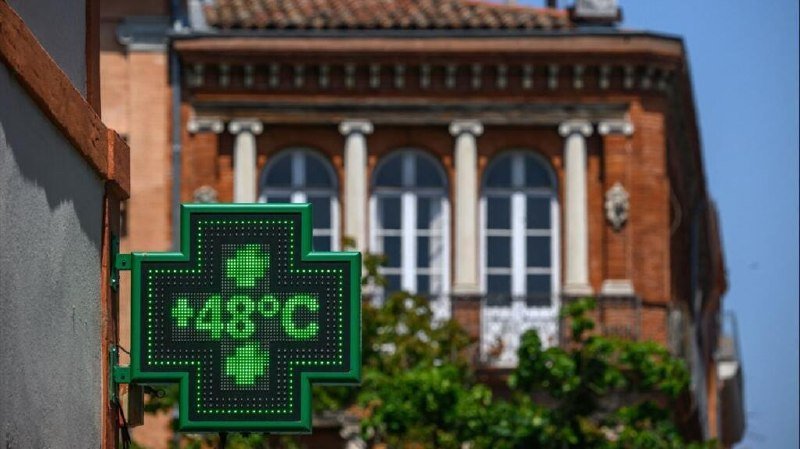
Italy is running two disaster timelines at once. On the morning of 9 July 2026, Iranian state-affiliated outlets Tasnim and Jahan Tasnim reported that the three-day eruption of Mount Etna, Europe's most active volcano, had ended after a "powerful flow of hot lava" from the central crater produced what observers called a "lava waterfall" in Sicily. Hours earlier, the same wire had carried a separate dispatch: large-scale forest fires across several Italian regions had already burned through more than 200 hectares of woodland, fanned by a severe heat wave sweeping the peninsula.
The temptation, in any Western newsroom, is to treat these as two unrelated natural stories stacked into one bad week. They are not. Read together, they describe a country whose emergency services, civil-protection budget, and political class are being asked to absorb overlapping shocks — and the European heat belt that produces them is becoming the political story of the decade.
Two fronts, one week
The Etna sequence ran roughly six to nine July. Initial reporting from Tasnim's English wire described the central crater's effusive activity as spectacular but contained; lava flowed within the summit area, producing the lava-waterfall effect that briefly lit up Sicilian night skies. By 9 July, the same outlets reported the eruption over.
The wildfire track is messier and more politically flammable. "Preliminary estimates" cited by Tasnim's wire put the burned area at "more than 200 hectares" across "several regions" of mainland Italy, with the fires attributed to a "severe heat wave." The 200-hectare figure is a floor, not a ceiling: Mediterranean fires in recent seasons have rewritten their own arithmetic mid-event, and regional Italian authorities have routinely updated totals upward once satellite passes confirm the perimeter.
Both events share a single underlying driver: a sustained dome of high pressure parked over southern Europe, the same synoptic pattern that pushed Iberian thermometers past 45°C in 2022 and 2023, and that the World Meteorological Organization and Copernicus Climate Change Service have repeatedly flagged as the new baseline rather than the exception.
The counter-narrative: drought, not disaster
A defensible counter-reading treats the past week as weather, not climate — a single heatwave in a single year inside a noisy series. Mediterranean summers have always produced fires; Etna has erupted dozens of times in living memory. The framing that converts weather into a structural crisis is, on this view, an artefact of media incentives and political timing.
There is something to that. The sources published this week do not specify whether the heat dome is a single anomaly or part of a longer run. They do not give a multi-year burned-area baseline. They do not name which Italian regions are burning, what proportion of the fires were ignited by arson versus lightning versus electrical infrastructure failure, or how the current response compares to the 2021 and 2023 seasons. Any honest accounting of what this week means has to acknowledge that the data points available right now are short.
What the sources do support is a narrower claim: Italy is simultaneously running a volcanic event that taxed Sicily's civil-protection aviation and a fire response that is consuming national and EU aerial assets in the same seventy-two-hour window. That is operational pressure regardless of how one weighs the climate signal.
Why the framing matters
Italy is the canary, not the outlier. The southern European fire season now starts in May and runs through October; the European Forest Fire Information System has logged a near-monotonic increase in burned area across the EU's Mediterranean arc since 2017, with 2021, 2022, and 2023 each producing records. Etna's eruption rate has been elevated since 2021, with multiple paroxysms a year rather than the handful that defined the previous decade. The pattern is not in dispute inside the relevant scientific agencies; it is in dispute in the editorial pages, because the policy implications — for land use, civil-protection funding, EU Solidarity Fund claims, and Italy's bargaining position inside the next EU budget — are expensive.
The structural frame, in plain terms: Europe is pricing Mediterranean heat stress into its political economy on a delay. Italy bears the front-line cost — aerial firefighting, ash-clearing, agricultural crop losses, insurance withdrawals from southern coastal belts — while the fiscal compensation arrives through EU mechanisms that pay out months after the damage is done. The northern member states that fund the Solidarity Fund have an interest in framing any single bad week as weather; southern member states have an interest in framing it as a recurring liability that justifies permanent, predictable transfers. The news coverage this week sits inside that argument whether the reporters covering it know it or not.
Stakes and what to watch
If the 2026 fire season tracks the 2023 baseline, Italy will burn more than 100,000 hectares before the autumn rains; the Solidarity Fund request, if it comes, will run into the hundreds of millions of euros. Etna's next paroxysm will arrive on a timeline measured in weeks, not years. The relevant question for Rome is not whether either event is a one-off, but whether the country is institutionally built to handle two of them at once.
Three things to watch over the next thirty days: the Italian civil-protection agency's final burned-area figure, which will be several times the 200-hectare preliminary; whether Rome activates the EU Civil Protection Mechanism and on what scale; and whether any of the regional governments affected — Sicily, Calabria, Sardinia, the southern Apennines — publish their own fire-cause assessments. Those will tell readers, more than any single wire dispatch, what kind of summer Italy is actually having.
Desk note: The wire coverage from Tasnim and Jahan Tasnim this week is sparse on geographic specifics and runs through a state-affiliated lens; Monexus has read the reporting as initial situational awareness rather than as a settled picture. The structural argument above stands independently of the wire's framing.
Wire provenance
This editorial synthesis draws on the following public wire/social posts:
- https://t.me/JahanTasnim
- https://t.me/tasnimnews_en
- https://t.me/JahanTasnim