The funeral in Karbala and the political choreography Tehran wants the world to read
Iran's state-aligned outlets staged a procession through Karbala's twin shrines. The optics are aimed as much at Iraqi politics as at mourning.
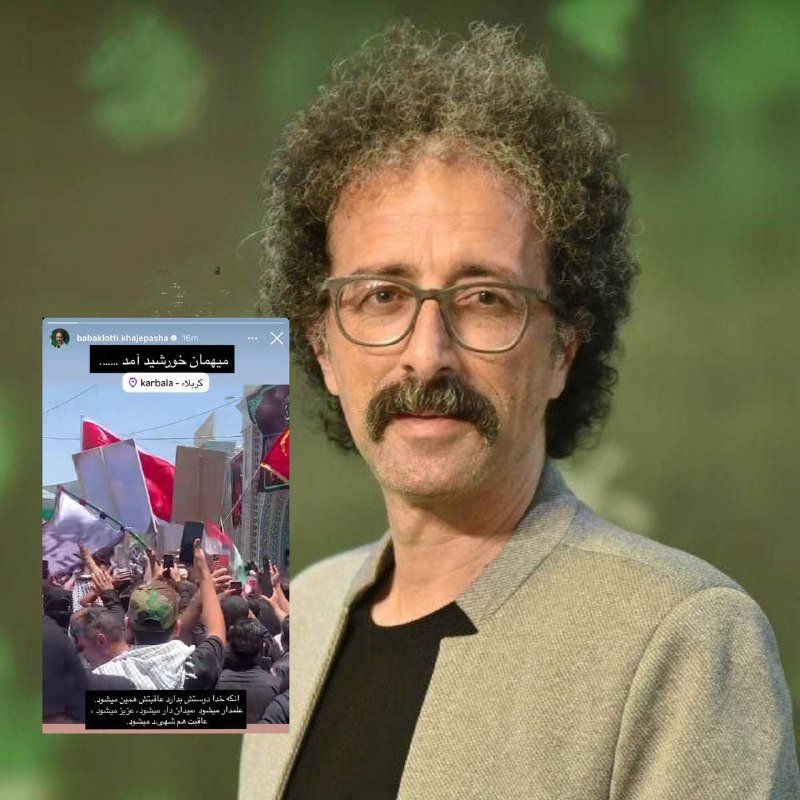
The coffin was carried through Bab al-Shuhada Gate shortly after midnight local time on 9 July 2026, processed across Bayn al-Haramayn between the two shrines, and lifted under the gold-leaf dome of Hazrat Abbas for funeral prayers. Iranian state outlets PressTV and Fars framed the procession in identical language: the martyred Leader, the shrine of Hazrat Abbas (AS), the faithful who came in their tens of thousands from across Iraq. Whatever is happening inside the succession politics of the Islamic Republic — a question the available sources do not resolve — the public-facing theatre is unmistakable. The funeral is being staged in Karbala, not Tehran, and the choice of stage says as much about Iraqi politics as it does about Iranian grief.
What is verifiable is the choreography and its sequencing. PressTV and Fars reported the coffin leaving Bab al-Shuhada Gate at 00:14 UTC on 9 July 2026, the procession filling Bayn al-Haramayn by 00:23 UTC, the entry into the Imam Hussain shrine at 23:47 UTC on 8 July 2026, and the funeral prayers at Hazrat Abbas beginning around 01:08 UTC and running through the next hour. The route is the standard Iraqi mourning corridor that hosts millions of pilgrims during Ashura — a piece of sacred real estate no Iranian leadership has used as a procession venue in living memory. That is not an accident.
The route is the message
Iraqi Shia politics is fractured along militia, party, and shrine-loyalty lines. Holding the janazah in Karbala, with the coffin literally paraded between Imam Hussain and Hazrat Abbas, hands two of the most powerful religious-administrative nodes in the Iraqi state — the Astan of the two shrines — a starring role in a globally broadcast Iranian moment. Baghdad, Najaf, and the Hawza are notably absent from the script. Tehran is signalling that its preferred Iraqi interlocutors are not the clerics of Najaf's seminaries, nor the federal government in the Green Zone, but the shrine cities of the south and the political machines that run them. The visuals in the thread — flower-strewn coffins, dense crowds in the courtyard between the two shrines, Iraqi mourners rather than Iranian state ceremonial guards — were selected, almost certainly, to read that way.
This is not the first time an Iranian leadership funeral has had to be assembled quickly under unusual circumstances. The composition of the mourner pool tells the audience Tehran actually wants: the Iraqi street, not the Iraqi state. PressTV's captions underline it, calling the crowds "Iraqi mourners" and emphasising the geography of the shrines rather than any Iranian institutional presence.
What the framing leaves out
There is a second read, and a more skeptical one. The Iranian state-aligned outlets reporting the procession — PressTV and Fars — are not neutral observers. They are the communications arms of a regime with a stake in how the death, the succession, and the regional alignment are interpreted. Coverage that uniformly uses the loaded term "martyred Leader" without naming the institution that has now assumed power is itself a piece of political signalling: it pre-positions the deceased as an object of religious veneration, not as a political figure whose succession is being decided in Tehran.
Western wire coverage has so far been sparse in the material available here; the live reporting we can verify in this cluster is Iranian state media via Telegram. That means the dominant frame right now is the one Iran wants. Whether Iraqi Shia political parties — the Sadrist movement, the Coordination Framework, the various Hashd factions — issued their own public statements on the procession, and whether the Iraqi federal government formally recognised the route, are facts the available sources do not establish. A reader should hold those questions open.
The structural stakes
Iran's regional influence runs through a network of Iraqi Shia parties, Lebanese Hezbollah, and Syrian and Yemeni corridors that have all been degraded or are under acute strain. A funeral staged as a Husayni ritual in Karbala rather than as a state ceremony in Tehran is, in plain terms, an attempt to recast the leadership transition as a religious event with cross-border Shia legitimacy — and to do it on Iraqi soil, where the diaspora base and the shrine economy give Tehran a more reliable audience than the Lebanese, Syrian, or Yemeni ones do. The choice of venue is therefore a confession of constraint as much as a display of strength: the procession could have been held in Qom, but Qom does not move Iraqi politics the way Karbala does.
The harder question — what the janazah signals about who governs Iran next, and whether the new leadership will sustain the same regional posture — is one the available reporting does not answer. Both PressTV and Fars used the same hashtag, #MartyrKhamenei, but neither published institutional detail on the successor body, the Assembly of Experts timeline, or the interim operating arrangement. That silence is itself a data point, but not a conclusive one.
What to watch next
Three things will tell readers whether the Karbala choreography was the start of a new regional play or simply a one-day production. First, the Iraqi federal government's public posture — a formal condolence from Baghdad would confirm that Tehran's choice of stage was coordinated with Iraqi state authorities; silence or a low-key statement would suggest Baghdad was bypassed. Second, the lineup at the Tehran succession ceremony: who appears beside the new leader, and whether the Iraqi shrine representatives who hosted the Karbala procession are given a featured role, will signal whether Karbala was a one-off or a template. Third, the tone of Iraqi Shia party coverage outside the Astan networks — if Sadr-aligned or Najaf Hawza clerics take a different line, the regional story is contested in ways the Iranian state media is not yet acknowledging.
For now, the photographs and the captions come from one direction. The sources available to this publication — Iranian state media via Telegram — are the only wire feed carrying the visuals in this cluster, and that alone should temper the certainty with which any of the choreography is read. The funeral happened. The route was Karbala. What the route was for remains, for the moment, a matter of inference rather than reportage.
Desk note: Monexus is carrying the Iranian state-media framing of this procession with explicit provenance. Where Western wire reporting emerges, this article will be updated; until then, treat the optics as Tehran-curated and the political reading as provisional.
Wire provenance
This editorial synthesis draws on the following public wire/social posts:
- https://t.me/presstv/
- https://t.me/presstv/
- https://t.me/presstv/
- https://t.me/farsna/
- https://t.me/presstv/