Mastodon releases short film honouring Brent Hinds, reframing how a metal institution mourns a single member
The Atlanta sludge-metal institution has released a short film honouring Brent Hinds, its founding guitarist and a defining voice of the post-Mastodon generation, who died in a 2025 motorcycle crash.
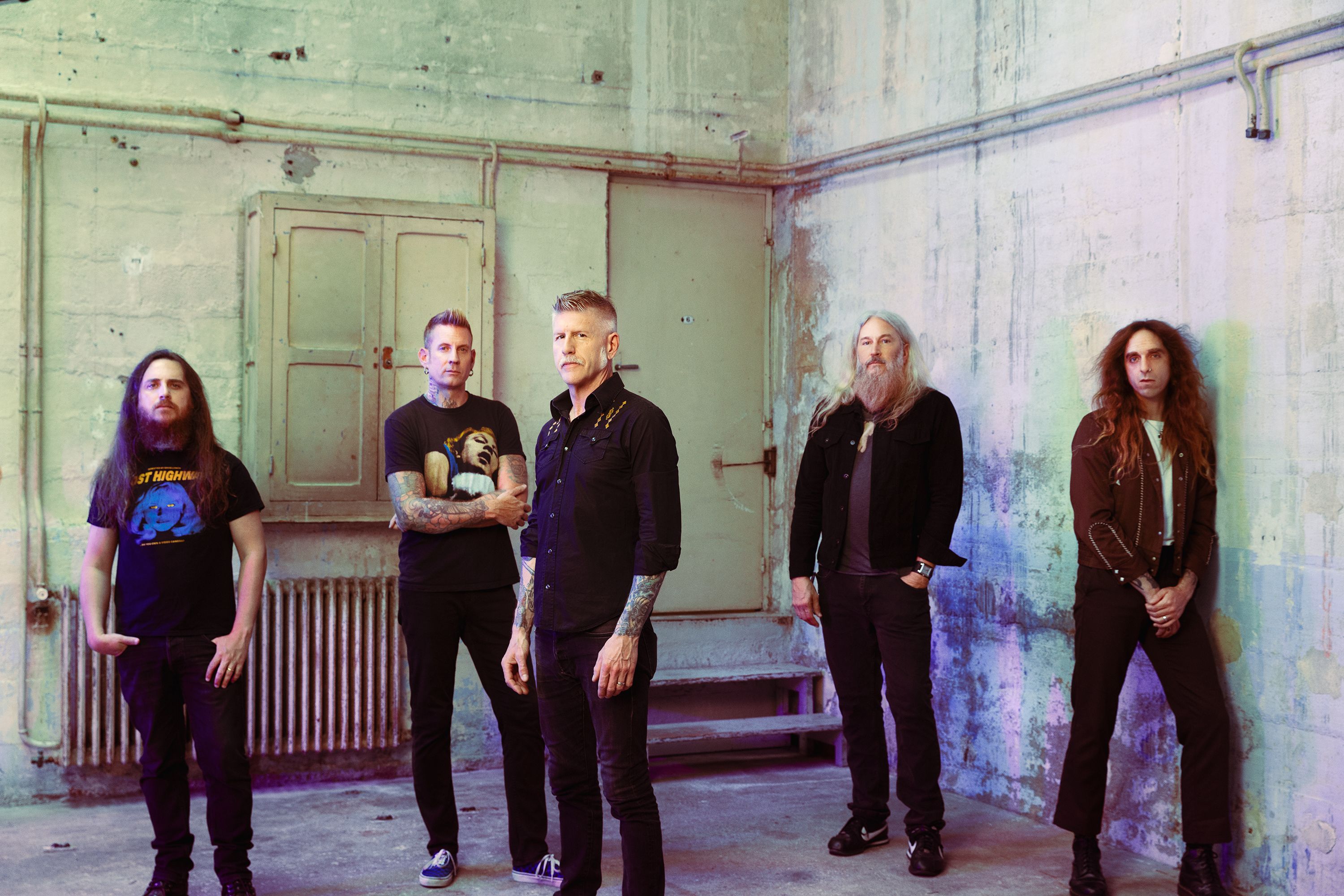
Mastodon, the Atlanta quartet that spent two decades carrying sludge metal into arenas, released a short film on 8 July 2026 honouring Brent Hinds, its co-founder and former lead guitarist, who died in a motorcycle crash in 2025. The film, announced across the band's channels and picked up by Pitchfork the same day, is the most deliberate public statement the surviving members have made about a loss that pulled the band's history into two unequal halves: before, and after.
The release lands at a moment when legacy acts across heavy music are reckoning, sometimes awkwardly, with the question of how to eulogise a single member without embalming the institution. Mastodon's answer is unusually direct for a group that built its reputation on obfuscation,concept albums, fantasy prose, sci-fi grotesquerie. The film centres Hinds as a creator rather than as a casualty, which is itself a statement about how a working band chooses to be remembered.
What the band put out
The short film, released through Mastodon's official channels on 8 July 2026, draws on archival performance footage, studio material, and interview segments with the surviving members. Pitchfork's same-day write-up frames it explicitly as a tribute to Hinds following his death in a 2025 motorcycle crash, signalling that the band has moved past initial shock into a more formalised act of remembrance. The visual language,heavy on dim amber light, slow-motion riffing, and the band's signature mastodon-skull iconography,is pitched at long-time listeners rather than at a casual audience being onboarded.
What the film is not is a hagiography of the four-piece's later, more streamlined era. It leans instead into the early-Mastodon register: Hinds as the grinning, technically unhinged guitarist whose leads seemed to arrive from a parallel tuning of the instrument. That framing matters because Mastodon's commercial peak,records like Crack the Skye and The Hunter,was a collaborative document, not a Hinds solo project, and the band has been careful in past interviews to credit the writing room rather than any single player. The film honours Hinds within that collective frame rather than outside it.
The counterweight: a band that publicly split
Mastodon's careful framing is sharper once you set it against the more common industry template: the legacy-act eulogy that doubles as a quiet airbrushing. The pattern is familiar enough that it has its own cliche. A founding member dies, the surviving members issue a statement, a tour is rebranded in their honour, and the late player's idiosyncrasies are sanded down in service of a cleaner institutional story. The Hinds film pushes against that template in two ways.
First, it preserves his roughness. The interview clips reportedly keep his contradictions,his humour, his restlessness,intact rather than presenting him as the genial architect of Blood Mountain. Second, it does not pretend that the band's working life has continued unchanged. Mastodon parted ways with Hinds in 2025 before his death; the film sits inside that complicated fact rather than papering over it. A short tribute that simply mourned would have been easier. One that honours while acknowledging the rupture is the harder, and more honest, editorial choice.
What this says about how metal institutions age
Heavy music has spent the last decade formalising itself in ways that would have struck its early-2000s practitioners as absurd. Festival headliners now negotiate through agencies that once represented pop acts. Bands that once lived in vans have HR departments. Obituaries are no longer typed out by friends in dim backstage rooms; they are assets, scheduled, art-directed, and distributed.
What Mastodon has done with the Hinds film is read that new terrain correctly. Rather than treating his death as a publicity problem to be managed, the band treated it as a creative one to be solved. The film is a piece of work with a point of view, not a defensive press release. That posture,deliberate, mournful, willing to absorb contradiction,is itself a marker of how seriously the genre's veteran institutions are now taking their own archives. The four-piece has, in effect, recognised that the band's history is a public object, and that public objects require stewardship rather than mere sentiment.
It also suggests a generational shift inside metal itself. The Mastodon cohort,now in their forties, came of age in a scene that distrusted the institutional gestures of stadium rock. Writing a short film for a fallen bandmate would once have felt like a betrayal of that ethic. Doing it without kitsch, and without sanding down the deceased's rougher edges, is a way of honouring both the man and the anti-institutional instinct that produced him.
What remains uncertain
The film itself is short on specifics that the wider rock press will want. The exact circumstances of the 2025 motorcycle crash that killed Hinds have not been re-litigated in the materials released on 8 July, and the band's longer-term direction,whether the current Mastodon line-up will continue to record and tour under the name,or what role Hinds's existing catalogue will play in future releases,remains an open question rather than a settled one. There is also the question,unaddressed in public materials so far,of how the band's song credits will be reconciled. Hinds co-wrote much of Mastodon's defining work. The economics of legacy rock publishing do not get less complicated after a founder dies; they get more so.
What the short film does, for now, is buy the band time and honesty. It does not resolve those questions, and it does not pretend to. It tells the audience, in roughly fifteen minutes of moving image, that the surviving members have decided to grieve in public on their own terms. For a genre that built its identity on spectacle and extremity, that quiet insistence on doing the work properly is, in its own way, the most metal move the band has made in years.
— Monexus framed this as a story about institutional memory rather than a straight celebrity obituary, because the band's editorial choices,not just the crash,are the news.