OpenAI’s GPT 5.6 lands, the Fed rewrites its inflation gauge, and the dollar’s long unwind begins
Three quiet shifts in 48 hours — a new flagship AI model, a rethink of how the Fed measures inflation, and the first-ever tilt away from the dollar in central-bank reserve planning — point to a single underlying rotation.
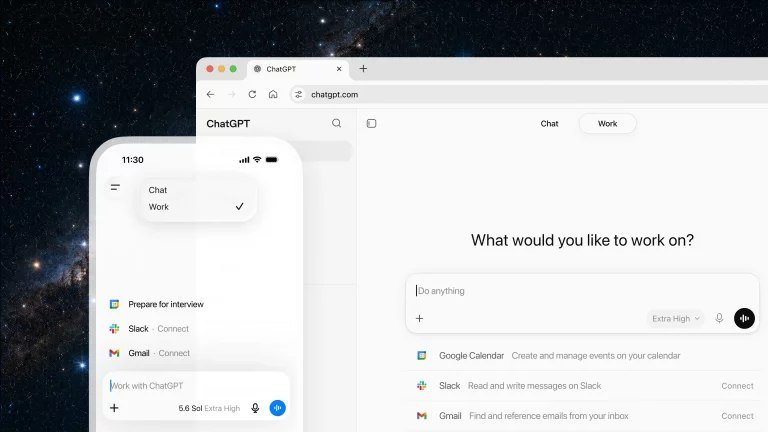
OpenAI on Wednesday 9 July 2026 put a new flagship model on the table — GPT 5.6, with a sub-variant called Sol billed as its top-of-line — and the timing, three days before the Federal Reserve's next policy meeting, was either coincidental or a reminder that the AI capex story now anchors every assumption about US growth. Hours earlier, the Fed had confirmed a long-rumoured rewrite of its preferred inflation gauge, a technical change that markets read as lowering the bar to a September rate cut. And at the margin, a quieter signal landed: for the first time since the GPI series began recording reserve managers' long-term intentions in 2023, more central banks expect to be holding fewer dollars ten years from now than more, per a tracker highlighted by Unusual Whales. Three moves, one week, one underlying rotation.
The pattern, taken together, is a market in which the cost of capital is being loosened, the relative scarcity of AI compute is being repriced upward, and the global savings that once recycled through Treasuries are being asked to do something else. None of these is, on its own, a regime change. Together, they sketch the beginning of one.
The new AI flagship, and what the price tag says about growth
OpenAI's launch of the GPT 5.6 family — with Sol positioned as the marquee release — lands into a capex cycle that has already pushed the S&P 500's valuation beyond anything analysts can compare to without invoking the late-1990s analogue. According to a Unusual Whales summary of a Bank of America note, the index is "statistically expensive on 17 of 20 metrics" and trades richer than tech-bubble benchmarks on eight of them. That framing is not new; the numbers behind it are. The hyperscaler capex bill is now the single most important line item in the US growth story, and a new model generation is the moment that bill reprices.
The argument is not that AI is overhyped. It is that the market has, for the first time in fifteen years, agreed to value a US growth story on capex rather than on earnings yield. A flagship release gives the bull case a fresh exhibit. The bear case is also implicit in the same numbers: seventeen of twenty valuation metrics overextended is not a setup that tolerates a disappointment cycle. The Fed decision in roughly 72 hours will set whether the market is being asked to fund that capex at 5.25% or 4.75%.
The Fed rewrites the yardstick
The second input is technical, and that is precisely why it matters. The Federal Reserve signalled, per a Wednesday morning wire, that an overhaul of its preferred inflation gauge could ease the case for further rate hikes. "Preferred inflation gauge" in Fed parlance usually means the personal consumption expenditures price index excluding food and energy, or its trimmed-mean cousin from the Dallas Fed. A methodology change that systematically lowers the printed rate does not, on its own, change the underlying price level. It changes the politics of the next 25 basis points.
This is the kind of story that gets read in two directions. Hawks will call it a softening of the institution's commitment to a hard 2% target. Doves will call it an overdue recognition that the basket has been distorted by post-pandemic weights. The most plausible read is neither: the Fed is rebuilding credibility after a 2022-2024 episode in which its preferred measure undershot realised inflation by enough to delay action. A revised methodology is a way of saying, quietly, that the institution's map was wrong and the territory is now being redrawn. Markets, which had been pricing a hold into September, moved within hours to price a cut.
The compounding effect is the point. A new flagship model, a softer inflation print, and a repriced rate path together describe a setup in which the marginal dollar of growth in the US economy is being funded more cheaply, on the assumption that AI capex will deliver the productivity gains that justify it. If it does, the Fed has bought itself a soft landing with extra runway. If it does not, the room for error shrinks dramatically.
The dollar's quiet unwind
The third signal is the one with the longest fuse. The GPI tracker, highlighted by Unusual Whales, recorded the first instance since the series began in 2023 of more central banks expecting to reduce their dollar holdings over the next ten years than increase them. This is a slow-moving survey, not a transaction, and a ten-year horizon is a long time for a reserve manager to be wrong. But the directionality matters. The dollar's reserve status has rested, for two decades, on a feedback loop: foreign central banks buy Treasuries, the US runs twin deficits, the yield curve absorbs the flow. If the marginal reserve manager is now, for the first time, a marginal seller, the price at which that flow is cleared starts to drift.
This is also the piece that pulls the other two stories into a single frame. A cheaper dollar, on the margin, is not a problem for AI capex priced in dollars. A more expensive dollar is a problem for the S&P 500's seventeen-of-twenty valuation stretch. The Fed's methodology change makes the dollar marginally less attractive to hold by making the carry story less compelling — the same easing that supports US growth also reduces the premium for parking reserves in short-dated Treasuries. None of these linkages is novel. The novelty is that they are moving in the same direction in the same week.
The market that doesn't get to sit this one out
The counter-narrative is straightforward. AI capex is real, the inflation revision is technical, and the dollar survey is sentiment, not position data. The S&P 500, on most reasonable discounted-cash-flow assumptions, is priced for a long sequence of earnings beats from a cohort of companies whose capital intensity has not stopped rising. That is a defensible position, but it requires a specific kind of world to validate: a world in which the Fed cuts, the dollar drifts, the AI capex delivers, and the marginal reserve manager does not, in fact, follow through on the survey.
The weaker position is the opposite: that the survey captures something structural, that the inflation revision is a tell, and that the AI capex is being funded by a curve that is repricing at the long end as the dollar's term premium begins to widen. The bond market is the place this debate will actually be settled. Treasury auctions over the next two months, and the bid-to-cover ratios on the long bond, will tell whether foreign demand is rolling off or merely pausing.
The nuance, for the moment, is that nobody is sure. The sources do not specify how representative the central-bank cohort in the GPI sample is, nor whether the inflation-gauge revision is a permanent methodology change or a base-effect adjustment that will roll off. OpenAI's own positioning of Sol as its flagship is a marketing claim that the market will price against benchmark performance in the coming weeks. The most that can be said, with the inputs in hand, is that three usually-uncorrelated signals moved in the same direction in the same 48 hours, and that the direction is the one the consensus had, until this week, treated as the lower-probability tail.
The stamp price rising to 82 cents on 12 July, announced by USPS and carried by Epoch Times, is a useful counterpoint on scale. A five-cent increase on a domestic postcard matters to direct-mail businesses and to the small cohort of Americans who still mail cards. It does not move the inflation print. The point of including it here is the contrast: a granular, predictable, and modest repricing of a real-world service sitting inside a week in which the cost of the marginal dollar of US growth, the cost of money itself, and the cost of holding the world's reserve currency are all being repriced simultaneously, in the same direction, at scales that run from a postcard to a central-bank balance sheet.
Desk note: the wire covered OpenAI's launch and the Fed's methodology change as separate technology and central-banking stories. Monexus reads them — together with the GPI central-bank survey — as a single rotation in the cost and scarcity of US growth, and frames the week accordingly.
Wire provenance
This editorial synthesis draws on the following public wire/social posts:
- https://t.me/c/CryptoBriefing
- https://t.me/c/CryptoBriefing
- https://t.me/c/CryptoBriefing
- https://x.com/unusual_whales/status/
- https://t.me/s/epochtimes