Live Wire
15:03ZPRESSTVLarge crowds gather in Iran for funeral of president killed in helicopter crash15:01ZFOTROSRESIOman tells UN shipping agency it opposes transit fees in Strait of Hormuz15:01ZENGLISHABUMohammad Al-Fayoumi identified as killed in vehicle strike at Gaza City junction15:01ZDISCLOSETVMexico to file criminal complaints in US over citizens' deaths in immigration custody15:01ZCLASHREPORFormer US Ambassador Emanuel Calls for Ending American Subsidies to Israel's Defense Budget15:00ZMYLORDBEBOEU lawmakers vote on chat control surveillance measure during parliamentary recess14:59ZIRNAENUS analyst praises Khamenei's legacy of Iranian independence14:59ZTHECRADLEMMourners chant "Death to Israel" at funeral procession in Mashhad for Iran's late Supreme Leader
Markets
S&P 500748.85 0.46%Nasdaq26,010 0.54%Nasdaq 10029,596 1.17%Dow524.17 0.27%Nikkei93.41 0.93%China 5033.38 0.19%Europe88.43 0.28%DAX41.53 0.53%BTC$62,911 1.91%ETH$1,740 1.04%BNB$570.88 1.54%XRP$1.09 1.61%SOL$77.7 1.03%TRX$0.3313 0.84%HYPE$68.05 1.27%DOGE$0.0725 1.12%RAIN$0.0145 1.09%LEO$9.51 0.70%QQQ$720.23 1.24%VOO$688.32 0.45%VTI$370.46 0.60%IWM$297.35 1.32%ARKK$81.49 1.66%HYG$79.79 0.16%Gold$378.53 1.09%Silver$54.49 3.14%WTI Crude$109.6 2.33%Brent$42.65 2.11%Nat Gas$10.95 5.60%Copper$37.91 2.27%EUR/USD1.1435 0.00%GBP/USD1.3396 0.00%USD/JPY162.41 0.00%USD/CNY6.7960 0.00%
OPENNYSEcloses in 4h 52m
The Monexus
Vol. I · No. 190
Thursday, 9 July 2026
Saturday Ed.
Updated 15:07 UTC
  • UTC15:07
  • EDT11:07
  • GMT16:07
  • CET17:07
  • JST00:07
  • HKT23:07
← The MonexusOpinion

Patriot, begotten: a deal the headline writers will flatter

Washington's offer to license Patriot production inside Ukraine looks like a strategic pivot. Read the small print before you call it one.
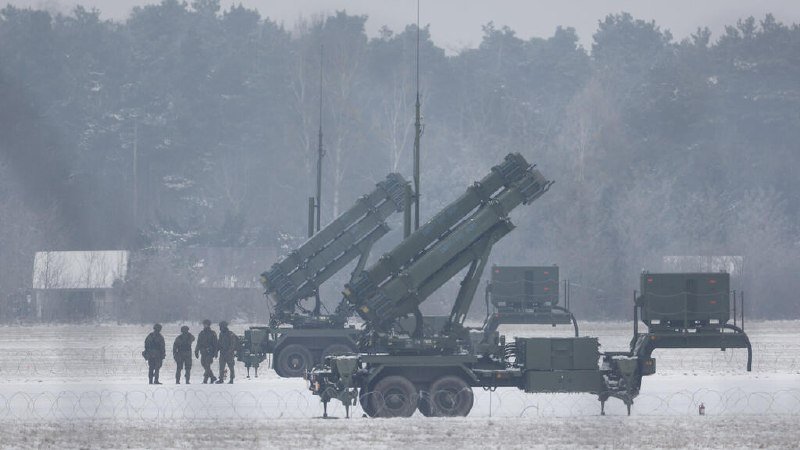
A headline reads "Trump Says He'll Let Ukraine Make Patriot Missiles. It Won't Be Easy" above an image of a camouflaged Patriot missile launcher and military truck parked in an open area. @Tsaplienko · Telegram

On 8 July 2026, a Polymarket-curated wire headline carried a striking line: Donald Trump had told Volodymyr Zelenskyy the United States would grant Ukraine a licence to produce Patriot missiles. The two men, per the same feed, also told each other they had developed a "very good relationship." By the morning of 9 July, a Telegram channel, DDGeopolitics, was framing the episode differently: Zelenskyy, it claimed, had managed to "beg" for a single Patriot package. The contrast is the story.

Strip away the choreography and the question is narrow. Did Washington just open the door to Ukrainian production of one of the most sophisticated surface-to-air interceptors on the planet, or did it move a small parcel of missiles and let the licence language do the rest? Both readings are live. One turns industrial policy. The other turns press release.

What the wire actually says

Two Polymarket-flagged posts from 8 July 2026 carry the substance. The first, timestamped 13:55 UTC, reports Trump telling Zelenskyy the two men have developed a "very good relationship." The second, at 14:00 UTC, reports Trump telling Zelenskyy the US will give Ukraine a licence to produce Patriot missiles. Nothing in the available items specifies the scope of the licence, the production site, the transfer of tooling, the rights to the seeker and radar subcomponents, or the timeline. The DDGeopolitics post of 9 July 2026 at 08:25 UTC, by contrast, describes a single Patriot package secured after Zelenskyy "begged" for it. The framing on Telegram is sharply at odds with the licence language circulating on the Polymarket feed.

This is the gap a sceptical reader should sit with. "Licence to produce" is a phrase with a long legal tail and a short political one. Lockheed Martin's Patriot is built around Raytheon ground-equipment, hit-to-kill guidance, and a tightly-held export-controlled supply chain. A licence can mean co-production of selected subassemblies under US supervision; it can mean final assembly from kits; it can mean a memorandum of intent. It can also mean little more than a polite word ahead of an election cycle. The wire does not say which.

The Zelenskyy problem

The Ukrainian president has, for two years, made the air-defence gap the central exhibit of his case to Western capitals. That case has been effective: Patriot systems from Germany, the Netherlands and Romania have entered service inside Ukraine, alongside IRIS-T, NASAMS and legacy Soviet kit. But the inventory math has never closed. Russia's glide-bomb and Shahed campaign burns through interceptors faster than donors can ship them. A domestic production line, even partial, would change that arithmetic in a way no single delivery ever can.

Which is why the "beg" framing matters. Telegram channels operating in the Ukrainian-language information space have spent months reporting on the asymmetric access Zelenskyy enjoys, or does not enjoy, in the Oval Office. A narrative in which Ukraine must petition for scraps is a counter-narrative to the "licence to produce" story: it tells a domestic audience that Kyiv is still supplicant, not partner. Both stories can be true simultaneously. Washington can offer a licence and demand deference in the same phone call.

Why the deal language is doing the work

Air-defence diplomacy has become the cleanest measure of where the Ukraine file actually sits inside US domestic politics. The Biden administration treated Patriot batteries as a deliberate, slow-release signal of resolve. The Trump administration has alternated between pause and push, often within the same news cycle. A licence to produce is, in that context, a politically cheap commitment. It promises industrial depth on a horizon of years without committing interceptors on a horizon of weeks. For a White House that wants to claim credit for arming Ukraine without surrendering inventory control, it is an elegant instrument.

The structural frame matters here, even without the theorist's name attached. Arms production has migrated from a donor-recipient model into a co-production and licensing model across the past decade. Turkey produces F-16 subassemblies under US licence. India produces airframes for its Su-30MKI fleet. The pattern is the same: the supplier retains the high-value intellectual property, the recipient gains industrial activity and a partial logistics tail, and both sides can describe the outcome as sovereignty. A Ukrainian Patriot licence, if real, would slot cleanly into that pattern.

What we do not know

The available reporting does not specify the scope of the licence, the production entity on the Ukrainian side, the timeline for first article, or whether US personnel would be embedded in any production facility. It does not say whether the licence covers the PAC-3 missile, the older PAC-2, the ground radar, the launcher, or all of the above. It does not address congressional notification requirements or whether any third country would host intermediate production. Until those questions are answered, the responsible read is that a political commitment to explore licensing has been made, not that an industrial programme has begun.

That distinction is the one the headline writers will obscure. A licence announced in a phone call is not a factory. A "very good relationship" is not a contract. And a single Patriot package, begged or otherwise, is not a substitute for the hundreds of interceptors Ukraine burns each month. Readers should hold all three propositions in mind at once.


Desk note: Monexus treated the Polymarket and Telegram items as raw wire, cross-reading the licence claim against the "beg" framing rather than picking a winner. Where the headline writers flatten ambiguity, this publication tries to keep it visible.

Wire provenance

This editorial synthesis draws on the following public wire/social posts:

  • https://t.me/DDGeopolitics
© 2026 Monexus Media · reported from the wire