Russia's fuel pinch: How Ukrainian drone strikes on refineries and 200 destroyed gas stations are squeezing Moscow's war economy
Moscow has banned diesel exports and Ukraine has lost 4% of its filling stations in a month — the fuel war is now cutting in both directions at once.
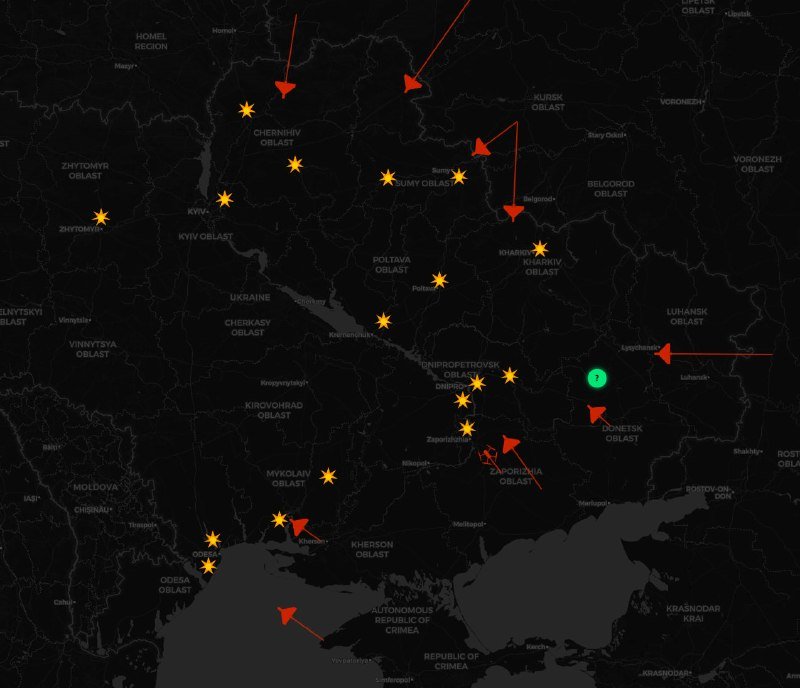
On 9 July 2026, a Ukrainian operational channel relayed an estimate from a domestic fuel-sector analyst that 200 of Ukraine's roughly 5,000 petrol stations have been physically destroyed in the past month, with the trajectory of attacks still accelerating. The figure, posted by the Telegram channel operativnoZSU at 05:01 UTC, is one data point in a quiet but consequential escalation: the fuel war between Russia and Ukraine has, in the space of roughly 24 hours, become visibly two-sided, with Moscow now banning diesel exports to keep its own refineries fed and Kyiv counting the cost of Russian strikes on retail fuel infrastructure inside its borders.
The structural picture is this: an attritional conflict has moved beyond the battlefield and the grid, and is now pressing on the pumps that keep both economies — and both war machines — running. Each side is attempting to deny the other the refined product it needs, and each is paying a price at home.
The Ukrainian side: a retail network under sustained bombardment
According to the fuel expert quoted by operativnoZSU, 200 filling stations out of approximately 5,000 nationwide have been destroyed in the last month — a 4% reduction in physical retail capacity in thirty days. The channel framed the trend as gaining momentum rather than plateauing. The figure should be treated as an analyst estimate relayed through an operational channel rather than an official Ukrainian government tally, and the underlying methodology is not described in the post.
The pattern, however, is consistent with reporting from earlier in the war. Russian long-range strike packages have routinely combined drone and missile attacks on energy infrastructure — initially grid substations and generation, more recently refineries, depots, and now, by this account, downstream retail. A 4% monthly loss of forecourts is, on its own, manageable for a national fuel market; a 4% monthly loss with the curve bending upward is not. If the same rate continued without adaptation, Ukraine would lose roughly half its forecourt network within a year — a trajectory that has not been verified and that assumes no adaptation, hardening, or diversification, but that illustrates why Ukrainian officials have begun treating forecourt infrastructure as a strategic asset.
The human cost is downstream of the structural one. Fuel is the input to evacuation, to agricultural harvest in the south, to logistics for the front, and to the diesel generators that bridge the gaps when Russian strikes take out transformer capacity. The forecourt is the last, most visible link in that chain.
The Russian side: an export ban and the politics of domestic supply
On 8 July 2026 at 16:45 UTC, LiveMint reported that Russia had banned diesel exports to head off domestic shortages following a flurry of Ukrainian drone strikes on the country's refineries. The move was confirmed the same afternoon by Polymarket's news wire at 15:29 UTC, which framed the ban as a response to a worsening fuel crisis inside Russia. Ukrainian long-range drone strikes on Russian refining infrastructure have been a sustained feature of the war since at least early 2024; what is new is the visible policy response from Moscow.
An export ban is a serious instrument. Russia has, in recent years, been one of the world's larger diesel exporters, and the country's refining sector is a meaningful source of state revenue as well as domestic supply. Closing the export valve is the kind of decision a government makes when it judges the political cost of empty tanks in Russian regions to be higher than the foreign-exchange cost of foregone sales. That is a political judgment, not a logistical one, and it tells you something about how the Kremlin is reading the domestic temperature.
The Russian framing of the underlying strikes — as terrorism against civilian infrastructure, as provocation, as something that requires retaliation against Ukrainian civilian systems in kind — is well understood and not the main story here. The main story is that Moscow is now visibly constrained by the same kind of attritional calculus it has been trying to impose on Kyiv.
The structural frame: two economies under mutual denial
What we are watching is not a new phase of the war but a maturation of an existing one. Both sides have spent more than three years learning to hit the other's economic infrastructure, and the targeting menus have converged: power generation, substations, refineries, depots, and now forecourts. The economics of denial are symmetrical in shape even if the underlying capacities are not. Ukraine is a net fuel importer; Russia is a net fuel exporter. Hitting a Ukrainian forecourt removes domestic capacity. Hitting a Russian refinery removes export capacity, and eventually, if sustained, domestic capacity too. The export ban is Moscow's attempt to convert the loss of refining throughput into a domestic allocation problem rather than a scarcity problem — to make the shortage legible to the state rather than to the citizen.
The deeper structural shift is that the war has become two-sided in a sense that goes beyond casualties and territory. Each side is now absorbing infrastructure losses at home, and each is making policy adjustments in public — Kyiv leaning on allies for air defence and mobile generation, Moscow leaning on administrative allocation. The fuel sector is the cleanest example of this symmetry because it is, by definition, measurable at the pump and at the dock.
There is an asymmetry that complicates the picture. Russia's refining capacity is larger in absolute terms, and a sustained Ukrainian drone campaign against it is, in a sense, a more cost-effective line of effort than the Russian campaign against Ukrainian forecourts, because the marginal Russian barrel that is destroyed or idled is one that would have been sold for foreign exchange. But this asymmetry is not as clean as it looks. Russian air defences around energy sites have thickened, Ukrainian drone production has come under cost pressure, and the political cost in Russia of visible fuel queues in major cities is real and is now, with the export ban, being internalised.
Stakes and the forward view
If the trajectory on the Ukrainian side continues, the next inflection point is not the forecourt count but the harvest window in the south — diesel for combine harvesters and for the trucking that moves grain to export corridors. If the trajectory on the Russian side continues, the next inflection point is the regional allocation of fuel inside Russia and the political tolerance of price increases or queueing outside major cities. Both are bounded problems, in the sense that markets and administrations can absorb them for a long time, but both are also problems that get harder to absorb as the cumulative toll rises.
The near-term read is that the fuel war is now cutting in both directions at once, and that the policy responses — Ukrainian reconstruction and hardening of forecourt sites, Russian export controls and administrative allocation — will shape the next quarter of the conflict more than any single battlefield engagement. The wire coverage has been thin on this dimension; most of the reporting continues to track grid strikes and frontline exchanges. The fuel story is running underneath that coverage and is, on present trend, where the war's economic pressure will be most visible to civilians on both sides of the line.
Desk note: Monexus is treating the operativnoZSU fuel-expert estimate as an analyst figure relayed through an operational channel rather than an official Ukrainian government tally, and has therefore described the 200-station figure as such rather than as a confirmed government statistic. The Russian export ban is treated as confirmed on the basis of two independent wire items, LiveMint and Polymarket, both dated 8 July 2026.
Wire provenance
This editorial synthesis draws on the following public wire/social posts:
- https://t.me/operativnoZSU/
- https://x.com/polymarket/status/