Set, sting, courtroom: Indian entertainment's two crises land on the same day
A Himalayan high court closes a suo motu case against a hotelier-turned-actor; a film-body demands a probe into a crew member's toxic insect bite on a Telugu set. Two fronts of the same uneasiness.
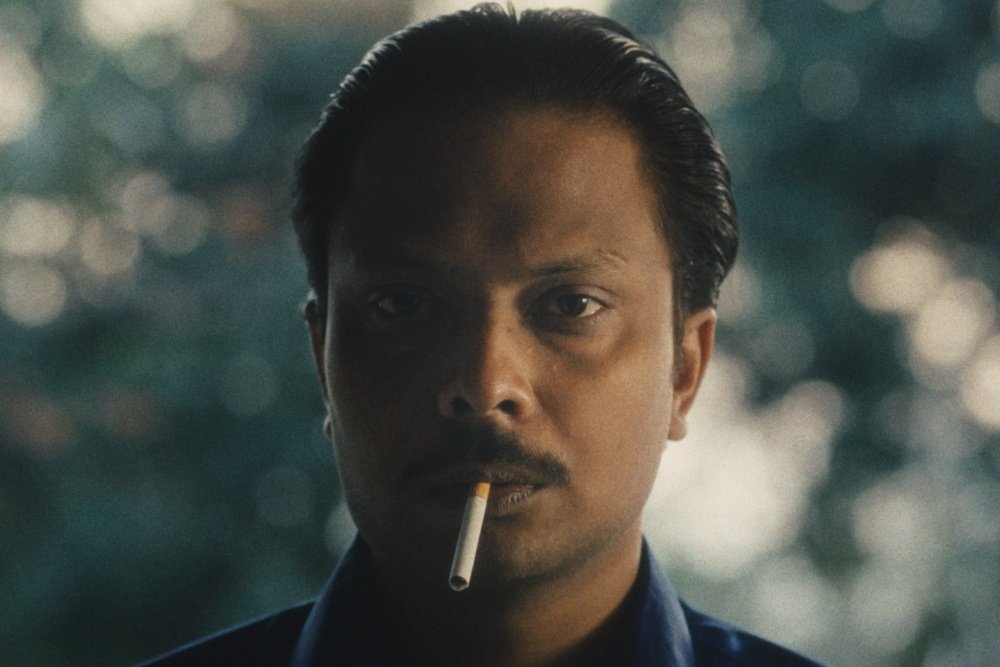
Two Indian entertainment stories landed within an hour of each other on 9 July 2026, and read together they sketch an industry that no longer has the space to manage its controversies internally. In one, the Himachal Pradesh High Court formally closed suo motu proceedings it had initiated against hotelier-turned-actor Nishant Sharma. In the other, a film workers' federation is pressing for a probe after a long-serving crew member collapsed on the set of a Telugu film starring Prabhas, reportedly days after an insect bite on location.
Each story, on its own, is a footnote. Stacked together, they suggest a sector where the courts, the unions, and the tabloid press are doing the regulating that an opaque star system used to do for itself.
A high court steps back
The Himachal Pradesh matter traces back to a public spat in which Sharma, who runs a hospitality business in the hill state and has appeared in Hindi films, represented himself in proceedings that generated considerable coverage through The Indian Express. According to a wire circulated by The Indian Express's Telegram feed at 07:52 UTC on 9 July 2026, the High Court has now dropped the suo motu proceedings it had opened.
The court did not need a petitioner to take the case up, which is the standard reading of a suo motu move — the bench acts on its own reading of what the public interest demands. Closing those same proceedings is also a discretionary act, and it carries a quiet message: the bench concluded, on whatever pleadings and counter-pleadings sat before it, that the matter did not warrant continued judicial management. Sharma's side now has a dismissal on the record; the court's supervisory jurisdiction is preserved for fresh cause.
The detail that has travelled furthest is procedural, not substantive. Indian courts have, over the last decade, become more comfortable stepping into celebrity-adjacent disputes — defamation, representation, contempt — that earlier generations of bench and bar preferred to leave to trade regulators or to the market. The Himachal ruling is a small counter-current: a court that picked the fight, then put it down.
A different crisis on a different set
Roughly an hour earlier, at 06:52 UTC, a separate Indian Express wire flagged a serious workplace complaint from the production floor of a major Telugu film: veteran crew member Rajesh Sharma is reportedly not out of danger after being bitten by an insect on the set of a Prabhas film, and a film workers' body has demanded a formal probe.
The pattern is familiar in Indian cinema. Location shoots in forested or semi-rural terrain — common in Telugu and Tamil productions — expose crews to vectors for bites and stings that city studios rarely see. Reporting on past incidents has tended to circle around the same questions: was a medic on site, was there a documented evacuation plan, did the production carry anti-venom if applicable, and did it delay calling a hospital to keep shooting. The wire from The Indian Express does not yet resolve those questions; the film body's demand for a probe is, in effect, a complaint that the production itself has not.
Prabhas's productions operate at the kind of scale at which set safety regimes exist on paper. Whether those regimes are being followed is now a live factual question. The crew member's name is the same as the actor's first name plus a different surname — there is no relation — and he has a long career credited in Telugu cinema.
What both stories share
Each is a labour-and-conduct case, even if the framing splits them between the courtroom and the set. The hotelier case turns on how a represented party conducted himself before the bench. The crew case turns on whether a represented party — the production house — kept a worker safe enough to survive an insect bite. In both, the institution being asked to decide is external: the High Court in the first; in the second, an industry federation that has only the moral and reputational leverage to push a probe.
There is also the question of speed. Suo motu moves are slow, court closures slower; a bitten crew member's condition can deteriorate in hours. The Indian entertainment industry's recent record on workplace fatalities — most acutely on sets where stunts and locations multiply risk — suggests that the union route is often the only one that produces contemporaneous information. The film body's demand for a probe is therefore also a demand for the kind of speed that courts are not designed to provide.
A counter-reading is fair. The court cases that look trivial from a distance often encode serious grievances, and a quick dismissal can be a denial of justice dressed as efficiency. So too with the set case — without an independent medical and logistical audit, the production's version of events is the only version on the public record, and producers rarely volunteer the unfavourable parts.
Stakes for the industry
The entertainment sector in India has grown large enough that its internal disputes are increasingly adjudicated in public. Theaters and streaming platforms have widened the audience; social media has shortened the news cycle; courts and unions have grown readier to enter where the industry once preferred to self-police. The two stories on 9 July sit inside that shift.
What remains uncertain is whether external scrutiny changes outcomes. The Himachal High Court can close a suo motu case and walk away; the bitten crew member may yet recover, or may not, and a probe may or may not follow. The structural question — whether Indian film and television are organised to keep workers safe on remote shoots, or whether every serious incident still has to be litigated or unionised into the record — is the one neither story answers on its own. Both, taken together, suggest that the industry has not yet built the institutions its scale now requires.
Desk note: Monexus has chosen to run the two wires side-by-side rather than separately, on the view that entertainment coverage should treat workplace conduct and courtroom conduct as part of the same story.