Small Talk: a Swiss finishing school, its alumnae, and a documentary that lets the camera do the talking
A Locarno-bound doc-fiction hybrid on Institut auf dem Rosenberg asks whether cameras can capture the etiquette taught to the daughters of the global elite — and whether that etiquette still pays.
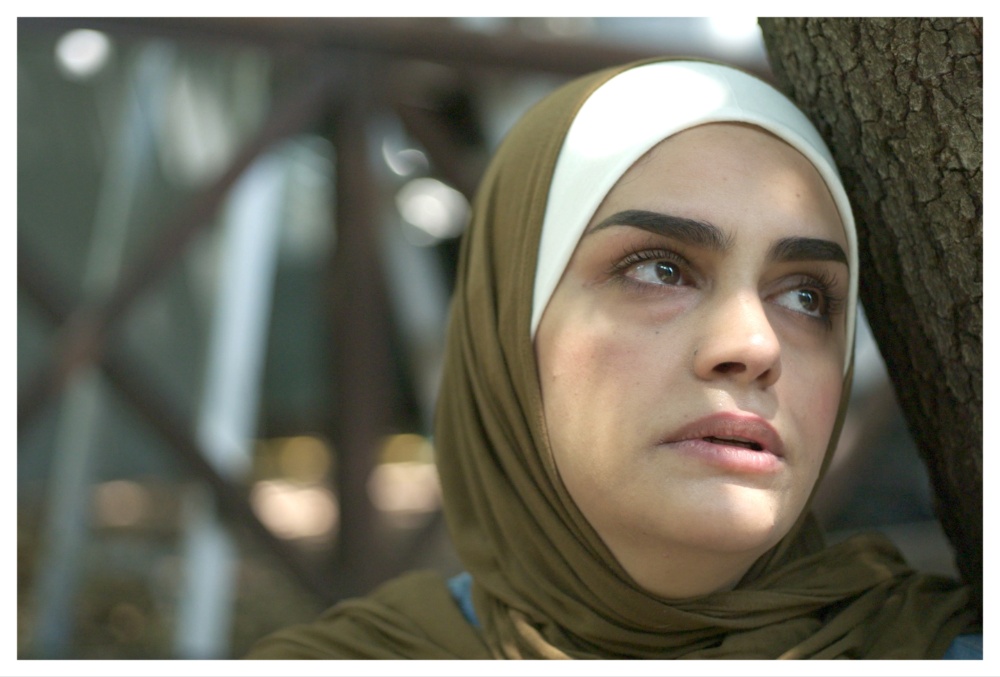
The Institut auf dem Rosenberg, the Swiss boarding school that markets itself as "the last finishing school," is about to become the subject of a film — not a hatchet job, and not a hagiography either. On 9 July 2026, Variety reported that Small Talk, a doc-fiction portrait of the school and the daughters of the global social elite who pass through it, has been picked up for international sales by the Paris-based company Urban Sales ahead of its Locarno Film Festival premiere.
The acquisition matters less for the commercial mechanics than for what the film is choosing to do with its access. Small Talk sits inside a long lineage of European documentaries — from the observational patience of the direct-cinema tradition to the controlled stagings of essay film — that have tried to render elite interiors legible without either flattering or indicting the people inside them. The school's own self-presentation, polished and self-aware, has long been a kind of soft propaganda. A film that goes in with a notebook, or with actors, and simply lets the rituals unspool is, in its way, a more pointed piece of reporting than any polemic.
A school built for a vanishing clientele
Auf dem Rosenberg, founded in 1889 and based in St. Gallen, has for more than a century catered to the daughters and sons of royal, political, and business families from the Gulf, Latin America, the former Soviet space, and Asia — the kind of households where "which school" is itself a status signal. The school's own marketing language, and the British tabloid profile of its alumni, frame the institution as a finishing school for an heiress class that is increasingly hybrid: oil money next to industrial fortunes next to second-generation political dynasties. The Variety notice positions Small Talk precisely inside that world: the power dynamics, the unspoken hierarchies, the social choreography that converts a teenage dormitory into a rehearsal space for the marriages, boards, and philanthropic boards-of-trustees those students are expected to occupy in their twenties.
The film is described as a doc-fiction hybrid, a form that has become the default mode for European art-cinema treatments of institutions the camera cannot fully enter on its own terms. The convention is well enough established that audiences now read it as a signal: the filmmakers had real access, but not enough to assemble a conventional verité arc, so they have staged scenes around the documentary spine. The choice has its own ethics. Staging allows the film to dramatise dynamics the teenagers themselves may not articulate in interview; it also gives the school the opportunity to claim that nothing on screen is "really" happening.
What the international sales market sees
Urban Sales, which Variety identifies as the film's sales agent, is part of a small group of European sales outfits — Playtime, MK2, Films Boutique, Wide — that have built reputations on art-house titles with crossover festival potential. Acquiring a Locarno-bound title ahead of the festival is a bet on two things: that the film will land reviews at Locarno's Piazza Grande or one of its sidebar sections, and that broadcasters and arthouse distributors will want to programme a Swiss-set documentary about elite adolescence in the autumn slate. Locarno's August dates fall into a window where the autumn-festival circuit (Venice, Toronto, San Sebastián) is preparing its own line-ups, so a sale announced in early July is, in commercial terms, deliberately front-loaded.
The sales arrangement also tells us something about the film's intended audience. Urban's catalogue has historically leaned toward titles that travel on the festival-and-broadcaster circuit rather than on theatrical breakout. That fits Small Talk's subject: a small, well-heeled school whose story is more interesting as sociology than as spectacle.
The camera in the dormitory
The harder editorial question — the one Small Talk will be judged on — is whether the filmmakers can hold the tonal line. A documentary about elite girlhood has a gravitational pull toward two failure modes: the voyeuristic, in which the audience is invited to gawk at heiresses the way mid-century society pages did, and the corrective, in which the film lectures its subjects about their privilege. Neither serves the material.
What the format the Variety notice describes — a doc-fiction portrait of "the power dynamics at play among the daughters of the world's social elite" — points toward, if executed well, is a third mode: the camera as a polite, slightly patient presence that records how hierarchy is performed in small gestures. Who pours the tea. Who is seated where. Whose birthday is celebrated and whose is not. Whose parents are named in conversation and whose are not. These are the documentary units that elite-ethnography filmmakers have been quietly assembling for two decades. The Swiss setting — neutral, discreet, billingual in a way that flatters the cosmopolitanism of the families in question — is, itself, part of the story.
Stakes, and what the film cannot tell us
If Small Talk succeeds at Locarno and in the subsequent festival and broadcast cycle, it will likely do two things at once. It will give the school a higher international profile than it has ever had, which the school's marketing operation will, presumably, find welcome. And it will make those rituals — the politenesses, the small cruelties, the diplomatic skills the girls are being trained in — visible to a wider audience that has, until now, only seen them in glossy alumni profiles. The two outcomes are not contradictory; they are the standard paradox of any institution that allows itself to be filmed at this level of intimacy.
What the sources do not tell us — and what no amount of press-release reporting can — is whether the film has the school or one of its alumnae on board as a credited producer or consultant. Complicity in the editorial sense is hard to read from a sales announcement. It will be legible, eventually, in the credits and in the way the girls on screen talk to the camera.
The Locarno screening will be the first test. If Small Talk arrives as the kind of film that lets the camera do the talking, it will earn its place in a respectable European tradition of institutional portraiture. If it tips toward either of the failure modes above, it will be remembered, if at all, as a missed opportunity. The school, after all, has been in the business of teaching daughters how to handle scrutiny for more than a century. The camera will need to be at least as well-briefed.
This publication treats the film announcement as a cultural event: the sales deal is the news peg, but the underlying question — what a documentary camera can and cannot do inside an institution that has spent 135 years learning to perform — is the reason the story warrants coverage beyond the trade press.
Wire provenance
This editorial synthesis draws on the following public wire/social posts:
- https://en.wikipedia.org/wiki/Institut_auf_dem_Rosenberg
- https://en.wikipedia.org/wiki/Locarno_Film_Festival