Strikes, sirens and the Gulf's narrowing buffer: what the 9 July exchange between Iran, the United States and Bahrain actually signals
Early-morning sirens across Manama on 9 July 2026 sit inside a fast-moving exchange of US and Iranian strikes. The available reporting is fragmentary, but the trajectory is harder to misread than the cable cut suggests.
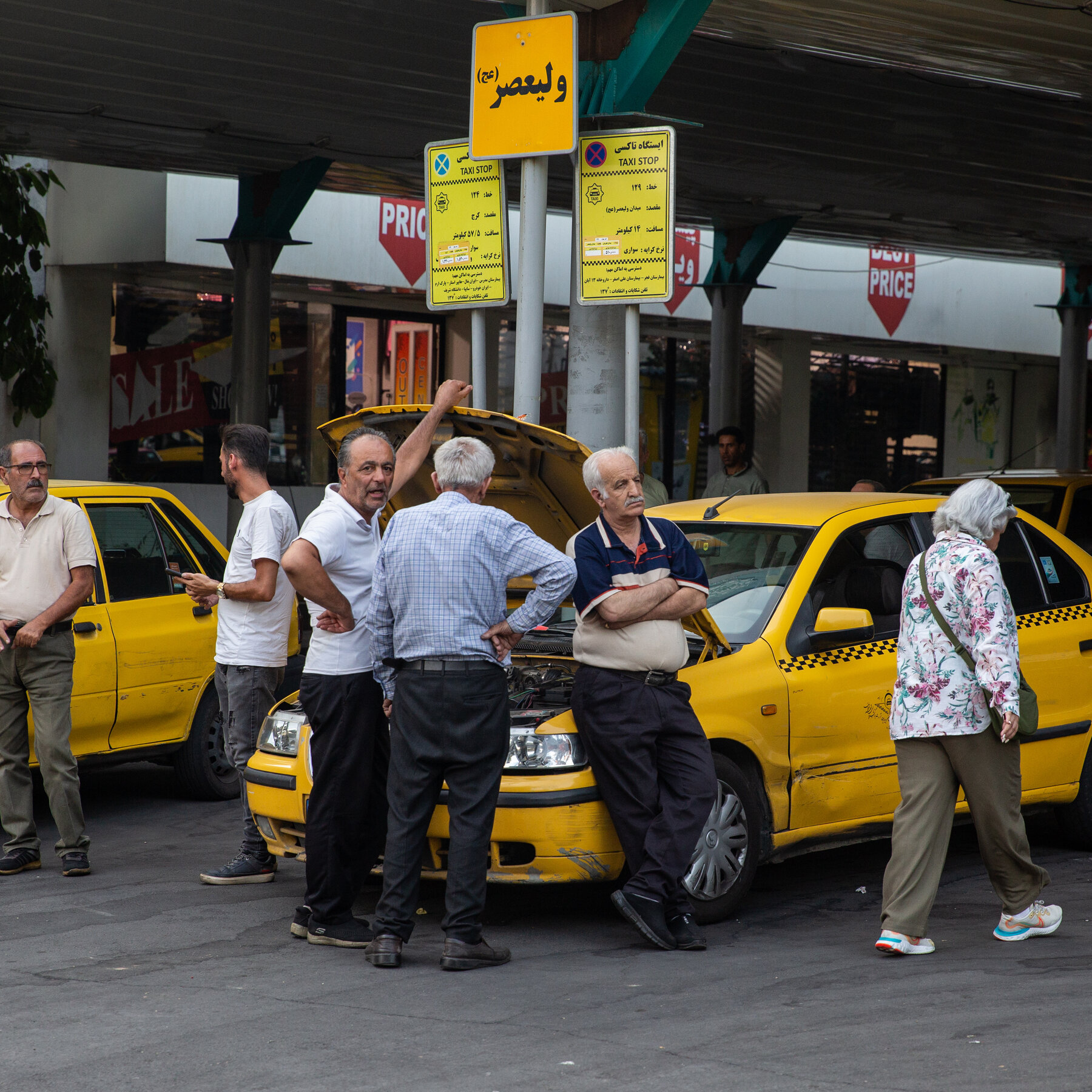
At 08:17 UTC on 9 July 2026, the open-source monitoring account Open Source IntelNOW posted on X that sirens and interceptions could be heard in Bahrain, linking photographic evidence from its feed. The post landed inside a flurry of regional alerts: an aligned channel, Intel Slava, had carried the same claim roughly fifteen minutes earlier at 08:02 UTC, and an account called Fotros Resistance reported sirens over Bahrain at 08:01 UTC. By 07:17 UTC — an hour before the Bahrain alerts — Iranian state-aligned media had already asserted that United States airstrikes killed 14 and wounded 78, a figure that has not been independently verified at the time of writing.
The shape of the morning is becoming legible: a US strike campaign on Iranian targets, an Iranian counter-narrative, and now a Gulf neighbour absorbing the spillover. The thinness of the evidence base forces a cautious read. The sources circulating in real time are Telegram channels and X accounts, not national authorities, and the casualty count comes from Iranian media alone. What can be said with more confidence is that the geography of escalation has widened overnight, and that Bahrain's air-defence activation is the most concrete new data point on that widening.
What the source trail actually shows
Two distinct clusters of reporting sit on either side of a 07:00 UTC dividing line. Before that hour, Iranian-aligned outlets were pushing a counter-narrative to a US action: the claim, recorded by Open Source IntelNOW at 07:17 UTC, that US airstrikes had killed 14 people and wounded 78, attributed to "Iranian media" rather than to a named outlet, ministry or city. After 08:00 UTC, the Bahrain-focused items cluster: sirens and interceptions, reported by three separate channels within roughly sixteen minutes. None of the four items links to an official Bahraini government statement, a US Central Command release, or an Iranian Ministry of Defence briefing. None names a specific site in Bahrain.
That asymmetry is itself a story. Telegram and X are the medium of last resort when official channels are silent, slow, or politically constrained. The Iran side is feeding casualty numbers without geographic specificity; the Bahrain side is feeding soundscape without casualty numbers. Each is performing a different kind of authority. In a 24-hour news cycle that has moved faster than institutional press operations can keep up with, open-source feeds are doing the work that wires would normally anchor — and the seams are visible.
A useful frame here is to separate event from signal. The event is some combination of a US strike on Iranian territory, an Iranian casualty claim, and a Bahraini air-defence activation. The signal is what these items, taken together, tell us about how the confrontation is being managed — or not managed — at the operational level. A single siren report is weather. Three aligned reports inside a sixteen-minute window, with photographic evidence attached, is a pattern. The pattern here points to a Gulf state that is no longer standing at a comfortable distance from the kinetic phase of an Iran–US exchange.
What Bahrain's activation tells us about the geography of risk
Bahrain hosts the US Navy's Fifth Fleet and the Naval Forces Central Command, the institutional centre of American maritime power in the Persian Gulf. It has, for two decades, been the staging ground for carrier aviation in any operation aimed at Iran. The political and military decision to put early-warning systems and interceptors into audible operation on the morning of 9 July implies a credible inbound threat — or, more cautiously, a threat the local command judged it could not afford to discount.
Two readings compete. The first is that Iran, or an Iran-aligned militia in Iraq, Syria or the Gulf littoral, has launched a missile or drone package aimed at US assets in Bahrain or at the Bahraini state itself. The second is that the activation is precautionary — a defensive posture taken in response to regional escalation rather than a direct incoming strike on Manama. The source items do not adjudicate between these readings. They record sirens; they record interceptions; they do not specify targets or origins. The honest position is that the evidence is consistent with either scenario, and that any firmer read will require Bahraini, US, or Iranian official confirmation that has not, as of midday UTC on 9 July, appeared in the open-source feed.
What the geography does support is the inference that the buffer is narrower than it was a week ago. The Gulf monarchies have spent much of the past two years attempting to keep the temperature with Tehran low — pursuing détente with Iran, reopening diplomatic channels through Syria's reconstruction phase, and resisting US pressure to fully normalise against the Islamic Republic. That posture assumes the United States can manage escalation without dragging the Gulf Cooperation Council states into the blast radius. If Bahrain's air-defence apparatus is now active, the assumption is under live test.
The counter-narrative and what it does
Iranian-aligned channels are not only reporting casualties from the US side; they are also, as the 08:01 UTC Fotros Resistance post hints, framing the Bahrain activation inside the same storyline. The architecture of the messaging is recognisable: a US strike produces Iranian civilian casualties; Iran is the victim of aggression; the Gulf states are pulled into the conflict by an American security umbrella they did not choose. This is not novel. It is the standard inversion that Iranian and Iran-aligned outlets run whenever the United States uses force in the region.
That the messaging is familiar does not make it wrong. Iranian civilian harm from US airstrikes is a long-standing and documented concern, raised consistently by Iranian state media, by regional outlets such as Al Jazeera and Middle East Eye, and by humanitarian organisations operating on the ground. The specific 14-dead, 78-wounded figure from the morning's reporting carries the standard caveats that come with state-aligned sourcing in a live-fire environment: it should be read as an Iranian-government position, not as an independently verified body count. But the structural point — that US action produces Iranian civilian harm, and that this harm shapes regional opinion in ways the United States rarely accounts for — holds.
The harder analytical move is to hold both in the same sentence: the United States has the right under international law to act against a nuclear and missile programme it considers an imminent threat; Iranian civilian harm from those actions is real and politically consequential; and the framing that treats US action as straightforwardly defensive obscures the cost that action imposes on the Iranian population. A responsible read of the morning requires holding each of those in view without collapsing them into one another.
The structural frame: why a small set of Telegram posts matter
The information environment around the 9 July exchange is being shaped by an unusually compressed stack of Telegram channels and X accounts. Open Source IntelNOW, Intel Slava, and Fotros Resistance are not wire services. They are monitoring and partisan accounts, each with its own editorial line, and they are filling the space that Reuters, AP and the BBC would normally occupy in a breaking-news cycle. This is not a 2026 novelty — the war in Ukraine and the Gaza conflict of 2023–24 trained a generation of readers to consume conflict reporting through these channels — but the Iran–US exchange is testing how well the model holds when the kinetic phase of a great-power confrontation goes live.
What the Telegram-mediated information environment does, structurally, is collapse the time between event and narrative. A wire service in the same situation would be scrambling to verify a siren report before publishing it; a Telegram channel publishes the report, then verifies or retracts. The 14-dead figure illustrates the inversion. In a wire-led cycle, that number would not appear until an Iranian official had spoken on the record and a stringer had filed from a named city. In the cycle that produced the morning's items, the number appeared first, and the editorial work of sourcing it back to a named institution is happening downstream — if at all.
For readers, the practical implication is that the morning's headline should be read as a structured uncertainty rather than a settled fact. Sirens in Bahrain: credible from three independent posts inside sixteen minutes. US strikes producing Iranian casualties: claimed by Iranian media, not yet independently verified. The escalation is real. The specifics are still arriving.
Stakes: a Gulf that cannot stay outside the line
The most consequential thing the morning tells us is not the siren count or the casualty figure; it is that Bahrain is now inside the operational picture. The Gulf Cooperation Council's strategy of managed distance from the Iran–US confrontation has been a slow, deliberate construction over the past decade. It rests on the assumption that US force posture in the Gulf deters Iranian retaliation against US hosts, that Iran prefers to avoid widening a conflict into the GCC's sovereign territory, and that the GCC states can carry on as both US security partners and Iranian trade partners in the medium term.
If Bahrain's air defences were active on the morning of 9 July, at least one of those assumptions is being tested live. The most likely candidate is the third: the assumption that the GCC can maintain the middle position. Even a precautionary activation of interceptors is a public event in a small country; it is heard, it is filmed, it circulates on local social media, and it tells the Bahraini public that the layer of distance has thinned. That is politically costly for a government whose social contract rests on the promise of stability.
The forward question is whether the activation is followed by an Iranian or Iran-aligned attribution — a claim of responsibility, an indirect acknowledgement — that locks in the new posture, or whether the activation fades and Bahraini officialdom describes it as routine. The source trail does not answer that yet. What it does say, with reasonable confidence, is that the geography of this particular Iran–US exchange now includes the Gulf littoral, and that the buffer the GCC spent a decade constructing is no longer functioning invisibly.
What we do not know
The morning of 9 July 2026 has produced a tight cluster of claims and a wide ring of unknowns. The 14-dead, 78-wounded figure is unattributed to a city, a facility, or a named Iranian official. The Bahrain siren reports are not paired with a Bahraini government statement, a US Central Command release, or an Iranian Ministry of Defence briefing. The interceptions are not specified by platform — surface-to-air missile, air-to-air, or counter-drone — and the targets are not named. None of the four source items references a casualty count from the Bahraini side.
What the sources do agree on is narrower than the headline. They agree that something happened in Bahrain at around 08:00 UTC that produced audible sirens and, in some accounts, interceptors. They agree that Iranian media has claimed US strikes produced civilian casualties, with a figure of 14 dead and 78 wounded. They agree that the two events are unfolding inside the same operational hour. The wider narrative — that this is the start of a sustained Iran–US war, or the last spasm of a contained exchange — is not yet in the source material. It is a forecast, not a report, and should be read as such.
Desk note: Monexus has run this piece on the four items available in the morning thread, none of which is a wire outlet. Where wire confirmation exists later in the day, this article will be updated through the live cluster; readers should treat the casualty and interception figures as preliminary until Bahraini, US, or independent Iranian official sources speak on the record.
Wire provenance
This editorial synthesis draws on the following public wire/social posts:
- https://twitter.com/Osint613/status/2075129458650976446/photo/1
- https://twitter.com/Osint613/status/2075129458650976446
- https://t.me/intelslava
- https://t.me/FotrosResistance
- https://t.me/osintlive
- https://t.me/s/intelslava