Tehran's grief machine: how Iranian state media is packaging a war narrative
A cascade of Tasnim dispatches mourning a senior security figure shows how Tehran's official apparatus fuses veneration and mobilisation — and what that blend tells outside readers.
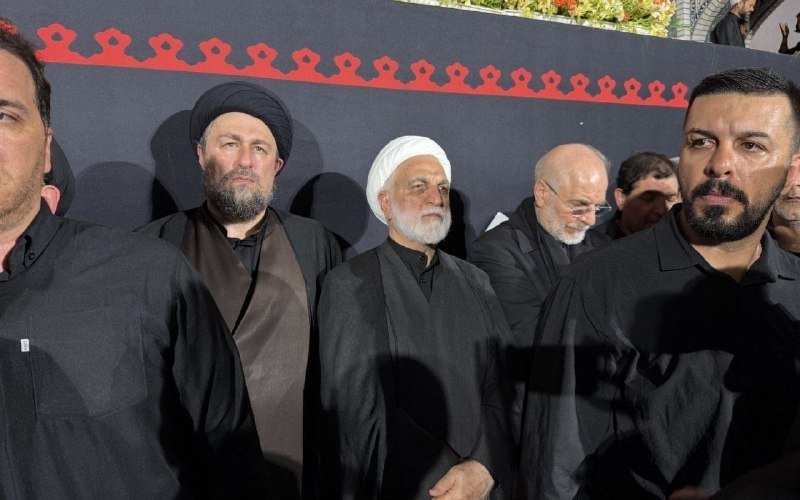
On 9 July 2026, between 19:58 and 22:04 UTC, the English-language feed of Iran's Tasnim News Agency pushed a tightly sequenced set of commemorative posts under the hashtag #Badarqa_Aghai_Shahid_Iran. The messages — short, devotional, addressed to a deceased figure styled as a "guarantor of the shrine" — were interleaved with clerical rulings on funeral prayer. To a reader outside Iran's information ecosystem, the posts can read as obscure religious content. They are not. They are a working example of how state-aligned media in a sanctioned, contested republic turns grief into a coordinated broadcast product.
The tactical point is what the sequence does, not what each post says in isolation. Tasnim, designated under US Treasury sanctions as part of the Iranian state media apparatus and long treated by Western think-tanks as a primary messaging arm of the Islamic Revolutionary Guard Corps, did not simply report a death. It constructed an hour-by-hour ritual of veneration, complete with imagery, hashtag, and explicit calls to engagement. That sequencing is the news.
What the feed actually published
Four Tasnim posts sit inside a roughly two-hour window on the evening of 9 July. The first, at 19:58 UTC, is framed as a personal address: "Sir, I hope to meet you…", paired with the martyr hashtag. The second, at 20:11 UTC, carries a clerical ruling on the prayer to be recited on the first night at a fresh grave for several mourners — a piece of religious instruction slotted into a breaking-news flow. The third, at 21:24 UTC, escalates the tone: "The trust reached the guarantor of the shrine…", again carrying the martyr hashtag. The fourth, at 22:04 UTC, closes the cycle with a video and the line "Yes, time is up."
The structure is deliberate. A devotional opener is followed by a religious-legal instruction, a status elevation of the dead man, and a final exhortation. The hashtag binds every post to a single narrative thread. The result is what media scholars call a "rolling shrine" — a content stream that performs collective mourning in real time, in public, on a platform that reaches both Iranian domestic audiences and an English-speaking external readership Tasnim maintains specifically for foreign-facing messaging.
Reading against the wire
Western wire reporting on Iranian state media tends to oscillate between two frames: either Tasnim is dismissed as crude propaganda, or it is read as an opaque intelligence channel of interest only to analysts. Both miss the operational point. The 9 July sequence is neither crude nor narrow. It is a sophisticated example of how a sanctioned media apparatus uses the grammar of a global short-video platform — hashtags, captions, video clips, calls to share — to project a particular image of Iranian political life to outside viewers.
Inside Iran, where Tasnim is read by regime loyalists and by reformist critics alike, the same sequence performs a different job. It signals the ideological standing of the deceased, gives clerical cover to mourners, and tells readers where they are expected to stand on the political spectrum. The English feed is not a translation of the Persian product; it is a parallel broadcast aimed outward.
A grief machine, not a press release
The interesting comparison is not with CNN or Reuters. It is with the wider ecosystem of state-aligned media in sanctioned or partly-sanctioned states — RT and the late Sputnik in Russia, Prensa Latina in Cuba, Prensa Oficial in Venezuela, and the English-language arms of outlets such as CGTN and Global Times in China. Each of these outlets has learned that the modern news product is less a published article than a continuously updated feed, less a story than an event-broadcast, and less a piece of journalism than a ritual performed in public.
What Tasnim's 9 July sequence shows is the Iranian version of that lesson. The martyr is the occasion; the platform is the medium; the hashtag is the connective tissue; the clerical ruling gives the operation religious legitimacy; the video gives it emotional weight; the English captions give it international reach. None of these elements is a press release. Together, they are a piece of broadcast engineering.
What this means for readers outside Iran
For foreign readers — diplomats, journalists, investors, sanctions-compliance officers, ordinary consumers of Middle East news — the practical question is how to read this material. Three points are worth holding onto.
First, Tasnim's English feed is a curated product, not a translation. Reading it as a window onto "what Iranians are saying" is a category error. It is what the Iranian state wants English-reading outsiders to see.
Second, sequencing is information. A single mourning post is sentiment; four mourning posts in two hours, interleaved with a clerical ruling, is a coordinated broadcast. Analysts who treat such feeds as a stream of disconnected items miss the engineering.
Third, the structural pattern generalises. Sanctioned or partly-sanctioned states have learned that the most efficient way to project legitimacy is not to publish more news, but to publish more ritual. Tasnim's 9 July window is a clean specimen of that practice.
What remains uncertain
The sources do not specify the identity of the deceased figure referenced by the #Badarqa_Aghai_Shahid_Iran hashtag beyond the title "Aghai Shahid," nor do they confirm the specific event that prompted the commemorative sequence. The framing here reads the sequence's structure and broadcast mechanics; the underlying news peg — who died, where, and how — would require corroboration from independent reporting outside the Tasnim feed before being treated as established fact. Monexus treats the structural reading as solid and the underlying biographical details as not yet verified.
Desk note: this piece reads the form of the Tasnim sequence rather than the biographical claims embedded in it; wire services reporting the underlying event should be cited directly when a confirmed peg is established.
Wire provenance
This editorial synthesis draws on the following public wire/social posts:
- https://t.me/s/tasnimnews_en
- https://t.me/s/tasnimnews_en
- https://t.me/s/tasnimnews_en
- https://t.me/s/tasnimnews_en