Tehran's martyrdom choreography and the Lebanon it leaves behind
State-aligned coverage from Tehran and Beirut is performing grief as governance, and a stalled Lebanon framework is being held hostage to the pageantry.
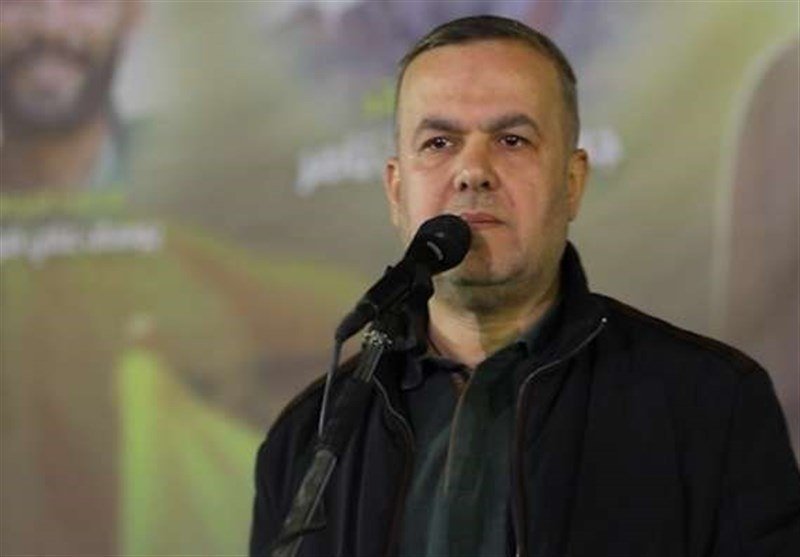
Iranian state media and its Lebanese proxy are running the same script this week, and the script is grief. On 9 July 2026, PressTV carried the landing of the late Supreme Leader's coffins at Mashhad's Shahid Hasheminejad International Airport, IRNA's English service confirmed the airport was being prepared to receive the body, and Hezbollah's secretary general used the moment to publicly torpedo a Lebanon framework agreement that Western and Gulf mediators have spent months brokering. The choreography is precise: canonise the leader, bind the alliance to his blood, and remind Beirut that its sovereignty is still, in the last instance, an Iranian concession.
What looks like mourning is in fact a constitutional exercise performed in real time. Khamenei's martyrdom has not produced a policy vacuum; it has produced a succession in which the theatre of unanimity is itself the claim to legitimacy. The "martyr" framing matters because it converts a succession crisis into a continuity claim. Whoever inherits the title inherits a movement whose entire claim is that the previous holder died at the hands of an enemy. The bargain is explicit in the messaging: avenge, unite, do not deviate.
The Mashhad landing and the grammar of a transfer of power
The arrival at Mashhad was not a logistics story. IRNA and PressTV both treated the tarmac as a stage, and the framing was consistent across the two state-aligned feeds: the late Leader returns to the holy city, the airport has been readied, the coffins are received. Mashhad is no neutral choice — it is the resting place of Imam Reza, the eighth Shia imam, and a procession through the city folds the new martyr into the older martyrology of the sect. The optics bind a contested succession to a thousand-year-old devotional map, which is precisely the work the state-aligned outlets want the cameras to do.
For a reader outside the region the relevant fact is the absence of an obvious neutral arbiter. There is no Iranian equivalent of the shura councils that, in other moments of Shia political transition, have mediated between clerical factions. The state press is performing the mediation itself, and the merit of the performance is being judged by how seamlessly regional allies echo it.
Hezbollah's veto, performed in public
Hezbollah's intervention is the more consequential of the two beats. Per PressTV's 9 July summary, the secretary general of the Lebanese movement publicly warned that the framework agreement on Lebanon will not advance, and tied that warning directly to the late Leader's legacy. In plain terms: a Lebanese political arrangement that the country's own elected government, plus Gulf and Western mediators, had been inching toward has now been declared conditional on Hezbollah's reading of Iranian grief.
This is not new behaviour, but it is unusually public. The Lebanese state has spent the better part of two years trying to keep a framework alive precisely because the alternative — open relapse into sectarian paralysis — is worse than any deal currently on the table. Hezbollah's choice to bury the framework in the same week that the Supreme Leader's body is being processed through the holiest cities of Iran tells a Lebanese audience, and a Gulf audience, that the timeline for normalisation in Beirut is now hostage to events in Qom and Mashhad. Whatever mediation capital exists in the Gulf is being forced to discount that fact.
The counter-read, and why it doesn't hold
The counter-read from analysts who track the Iranian axis is that this is bluster, not policy — that Hezbollah routinely opposes agreements publicly and then negotiates privately, and that the framework will re-emerge once the mourning period ends. There is something to that. Lebanese politics has survived many public no's from the movement, and the framework's sponsors have shown willingness to wait.
The reason that reading is fragile this time is the conjunction. A leadership transition in Tehran, in which the new incumbent's authority depends on visible continuity with the dead, is exactly the moment a proxy cannot afford to look subordinate to a foreign mediator. Hezbollah's standing inside the Iranian alliance is calibrated against its standing inside Lebanon; if it is seen to concede a framework under foreign pressure while Tehran is mid-succession, the cost inside the alliance exceeds any domestic Lebanese benefit. Expect the no to hold longer than the cynics think.
What is actually being decided
The structural question underneath the pageantry is not who succeeds Khamenei. That contest will resolve in Tehran, behind closed doors, in a sequence that will be announced as consensus. The question on the table is whether the post-2011 architecture — in which an Iranian-led axis directs Lebanese, Iraqi and Syrian Shia politics through patronage, militia finance and coercive veto — survives the transition intact or whether the succession forces a renegotiation.
Lebanon is the canary because it is the theatre where the cost of renegotiation is most visible to a Western audience. A held framework means Beirut's government cannot credibly claim sovereignty over its own financial rescue, its border, its disarmament file or its relations with Israel. That is not an abstract loss. It is a measurable decline in the capacity of the Lebanese state to deliver electricity, banking stability, or functioning ports — the kinds of outcomes that drive migration, and that Gulf and Western aid is conditional on reversing.
What remains uncertain
Three things the available reporting does not yet resolve. First, the identity and standing of the clerical figure inside Iran who is currently performing the mourning-and-continuity role that the public messaging implies. PressTV and IRNA are naming the late Leader but not yet naming a successor with institutional authority, which is itself a piece of information. Second, the precise content of the Lebanon framework that Hezbollah has now publicly rejected — the available wire items describe a "framework agreement" without specifying which clauses are at issue, which leaves analysts arguing about a text they have not seen. Third, the reaction of the framework's other sponsors, particularly Gulf states whose economic leverage in Beirut is real but whose patience is finite. None of these gaps is a reason to fill the silence with speculation. They are reasons to treat the next ten days of state-aligned coverage as a tell — watch what is named, watch what is held back, and assume that the choreography is the policy until someone in Tehran says otherwise.
Desk note: Monexus is reporting this story on the basis of Iranian state-aligned channels — PressTV and IRNA — plus the Hezbollah-aligned readout of the framework rejection. We have flagged the editorial origin of each input so readers can see the lens. Where mainstream Western wire reporting contradicts or specifies the framework's text, that reporting should be consulted before any policy conclusion is drawn.
Wire provenance
This editorial synthesis draws on the following public wire/social posts:
- https://t.me/presstv
- https://t.me/presstv
- https://t.me/presstv
- https://t.me/Irna_en