Tehran summons British envoy as diplomatic rift over 'terror networks' charge widens
Iran's Foreign Ministry pulled in the UK ambassador on 9 July 2026 to complain about what it called British support for anti-Iran militant networks — the latest in a string of escalations between Tehran and London.
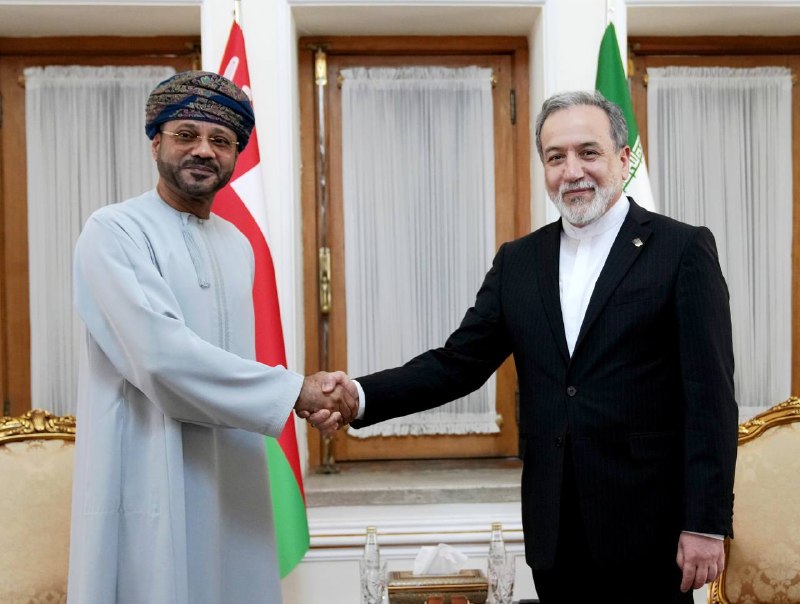
Iran's Ministry of Foreign Affairs summoned the British ambassador to Tehran on the morning of 9 July 2026, accusing London of "repeated baseless allegations" against the Islamic Republic and urging the UK to end what it described as support for "anti-Iran terrorist networks." The summons, announced through state-aligned outlets in the late morning UTC hours, is the latest escalation in a low-grade but consequential diplomatic war between the two countries — and comes against a backdrop of rising tensions across the wider Gulf.
The pattern is familiar: Tehran pulls in a Western envoy, reads out a protest, threatens unspecified consequences; the Western embassy in Tehran reads out its own protest a few days later. What is different now is the framing. "Terror networks" is a deliberately escalatory word — it implies London is not just criticising Tehran but materially backing groups that attack Iranian citizens. If Iran believes that charge, the diplomatic bill could move from rhetorical to material very quickly.
What was actually said
The substance of the Iranian complaint, as carried by IRNA and PressTV on 9 July 2026, is twofold. First, Iran claims British officials — the statement does not name them — have made "repeated baseless allegations" against the Islamic Republic. Second, it claims the British government has supported "anti-Iran terrorist networks," again without naming which networks or providing documentary evidence in the public summons notice.
The British side has not, as of the time of writing, formally responded through FCDO channels. The Telegram channels IRNA and PressTV are both state-aligned, and English-language wire coverage of the summons from Reuters, the BBC or the Guardian has not appeared in the public thread. That matters: a one-sided diplomatic disclosure, repeated through one state's media infrastructure, is not the same as a corroborated set of facts, and readers should weight the specific allegations accordingly.
The counter-narrative from London
The dominant Western framing of Iran's complaints against the UK runs through two channels: Iranian dissident broadcasters based in London, and routine British sanctions designations. The UK has, over the past decade, designated multiple Iranian entities — most prominently the Islamic Revolutionary Guard Corps, listed in its entirety as a terrorist organisation by Parliament in 2022 — and has hosted broadcasters that Tehran considers hostile. Iran has repeatedly demanded the closure of these broadcasters, most prominently Iran International (whose London studios were attacked in 2024 by agents later tried in absentia).
From London's standpoint, the measures are routine counter-terrorism and human-rights policy. From Tehran's standpoint, they constitute material support for an information and political operation aimed at regime change. Both readings can be true at once, and this is where the diplomatic combat sits: each side treats its own conduct as defensive and the other's as offensive, and the gap between those framings is what summoning an ambassador is meant to narrow — or widen.
Structural frame: a multipolar corridor war
What is happening between Tehran and London is not bilateral — it is the diplomatic surface of a deeper competition over Middle Eastern corridors. Iran wants Western military and intelligence footprints out of its periphery: the Persian Gulf, the Levant, the Caucasus. Britain, along with France and the United States, retains a residual basing and intelligence architecture that Iran reads as a forward-deployed threat. When Iranian-aligned outlets refer to "terror networks," they are collapsing several distinct grievances — sanctions, broadcaster licences, training partnerships with Gulf states — into a single charging vocabulary.
The structural risk is that a single high-profile incident on Iranian soil attributed, however improbably, to a UK-tolerated network could trigger a retaliatory cycle that pulls in Gulf shipping lanes, where Royal Navy frigates and Iranian fast-attack craft operate within visual range of each other. The 2019 seizure of the Stena Impero and subsequent tanker wars is the precedent Tehran's hardliners have in mind; the precedent London's political class has in mind is the 2024 broadcaster attack, which materially damaged British soil and produced arrests that Iran has not acknowledged.
Stakes and what to watch
The immediate stakes are procedural. A summoned ambassador is normally followed by either a reciprocal summons within seventy-two hours, the withdrawal of a chargé d'affaires, or a downgrade to formal protest. None of those is yet visible. The substantive stakes run through three corridors: the Persian Gulf shipping lane through the Strait of Hormuz, where roughly a fifth of global oil passes and where Iranian and Royal Navy vessels have traded close-approach warnings several times this year; the broadcaster question in London, where Iran International's status remains contested; and the sanctions architecture, where the UK is currently the most active European designer of Iran-specific designations under its autonomous post-Brexit regime.
Iran wins little by summoning ambassadors it expects to ignore the summons. It does, however, signal resolve to a domestic audience and to a regional one: Gulf states watching the exchange understand that Iran remains willing to treat even modest British influence in the region as an affront worth a formal protest. London loses little by not responding through FCDO channels — it gains the diplomatic space to calibrate any further escalation on its own timetable. The two calculations point in opposite directions, which is precisely why summoning ceremonies of this kind have become so routine.
What remains uncertain
The sources for this article are two state-aligned channels, IRNA and PressTV, both operating inside Iran's official communication envelope. They agree on the basic fact — a summons happened on 9 July 2026 — but they do not name the British official summoned, do not cite a specific British statement that triggered the protest, and do not specify which "terror networks" Iran alleges London supports. Independent Western-wire confirmation has not appeared in the public thread. Readers should treat the specific allegations as Tehran's framing of the dispute, not as a jointly established set of facts.
Desk note: Monexus has reported the summons through the Iranian state-aligned outlets that carried it, and has flagged the absence of independent Western-wire confirmation rather than papering over it. Where Reuters, the BBC or the Guardian later publish a parallel account, this article will be updated.
Wire provenance
This editorial synthesis draws on the following public wire/social posts:
- https://t.me/Irna_en/
- https://t.me/presstv/