Trump's Iran calculus: deal talk meets renewed Strait strikes, with one eye on the cameras
Air Force One downgrades mid-air, Iran 'wants a deal so badly,' and the Strait of Hormuz is closed on alternate days. The choreography looks improvised. The stakes are not.
Donald Trump landed in Britain aboard the newly renovated, Qatari-donated Air Force One on Wednesday evening, after an unusual mid-trip aircraft swap that began in Turkey and ended in UK airspace. The plane that brought him to the NATO summit in Ankara had been the replacement jet at the centre of a multi-week controversy over a foreign-government gift to a sitting US president. The aircraft that carried him part of the way home, Reuters reported citing pool reports at 05:15 UTC on 9 July 2026, was an older VC-25. The symbolism was almost certainly unintended; the optics were not.
Within hours, the President was telling reporters aboard the newer aircraft that Iran wants a deal "so badly" it had rung the White House. The same stretch of waterway that handles a fifth of seaborne oil has been the site of renewed attacks. Iran's leadership has been hit "very hard," Trump added, leaving unclear whether the strikes he was describing were his, theirs, or both.
The two-track Trump doctrine
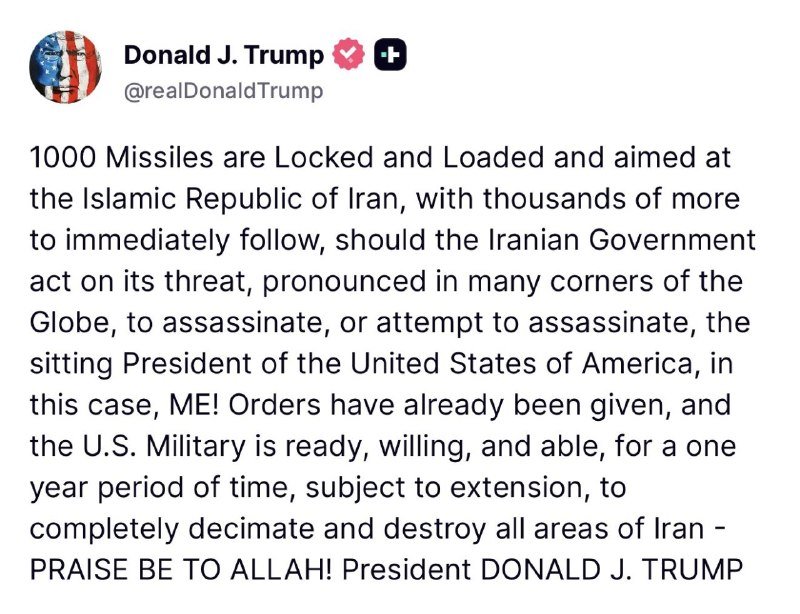
The pattern is now familiar enough to name. A combative public posture, calibrated to the politics of the moment, sits alongside an open diplomatic channel that the same administration insists is operational. On 9 July 2026, speaking to reporters aboard Air Force One after the NATO summit in Turkey, Trump framed Iran as both desperate and untrustworthy. "They want to make a deal so badly," he said, per Middle East Eye's reporting on the remarks. "I just don't know if they're worthy of making a deal." That is the diplomatic channel talking, in the same breath as the threat of further force.
The Jerusalem Post, citing the same Air Force One gaggle at 06:59 UTC, characterised the President as saying Iran is "out of control" over attacks around the Strait of Hormuz. The Strait is the chokepoint through which roughly a fifth of global seaborne oil flows; any sustained disruption moves benchmarks within hours, and shifts insurance premiums for hulls and cargoes before the diplomats have time to convene. NPR's write-up of the day's travel, timestamped 06:56 UTC, placed the aircraft swap and the renewed strikes with Iran inside the same 24-hour news cycle.
This is not a contradiction in Trump's Iran policy. It is the policy. Maximum pressure coexists with maximum availability. Each round of strikes tightens the screws on Tehran's revenue; each offer to talk gives the President's domestic audience a credible off-ramp and gives jittery Gulf partners and European allies the impression that war is the contingency, not the plan.
The Strait is the floor, not the ceiling
The strategic object is not the Strait itself. The Strait is the floor — the minimum price Iran can extract for accepting constraints on its nuclear and missile programmes, and the minimum price the United States can extract for not escalating further. What sits above that floor is a longer negotiation over enrichment capacity, IAEA access, the fate of proxy networks in Iraq, Syria, Lebanon and Yemen, and the sanctions architecture that has defined the relationship since 2018.
Tehran's leverage is real and physical: the ability to harass tanker traffic, to destabilise Gulf energy infrastructure, and to remind every importer of Middle Eastern crude that the alternative to a deal is a sustained insurance-and-shipping shock. Washington's leverage is also real and physical: the capacity to degrade Iranian air defences, oil export terminals, and the leadership cadre that has survived four decades of sanctions. The deal, when it comes, will reflect that balance — not the atmospherics of a Tuesday gaggle.
The Iran file sits inside a wider ledger. The same week brought the President's NATO engagement in Turkey, where alliance burden-sharing, Ukraine support, and the eastern Mediterranean were on the agenda. Iran cannot be negotiated in isolation from those files; any deal that lowers the temperature in the Gulf increases Washington's bandwidth for the Black Sea, and vice versa.
What the wires are not saying plainly
The Western wire line, taken together, leans on three propositions. That Iran's leadership is weakened and therefore pliable. That the Strait attacks are Iranian adventurism that can be deterred. That a deal, if it comes, will look like the 2015 framework with cosmetic adjustments.
Each of these deserves scepticism. The proposition that pressure has produced pliability in Tehran has been wrong, in its strong form, at least three times since 2003 — and right, in its weak form, often enough to keep it in play. The proposition that the Strait attacks are deterrable ignores the asymmetry: Iran's costs for harassment are low and asymmetric; the United States' costs for a sustained naval posture are high and persistent. And the proposition that a 2026 deal will resemble 2015 understates how much the regional architecture has changed. Iran has deeper supply-chain ties to China and Russia; Israel has a wider operational latitude; the Gulf monarchies have moved from underwriting US protection to hedging between Washington and Beijing.
The reading this publication finds most defensible is the unglamorous one: the next phase is a slow, partial, reversible arrangement — sanctions easing in tranches, enrichment capped rather than eliminated, Strait de-escalation managed rather than resolved — and the public posture on both sides will continue to swing between ultimatum and outreach because that is what a slow deal requires to survive its own domestic critics.
Stakes and the next ninety days
The cost of a misstep is measured in oil prices, in shipping insurance, and in the political survival of leaders in Washington, Tehran and the Gulf who have all bet on a particular trajectory. The benefit of even a partial deal is a softer insurance curve, a calmer tanker market, and bandwidth for the Black Sea and the Indo-Pacific. The sources do not specify which way the next round will break, and any Monexus reader who has watched this file for two decades will recognise the period between a deal "they want so badly" and a deal that actually holds as the most dangerous stretch of all.
Desk note: this publication treated the President's mid-trip aircraft swap as atmospherics, not as a story; treated the renewed Strait strikes and the diplomatic outreach as two halves of a single policy; and declined to characterise Iran's leadership as either on the brink or in control, both of which are recurrent Western wire tropes that the underlying reporting does not support.
Wire provenance
This editorial synthesis draws on the following public wire/social posts:
- https://t.me/s/The_Jerusalem_Post
- https://x.com/reuters/status/
- https://x.com/middleeasteye/status/