The Cloud Over Trump's Iran Truce, and the Markets That Refused to Look Away
A scrapped truce with Tehran, a sliding rupee, and a fifty-year-old industrial cloud over Lombardy — three signals that the next crisis won't wait for the last one to finish.
Markets seldom vote on principle. They vote on the next quarter, the next headline, the next meeting between two men who can move money by moving their mouths. On 8 July 2026, the Indian rupee and the Bombay stock exchange cast exactly such a vote — and the ballot was unambiguous. After United States President Donald Trump scrapped a tentative truce with Iran, Indian assets slumped, dragged down by the realisation that the world's most oil-dependent major economy was about to be repriced for a live conflict, not a managed one. Per Crypto Briefing's 11:41 UTC wire that day, the move was sharp, swift, and politically legible.
A truce that disappears between news cycles is no truce at all. It is an interval. And intervals have a habit of ending on the schedule of the more powerful party — which, in the Persian Gulf, is not New Delhi, not Tehran, not Brussels, but Washington. The Indian slide is therefore not a story about Indian economic fragility. It is a story about who sets the tempo of global risk.
The 72-hour window that wasn't
The mechanics of the Indian move matter. When a US-Iran arrangement is on, importers can hedge with confidence: contracts priced in Gulf crude, shipping routes through Hormuz treated as semi-routine, insurance premiums that reflect noise rather than war. When the arrangement is off, every one of those line items reprices simultaneously. India's external account, heavily exposed to crude, feels the brunt. The rupee's slide and the equity drawdown reported on 8 July are the textbook footprint of an oil-importing emerging market discovering that geopolitical risk has a unit cost measured in basis points and basis-point days.
The alternative read — that India's domestic politics or RBI posture drove the move — does not survive contact with the trigger. The catalyst, on the published record, was Trump's withdrawal from the truce. The market priced the consequence, not the cause.
Corriere, the cloud, and the length of memory
There is a second story circulating this week, and it sits in an Italian newspaper rather than a trading screen. On 9 July 2026 at 06:40 UTC, Corriere della Sera's Telegram feed carried a long-form reflection on Seveso — the 1976 ICMESA chemical plant release that contaminated a swath of Lombardy, killed livestock, and forced the European Union into writing its first real industrial-harmonisation directive. The piece is not breaking news. It is something rarer and more useful: institutional memory, in print.
The temptation is to treat Seveso as parable — a tidy morality tale about regulation arriving after the bodies are counted. That framing is true, and incomplete. Seveso is also a story about how quickly a single corporate decision, in a single municipality, can rewire the cost of doing business on an entire continent. The directive that bears the town's name did not emerge from foresight. It emerged because dioxin does not respect borders, and the photographs did not respect politics.
What the two stories share
A scrapped truce in the Gulf and a fifty-year-old cloud over Lombardy look unrelated. They are not. Both are reminders that the price of yesterday's complacency is billed tomorrow, and that the bill is paid by someone other than the decision-maker. In the Iran case, the decision-maker is in Washington and the bill is split between Tehran, New Delhi, and anyone whose pension fund touches emerging-market debt. In the Seveso case, the decision-maker was a Swiss-owned plant in a Lombardy suburb and the bill was paid by children, by farmers, by a regulatory apparatus that had to be built from scratch because it did not previously exist.
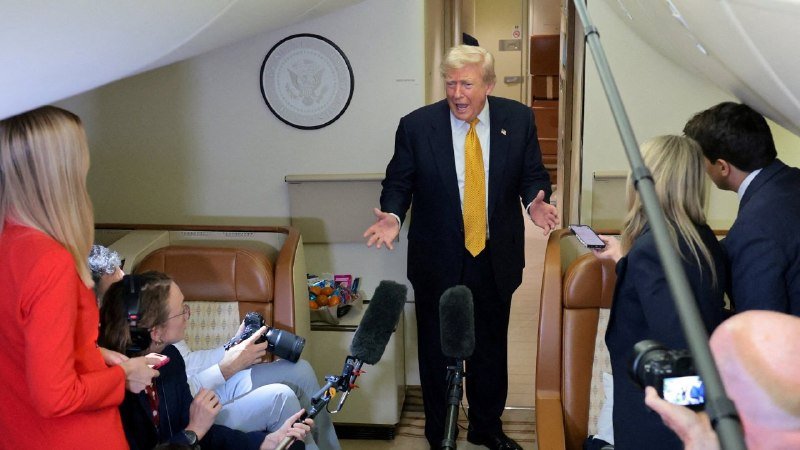
The structural point, stripped of jargon: industrial and geopolitical accidents do not respect the calendars of those who cause them. Both run on the slower clock of consequence. Trump's self-congratulatory reading of the moment — captured in a Corriere della Sera dispatch at 05:25 UTC the same morning, where he declared that "now everyone loves me" after a maximal-tension sequence with allied capitals — is the precise posture that Seveso's history warns against. Confidence in the controllability of one's own decisions is the variable most likely to be wrong.
Stakes, and the read that this publication is not yet willing to lock in
If the Iran truce is genuinely dead, the medium-term consequences concentrate in three places: oil-importing emerging markets with thin foreign-exchange buffers, European energy-intensive industry exposed to a renewed Middle East premium, and the diplomatic capital of any administration that bet on managed escalation. If, instead, the Trump move is the opening bid of a renegotiation rather than a rupture — a reading that the public sources do not yet confirm — then the Indian sell-off is a tradable overreaction, and the next seventy-two hours will see partial recovery as positions unwind.
What remains genuinely uncertain is the second-order question: whether allies, having watched the truce architecture collapse once on Washington's schedule, will continue to underwrite that architecture at all. India's slide is the first market signal. It will not be the last. The historical lesson from Seveso is not that accidents recur, but that institutions built to absorb them are usually constructed only after the recurrence — and at a cost the original decision-makers never paid.
Monexus framed this piece around the connective tissue between two same-day dispatches — Crypto Briefing's market wire and Corriere della Sera's long memory — rather than treating either as a standalone event.
Wire provenance
This editorial synthesis draws on the following public wire/social posts:
- https://t.me/CryptoBriefing
- https://t.me/CorriereDellaSera
- https://t.me/CorriereDellaSera