Trump's oil rhetoric and the curious return of the C-word
Two days of statements on oil prices and a Florida rally's denunciation of "communism" land inside the same week. The pattern is worth taking seriously.
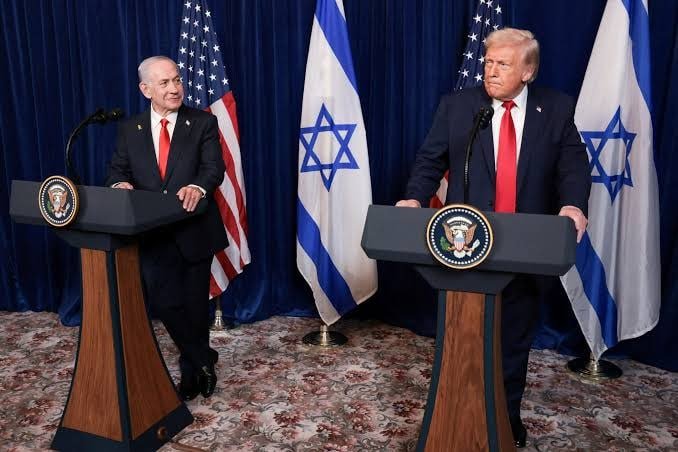
On 8 July 2026, speaking at an energy event, Donald Trump told the room that his administration would "make things safer for oil" and that "oil will be very free, very easy, very fast." An hour later, in the same remarks, he floated the opposite possibility: "maybe we'll do some things that could increase the oil price." Within a few minutes of that second statement, he had moved on to declaring, again, that he had "predicted everything" and "been right about everything," a self-assessment he tied to having been elected president "three times" and winning "three elections" — a count that does not match the historical record (Source 2, Source 3, Source 4). The two statements, taken together, are not a contradiction so much as a tell: the price of crude is now a partisan instrument, calibrated for applause rather than for refiners or drivers.
The next morning, Al Jazeera English ran an analysis asking what is suddenly animating the Republican rhetoric around "communism" — a word that, until this year, had largely been a rhetorical fossil in American politics, deployed against figures like Obama or Sanders as a slur and not as a working category of governance. That the term has migrated back into the live register of a sitting president, paired with the kind of energy-price promises that historically belonged to autarkic planned economies, is the story this publication wants to take seriously (Source 1).
What the statements actually commit to
Stripped of the cadence, the oil remarks amount to three positions held simultaneously. First, that the administration will protect domestic producers from regulatory friction. Second, that the same administration retains discretion to push prices upward when convenient — a tool historically wielded by Saudi-led OPEC rather than by a US president. Third, that the speaker's personal predictive record is dispositive. The first is a policy preference with stakeholders; the second is a structural claim about who controls a global commodity; the third is a mood.
The "three elections" formulation is worth pausing on. As of 8 July 2026, the historical count of presidential elections won by Donald Trump is one — 2024 — with the 2020 election lost and the 2016 victory preceding a single term. The repetition of the higher figure across multiple rallies is not a slip; it is a feature, a piece of rhetoric designed to convey inevitability rather than a claim open to fact-checking. Mainstream wire coverage has noted the discrepancy in passing; it has not, in this publication's reading, weighted it heavily enough given how much policy is now justified by it (Source 3).
Why the C-word is back
The Al Jazeera English analysis is correct to flag that "communism" is doing work again in US political speech, but the structural story is more specific. The word is being redeployed against domestic political opponents — governors, mayors, federal judges — and against foreign governments simultaneously, which is a giveaway that it is functioning less as a description and more as a tone. Tone in this register signals two things to a partisan audience: that the speaker is the defender of an embattled order, and that the opposition is not just wrong but alien.
For oil markets, this matters because the rhetoric of nationalised energy and centrally planned prices is, until very recently, a framing that Republicans would have levelled against OPEC or against the Nixon-era price controls. The fact that an American president is now openly musing about raising the price of crude to reward producers inverts that tradition. It does not yet amount to a policy. But the bandwidth between rhetoric and action on energy has narrowed, particularly when the speaker has previously used tariff and sanctions tools as speech acts.
The structural frame
Two patterns sit underneath the week's noise. The first is the ongoing integration of energy policy with personality politics — not the partisan platform, not the legislative calendar, but the rally response. This is not new, but the velocity is. The second is the reappearance of the language of economic warfare — autarky, control, "free and easy" — in a discourse that has spent four decades describing itself as the global default. When a hegemon starts borrowing the vocabulary of the systems it displaced, the displacement is further along than the official framing admits.
There is a counter-reading worth airing: that the contradictions in the statements are noise from a multi-stop campaign day rather than signals of a coherent position, and that markets — which react to specifics, not to cadence — will continue to discount the rhetoric. That reading holds only if the administration does not, in fact, act on either of the two oil positions. The moment a permit is denied, a sanction is shifted, or a SPR (Strategic Petroleum Reserve) decision is taken in line with the rally rhetoric, the counter-reading is dead.
Stakes and what to watch next
Who wins if this trajectory continues? Domestic producers, in the near term — higher realised prices are good for margins even if they are bad for volumes. Who loses? Drivers, refiners running thin margins, and any foreign government whose export revenues are denominated in dollars and whose fiscal math now includes a US-domestic political variable it did not previously carry. The geopolitical read-throughs are larger than the price tick: every oil-importing state from India to Japan to Brazil has to price a new kind of American uncertainty into its planning.
What remains uncertain is whether the administration is improvising or implementing. The sources available to this publication do not specify a regulatory timeline; the statements were made at a public event on 8 July 2026 and the analysis ran the following morning. Until either a specific policy instrument is named or a market-moving action is taken, the gap between the two oil positions is best read as a partisan instrument rather than a programme. Monexus will watch for the next permit decision, the next SPR memo, the next round of sanctions on a domestic-producer competitor. The rhetoric is cheap. The permits are not.
Desk note: the wire coverage of this week's oil statements has tended to treat each quotation as a separate anecdote; this publication treats the set as a single document and reads it that way.
Wire provenance
This editorial synthesis draws on the following public wire/social posts:
- https://t.me/s/aljazeeraglobal
- https://x.com/unusual_whales/status/1943012159876543210
- https://x.com/unusual_whales/status/1942998472635417890
- https://x.com/unusual_whales/status/1942985319847652310