Trumps Two Wars: A Courthouse Verdict, a Ceasefire Collapse, and the Rhetoric Bridging Both
A federal judge has authorised payment of the $5 million Carroll verdict against the president. Hours earlier, the same president declared the Iran ceasefire over and threatened to flatten bridges and power plants.
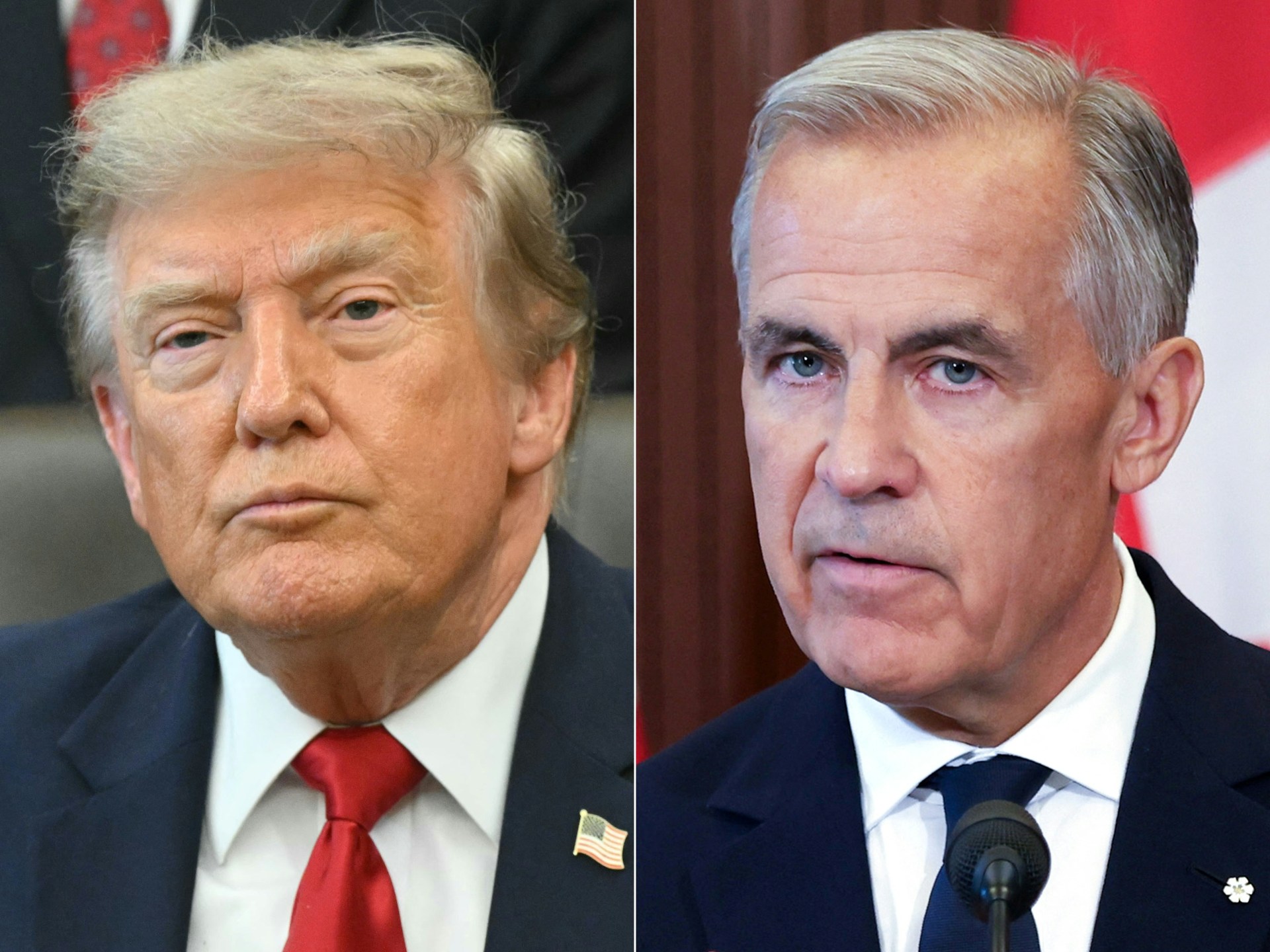
On the afternoon of 8 July 2026, a federal judge in Manhattan authorised the payment of a multimillion-dollar verdict to the writer E. Jean Carroll, closing a three-year civil chapter in which a jury found President Donald Trump liable for sexually abusing her and for defaming her when she went public. The order, reported by Reuters and The New York Times, sets in motion the transfer of roughly $5 million in damages plus interest — money that the Trump legal orbit had spent years trying to keep frozen in court.
Within hours of that order, the same president was on television describing a very different adversary. The ceasefire with Iran, he told reporters, was "over." Renewed strikes would be "very quickly." Asked about his own safety, he volunteered that Iran "may kill me" and called Iranian leaders "scum," "sick people," and "viscous violent people." The juxtaposition is unusual by any standard: a sitting president absorbing, on the same day, a final civil judgment for personal conduct and a fresh rhetorical escalation against a foreign state that has, in the past two weeks, fired on US forces in the Gulf.
Both stories belong to the same presidency. Read together they expose something about how this White House narrates itself — and how the institutions that surround it struggle to keep pace.
The Carroll payment, and what it actually closes
The 8 July order from US District Judge Lewis Kaplan did not relitigate the underlying 2023 verdict. It cleared the way for Carroll, a longtime magazine columnist, to finally collect. A jury had found Trump liable for sexual abuse — the legal term the court accepted, distinct from "rape" — and for defamation. The jury awarded $5 million; with interest, the figure is closer to $5.5 million, a number The New York Times put on the record in the hours after the ruling.
Trump has denied the underlying allegation. His lawyers have argued, in filings and on cable, that the payment should be stayed while appeals proceed. Judge Kaplan, according to Reuters' account of the docket activity, concluded that further delay was not warranted.
The story is not new. What is new is the finality. With the payment authorised, Carroll's legal team can begin the collection process. The judgment becomes, in practical terms, enforceable.
A note on framing: this is a civil verdict, not a criminal conviction. It establishes liability under the standard a federal jury applies — a lower bar than criminal proof beyond a reasonable doubt. It is also a verdict that has been appealed, and Trump has signalled he intends to keep appealing. The transfer of money does not foreclose those appeals; it does foreclose indefinite postponement.
The ceasefire, declared dead before breakfast
By mid-afternoon Washington time on 8 July, the president was telling the press pool that the Iran ceasefire — the arrangement that had paused a punishing round of strikes on Iranian nuclear and energy infrastructure — was finished. The trigger was a fresh escalation in the Gulf: Iranian proxy attacks on US assets in the region, details of which had been carried by wire services through the morning.
The rhetoric that followed was striking in volume. The president said the United States could, "in one day," knock down "every single bridge in Iran," and disable the country's electricity-generating plants. He described Iranian leadership in language that no recent president has used in a public setting. He told reporters, in the same exchange, that Tehran had him at the top of a target list — "I'm their number one target" — and that the conflict would be resolved "very quickly."
The market response was immediate. Polymarket's prediction contract on the duration of the conflict moved sharply within minutes of the comments hitting social media. Defense stocks rallied. Oil futures spiked, then partially retraced as traders tried to gauge whether the language was an opening negotiating posture or the prelude to an actual order.
The structural read: a president who has spent the year claiming credit for ending foreign wars is now, by his own account, restarting one.
Why both stories travel together
It would be easy to treat the Carroll order and the Iran escalation as separate news cycles. They are not. They share an author, a day, and a rhetorical posture.
The common thread is the Trump mode of public address: the assertion that the speaker is the principal victim, the principal arbiter, and the only adult in the room. In the Carroll matter, the line runs through years of courtroom denials, characterisations of the jury as politically motivated, and an appeal strategy that has slowed payment even as the underlying finding survived every motion. In the Iran matter, the same posture produces "I may be gone too," the in-one-day line about bridges, and the framing of Tehran as uniquely depraved — language that forecloses the diplomatic offramps the ceasefire was built to preserve.
Institutions, for their part, are processing both at different speeds. The federal judiciary has, with quiet procedural language, signed an order that makes the verdict real. The foreign-policy apparatus — State, the National Security Council, the joint staff — has had no comparable mechanism to discipline the rhetoric. By the time the cable networks ran the Iran clips on a loop, the working assumption in regional embassies, according to what Gulf-based analysts told Western wires, was that the diplomatic channel was effectively frozen until the language changed.
The two stories also share an information ecosystem. They travel on the same X timeline, through the same algorithmic surfacing, and into the same nightly-news chyron. The Carroll story gets 30 seconds of broadcast attention, then yields to the Iran clips because the Iran clips come with footage. The Carroll story requires a viewer to read the docket or to recall a 2023 jury instruction. The Iran story arrives pre-edited for television.
That asymmetry is itself a story about how a White House that understands cable pacing can dominate a news cycle even while losing in court.
The counter-read, and why it does not hold
The counter-narrative on the right is consistent and worth taking seriously on its own terms. On the Carroll matter, it runs: the verdict is the product of a hostile jury pool in a hostile jurisdiction, the underlying allegation is denied, and the appeal has merit. On the Iran matter, it runs: the president's rhetoric is leverage, not policy, and the language is calibrated to a domestic audience while the actual operational orders are more measured.
Both claims are partially defensible. The Carroll jury was empanelled in Manhattan federal court, and the politics of the pool are a legitimate subject for appellate argument; the Trump legal team has preserved those objections, and the appellate record is the appropriate venue for them. The Iran rhetoric may, in fact, be coordinated with back-channel signalling — presidents have, historically, used public escalation as a negotiating instrument.
But neither counter-claim does the work its proponents want it to do. On the Carroll side, the verdict survived appeals-process scrutiny to the point that a federal judge has now authorised payment; the legal posture has hardened against further delay. On the Iran side, there is no public evidence that the language is paired with private restraint. The administration's public-facing officials have not contradicted the president; Pentagon readouts have stayed close to his framing; the prediction markets have moved on his words. If the rhetoric is leverage, it is leverage without a visible offramp.
The honest read is that the presidency is operating, on 8 July 2026, in a register that confuses personal grievance with statecraft and treats the courtroom and the battlefield as venues for the same performance.
The structural frame, in plain language
What is unfolding is not new in kind. American presidents have absorbed civil judgments and run foreign wars simultaneously for decades. What is new is the rhetorical density — the willingness to fuse personal legal exposure with national-security language in a single news cycle, on a single afternoon, in a tone that admits no daylight between the two.
That fusion has consequences. It narrows the space for allies to calibrate. It widens the space for adversaries to read the comments literally. It pushes the foreign-policy apparatus into a reactive mode — its job becomes to manage the fallout from the rhetoric rather than to shape the policy the rhetoric describes. And it tells domestic audiences, in both directions, that the institutions designed to check the executive — courts in the Carroll matter, congressional war powers in the Iran matter — are obstacles to be endured rather than processes to be respected.
The dollar politics underneath are quieter but real. A president publicly threatening to disable the electricity generation of a mid-sized G20 economy is, in the same breath, unsettling energy markets, defence supply chains, and the bond purchases that price US sovereign risk. The ceasefire, before it was declared dead, had provided a frame of predictability that Gulf sovereign wealth funds, European utilities, and Asian refiners had priced in. The end of that frame is a tax on every balance sheet that had priced it.
The court order, by contrast, has no market-moving weight at all. Carroll will eventually be paid. Trump will appeal. The legal record will thicken. None of it moves the ten-year Treasury.
The two stories, then, are not equally consequential. They are equally revealing.
Stakes, and what to watch next
In the immediate term, three things to watch.
First, the Carroll payment itself. The order authorises the transfer; it does not complete it. Carroll's legal team can now move to enforce, which can include the routine collection tools a federal judgment permits. The longer the actual transfer takes, the more material there is for the next round of political argument.
Second, the Iran rhetoric versus the Iran orders. The president has, in the same press availability, threatened bridges and power plants and described a renewed conflict as "very quick." Whether the operational orders that follow match the language is the question that Gulf ministries, Israeli planners, and European foreign ministries are trying to answer. The next 72 hours will be unusually heavy with diplomatic signalling, much of it off-camera.
Third, the 2026 campaign calendar. The Carroll verdict is now a payment, not a headline, which means it joins the settled record of the presidency rather than the active litigation pile. The Iran escalation, by contrast, is freshly active and will dominate the foreign-policy debate through the autumn budget cycle and the congressional review of any further use-of-force authorisation.
The uncertainty worth naming out loud: no source available to this publication describes the back-channel posture of either Iran or the United States with enough specificity to confirm whether the president's public language is paired with private de-escalation. The market read, the embassy read, and the Pentagon read all point the same way — toward escalation — but the diplomatic record is not yet closed. On the Carroll matter, the uncertainty is narrower: the verdict has survived to the point of payment authorisation, and the appellate runway is shorter than it was a week ago.
What is not in dispute is that the presidency absorbed both events on a single afternoon, in a single voice, and that the country is now operating in the world that voice describes.
Desk note: This piece led with the Carroll payment because the legal record is settled and the source material is unambiguous, then moved to the Iran rhetoric because it is the active, market-moving story of the day. Wire coverage of the Carroll order was brief and procedural; coverage of the Iran comments was heavy on the clips and light on the operational picture — a gap this publication has tried to fill with the framing rather than with speculation.
Wire provenance
This editorial synthesis draws on the following public wire/social posts:
- https://x.com/reuters/status/2074855027995463680
- https://x.com/unusual_whales/status/2074855027995463681
- https://x.com/polymarket/status/2074855027995463682
- https://x.com/unusual_whales/status/2074855027995463683
- https://x.com/unusual_whales/status/2074855027995463684
- https://x.com/unusual_whales/status/2074855027995463685
- https://x.com/polymarket/status/2074855027995463686
- https://t.me/LiveMint/2074855027995463687
- https://x.com/reuters/status/2074855027995463680
- https://x.com/unusual_whales/status/2074855027995463681
- https://x.com/polymarket/status/2074855027995463682
- https://x.com/unusual_whales/status/2074855027995463683
- https://x.com/unusual_whales/status/2074855027995463684
- https://x.com/unusual_whales/status/2074855027995463685
- https://x.com/polymarket/status/2074855027995463686
- https://t.me/LiveMint/2074855027995463687