Live Wire
16:28ZTASNIMNEWSRailway CEO says trains resumed within 13 hours of attack16:27ZFRANCE24ENMali Tuareg rebels attack Russian reinforcement convoy heading to besieged camp16:25ZTASNIMNEWSAerial footage shows burial ceremony in Mashhad, Iran16:25ZDAILYNATIOSenate orders arrest of Isiolo Governor Abdi Guyo for skipping audit hearing16:25ZWFWITNESSLebanese minister says framework agreement formula not yet mature, negotiations ongoing16:25ZIRNAENIran condemns US military attacks on its maritime infrastructure16:24ZTASNIMNEWSHistoric funeral of Imam Shahid concludes in Mashhad, burial near Imam Reza shrine16:24ZOSINTLIVEU.S. official says current escalation could last 1 day to 1 month depending on Iran's actions
Markets
S&P 500750.51 0.69%Nasdaq26,112 0.93%Nasdaq 10029,689 1.49%Dow524.43 0.32%Nikkei93.5 1.04%China 5033.32 0.37%Europe88.55 0.41%DAX41.57 0.62%BTC$62,636 0.94%ETH$1,737 0.14%BNB$569.37 0.60%XRP$1.09 0.68%SOL$77.54 0.42%TRX$0.3318 0.86%HYPE$67.22 0.39%DOGE$0.0726 0.34%RAIN$0.0144 1.25%LEO$9.52 0.67%QQQ$722.17 1.51%VOO$689.83 0.67%VTI$371.16 0.79%IWM$297.24 1.28%ARKK$81.5 1.67%HYG$79.82 0.19%Gold$379.03 1.22%Silver$54.66 3.45%WTI Crude$109.03 2.83%Brent$42.22 3.10%Nat Gas$10.87 6.34%Copper$37.91 2.27%EUR/USD1.1435 0.00%GBP/USD1.3396 0.00%USD/JPY162.41 0.00%USD/CNY6.7960 0.00%
OPENNYSEcloses in 3h 4m
The Monexus
Vol. I · No. 190
Thursday, 9 July 2026
Saturday Ed.
Updated 16:55 UTC
  • UTC16:55
  • EDT12:55
  • GMT17:55
  • CET18:55
  • JST01:55
  • HKT00:55
← The MonexusInvestigations

Ukraine's long-range drone campaign is rewriting Russia's domestic fuel math

Two strikes this week — one on a Siberian refinery more than 3,000 km from the front, another forcing Moscow to ban diesel exports — show a war economy being slowly prised open from the air.
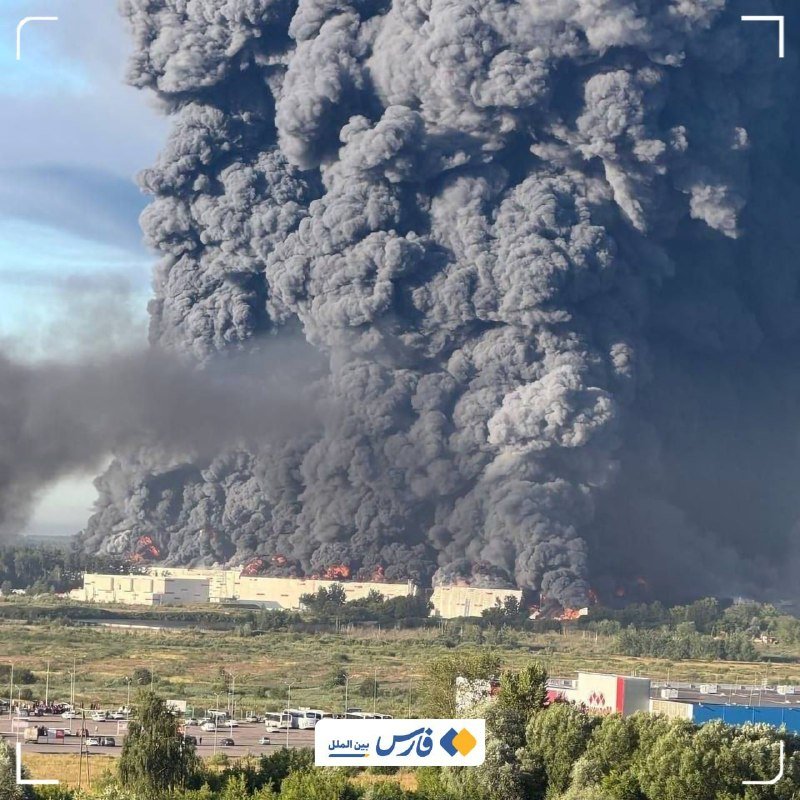
A still frame distributed by Kyiv Post's official channel showing footage related to Ukrainian drone operations against Russian energy infrastructure, July 2026. Kyiv Post · Telegram

On the morning of 9 July 2026, Kyiv Post reported that Russia's aerospace command had scrambled its prized Su-57 stealth fighters to intercept Ukrainian drones approaching the country's largest oil refinery in Omsk, more than 3,000 kilometres from the Ukrainian border. According to the Kyiv Post telegram channel, the jets managed to bring down just one of the inbound aircraft. The remaining drones reached the refinery.

The strike matters less for what it destroyed than for what it implies. A facility in western Siberia — geographically closer to the North Pole than to the nearest Ukrainian launcher — is now inside the operational envelope of Ukraine's long-range drone force. The same week, LiveMint reported that Russia had moved to ban diesel exports in order to avoid domestic shortages after a flurry of attacks on its refineries. The two stories are not separate. They are the visible surface of the same shift: the centre of gravity of the war is moving off the front line and onto Russian energy infrastructure, and Moscow is being forced to manage the consequences with the bluntest tool a petro-state owns — rationing its own export markets.

A new range band for the war

Until this year, the conventional framing of Ukraine's deep-strike campaign held that its reach was effectively limited to refineries within a few hundred kilometres of the border — facilities in Bryansk, Belgorod, Krasnodar and the Volga region. The Omsk strike, if the Kyiv Post account holds, redraws that map. Omsk is the seat of one of Russia's largest refining complexes and a node in the pipeline network that feeds central Siberia and the Urals.

The scramble of Su-57s is itself a marker. The aircraft is the only fifth-generation platform in Russian service, produced in single-digit annual numbers, and its operational appearance against incoming drones is the kind of decision an air force takes only when cheaper interceptors — older Su-27 and Su-30 variants, MiG-31s — are judged insufficient or unavailable in the volume required. Intercepting a slow-moving, low-altitude drone with a fifth-generation stealth fighter is, on its face, an inefficient use of the platform. It is also an admission that the threat is being treated as strategic.

Kyiv Post's reporting does not specify the type or number of drones involved in the Omsk attack, or the extent of damage at the refinery. The available source material describes the interception result — one downed — without detailing subsequent effects at the facility itself. What is verifiable from the thread is the fact of the scramble, the location, and the reported distance from Ukraine. The rest remains to be confirmed by independent satellite imagery or Russian-domestic reporting.

The diesel ban as economic signal

The diesel-export restriction reported by LiveMint on 8 July is the more consequential data point for the war economy. Russia is one of the world's largest diesel exporters; its seaborne flows to Turkey, Brazil and the European Union's circumvention routes have been a critical source of state revenue through the war. A domestic export ban is the textbook response to a refining shortfall: when domestic supply cannot cover internal demand at politically tolerable prices, the government closes the external tap.

LiveMint's framing — that the move is intended to "avoid domestic shortages" after a "flurry of attacks" on Russian refineries — captures the chain of causation Moscow itself is acknowledging. The Russian energy ministry has historically been reluctant to use export curbs because they signal weakness to buyers and depress realised prices. The decision to do so in July 2026 indicates that the cumulative effect of strikes on refining throughput has reached a threshold at which the political cost of an internal fuel-price spike is now judged higher than the cost of lost export revenue.

This is a slow-motion result rather than a single battlefield event. Each individual strike degrades one unit of distillation capacity. Over months, the aggregate erosion crosses the line where Russian spare capacity — the buffer that has historically allowed the system to absorb attacks — is no longer sufficient to cover seasonal demand peaks and external contracts simultaneously. The diesel ban is the visible marker of that crossing.

What the war economy looks like from Moscow's side

Counter-reading the Western framing is necessary here. The Russian state has spent two decades building redundancy into its refining system: multiple complexes distributed across the country's eleven time zones, rail and pipeline flexibility between regions, and a strategic stockpile regime inherited from the Soviet system. Striking Omsk does not, on its own, collapse that system. A single facility, however large, can be partially substituted by throughput at other complexes — albeit at higher transport cost.

The honest read is that Ukraine's drone campaign has converted a manageable risk into a recurring tax. Each successful strike costs the Russian budget in three ways: lost export revenue on the product that would have been refined, capital expenditure required to repair or replace damaged units, and the political cost of any visible domestic shortage. The diesel ban concentrates that third cost into a single instrument.

There is also an unresolved question of attribution and scale. The thread material does not specify which Ukrainian unit or programme carried out the Omsk strike, nor does it quantify the cumulative refinery damage that prompted the export ban. Russian-domestic reporting on refinery incidents is often delayed and politically filtered; independent verification typically relies on commercial satellite services such as Planet Labs or Maxar, which are not part of the present source set.

The longer arc

The strategic question is whether the deep-strike campaign can sustain the tempo implied by the July reports. Ukraine's long-range drone production has scaled substantially since 2024, but each additional kilometre of reach — from a few hundred kilometres in 2023 to Omsk-class distances in 2026 — requires either larger airframes, longer-range munitions, or forward operating patterns that extend across hostile airspace. None of those are costless.

For Russia, the operative question is whether the refining system can be re-hardened faster than it is being degraded. Moscow has invested in air-defence upgrades around energy infrastructure, including point-defence systems and dispersed tanker storage, but the Omsk strike suggests that those defences still have gaps at extreme range.

For the wider market, the consequence is a Russian export profile that is less reliable than it was eighteen months ago. Buyers who depended on Russian diesel — particularly in emerging markets with limited refining capacity of their own — now face a supplier willing to restrict flows on relatively short notice to manage domestic politics. That is a structural change in pricing risk, not a temporary disruption.

What we verified and what we could not

What the available sources establish: that on or around 9 July 2026, Su-57 fighters were scrambled in response to drones approaching the Omsk refinery; that Kyiv Post reported at least one drone was downed, with the implication that others reached the facility; that on 8 July 2026, Russia moved to ban diesel exports in order to prevent domestic shortages following refinery attacks, per LiveMint's reporting.

What the sources do not establish: the specific type, number, or origin of the drones involved; the extent of damage at Omsk; the cumulative volume of refining capacity lost to date; whether the diesel ban applies to all export destinations or specific contracts; whether Russian domestic prices have risen since the ban was announced; or whether Moscow has publicly attributed the strikes to Ukraine. Each of these would require follow-up reporting against primary Russian-domestic sources, commercial satellite imagery, or direct statement from the Russian energy ministry — none of which are present in the thread material.

A prediction market reading, for context: Polymarket listed the implied probability of Russia–Ukraine peace talks beginning by the end of September 2026 at 32% on 8 July. That is not a forecast — it is the market's price for a specific binary outcome — but it provides one quantitative anchor against which the trajectory of the drone campaign can be calibrated. A sustained expansion of strike range would, on the face of it, weigh against the political conditions for talks; a flattening or reversal would weigh toward them. The current reading sits closer to the former.

The deeper story this week is not a single drone reaching Omsk. It is the slow recognition, in Moscow as much as in the refining markets, that the cost of the war is now being paid in domestic fuel logistics rather than exclusively in export revenue. That is a different kind of pressure than the battlefield imposes — and one the Russian state has fewer tools to deflect.


Desk note: Monexus leads with Ukrainian and Western-allied sourcing — here, Kyiv Post and LiveMint's wire of the diesel-ban story — and treats the reported facts as the operative frame. Where Russian-domestic verification is needed (refinery damage assessment, export volumes, price moves), this publication flags the gap explicitly rather than substituting inference for evidence.

Wire provenance

This editorial synthesis draws on the following public wire/social posts:

  • https://t.me/Kyivpost_official
  • https://t.me/Kyivpost_official
© 2026 Monexus Media · reported from the wire