Bridge over troubled signalling: a 48-hour scramble to read the US-Iran ceasefire that wasn't
Forty-eight hours of contradictory presidential statements have turned a declared US-Iran ceasefire into a working hypothesis. What the wire traffic shows is less a deal than an auction in progress.
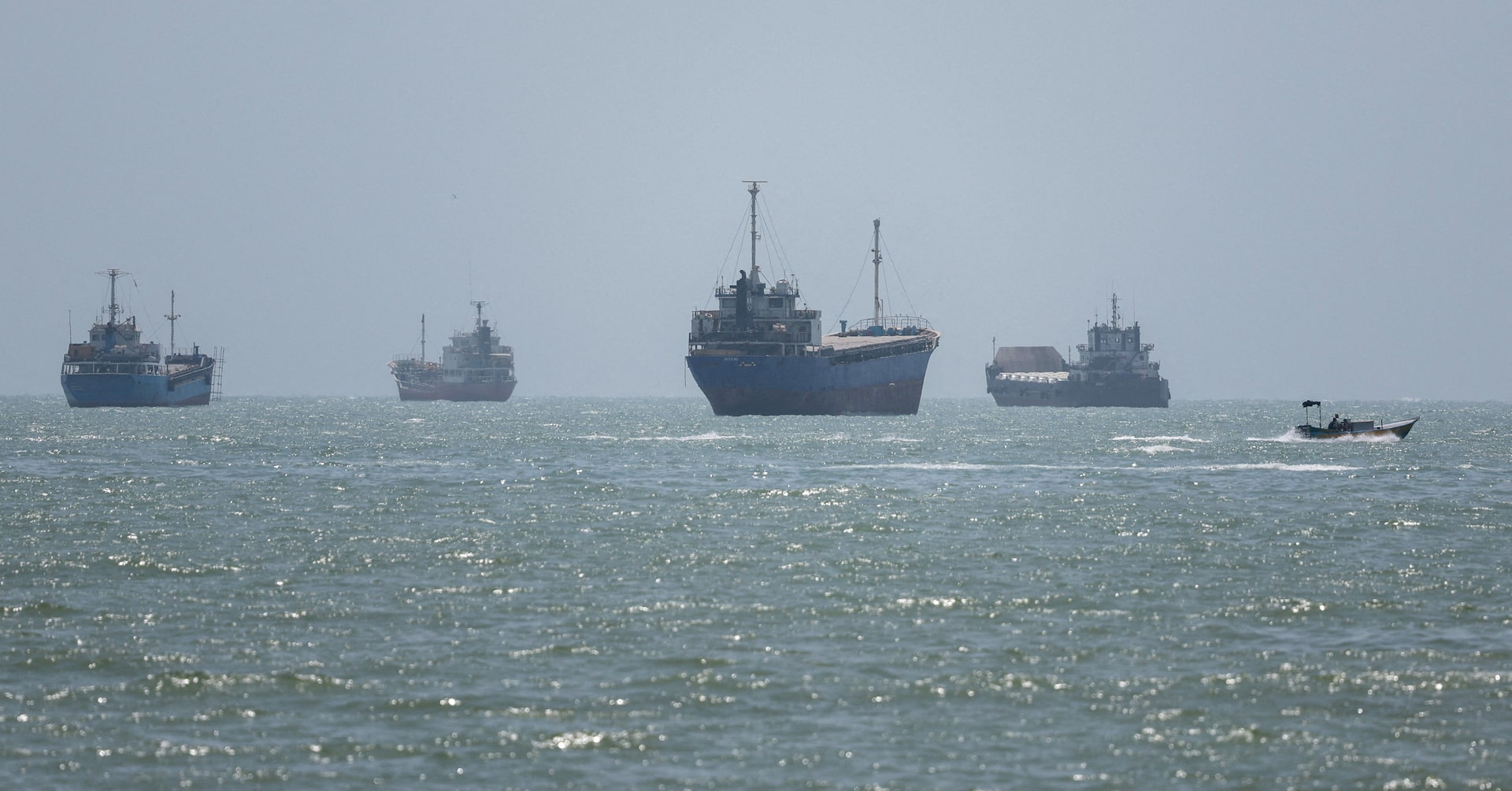
At 16:37 UTC on 8 July 2026, the President of the United States declared that Iran "has been defeated." Three minutes earlier, by the same readout, he had suggested the United States "may take over" Kharg Island. Minutes later, at 16:32 UTC, the same platform carried an unrelated declaration about communism. By 17:37 UTC he was calling Iranian leadership "sick people" led by "viscous violent people." By 18:39 UTC he was assuring the renewed conflict would be over "very quickly." By 21:31 UTC he said he did not think the war would start again. By 22:35 UTC a US official, via CNN, said the ceasefire had "at least temporarily ceased." By 00:14 UTC on 9 July, the President disclosed that Iran had called and wanted to make a deal "very badly." And at 11:31 UTC on 9 July, a Telegram channel aligned with the BRICS information environment reported that the United States had struck a railway bridge on Iran's northern corridor — the rail link that tied Iran to China and Russia.
What the public record contains, in other words, is not a coherent war-and-peace narrative. It is a 19-hour stress test of how a single head of state talks about an armed confrontation in real time, while markets, allies and adversaries try to read him. The dominant wire line — that the US struck Iran, that a ceasefire briefly held, that the ceasefire has now collapsed, and that the two sides are bargaining — is the only reading the underlying traffic supports. The competing reading — that this is performance, that no real shooting has restarted, that the deal is largely done — cannot be ruled out either. The honest answer is that nobody outside the principals' rooms knows, and the principals themselves, on the evidence, are not in agreement about what they have just done.
What was actually struck, and what the traffic does and does not prove
The single most consequential item in the thread is a Telegram post at 11:31 UTC on 9 July 2026 from a BRICS-aligned channel, asserting that US forces had struck a railway bridge on Iran's northern corridor — the line that connects the Iranian rail network to the Chinese and Russian systems. The post is short, declarative, attributed to a channel rather than to a state information office, and carries no embedded imagery, no coordinates, and no second-source corroboration within the thread itself. What it establishes is a claim. What it does not establish, on this evidence, is the claim's truth.
That matters because the geographic specificity of the alleged strike — a rail bridge on the north–south corridor linking Iran to the Eurasian landmass — is precisely the kind of target whose political weight would vastly exceed its military weight. Iran's position as a connector between the Persian Gulf and the Caucasus, between the Caspian and the Gulf of Oman, and between Russian and Chinese supply chains, is the structural fact that gives Tehran leverage in any negotiation. A bridge strike on the northern corridor would not simply damage infrastructure; it would signal that the United States is willing to degrade Iran's role as a transit state.
The Presidential statements collected between 16:32 UTC on 8 July and 00:14 UTC on 9 July are consistent with that interpretation in tone, if not yet in confirmed fact. At 17:17 UTC the President said the United States "can knock down every single bridge in Iran" and warned that Iranian power plants "if we have to, we'll take them out." At 16:17 UTC he said he "would hate to strike desalination plants" but might. At 16:37 UTC he raised the prospect of taking Kharg Island, through which something close to all of Iran's seaborne crude exports have historically flowed. Each of these statements is forward-leaning in the rhetorical sense: each raises the cost of the next escalation in language that sounds operational. None of them, on the face of the thread, is paired with a confirming strike report from a Western wire, a Pentagon readout, or an Iranian official source.
The contradictory texture of the same readout is what makes this difficult to flatten into a story. Within roughly an hour and a half on 8 July, the President described Iran as defeated, mused about seizing its principal oil export terminal, threatened its bridges and power plants, expressed reluctance about striking its desalination infrastructure, and then declared the renewed conflict would be over "very quickly." Treating any one of those lines as the authoritative one is a category error; the authoritative reading is the set.
The ceasefire that "temporarily ceased"
The second load-bearing item is the 22:35 UTC on 8 July statement, attributed to a US official via CNN, that the ceasefire "has at least temporarily ceased." That phrasing is a diplomat's hedge pressed into service as a news line. "Temporarily ceased" is not the same as "collapsed," and it is not the same as "expired." It concedes that the pause in active operations is no longer reliably holding, while leaving open the possibility that it could resume.
CNN's reporting on the statement does not appear in the thread itself; the thread captures only the headline phrasing. That is a real evidentiary limit. But the structure of the broader readout supports the read: if the ceasefire were intact, the President's 21:31 UTC line that he did not think the war would start again would be unremarkable. That it appeared the same evening as the official "temporarily ceased" line suggests the two messages are not quite compatible.
The Iranian interest in resuming contact, as reported at 00:14 UTC on 9 July, sits inside that ambiguity. "Iran called and wants to make a deal very badly" is the kind of claim that can be made by either side at any point in a negotiation, and which tells the outside reader very little about who moved first, on what terms, or whether any terms are actually on the table. It does, however, indicate that contact exists. That is not nothing, in a week in which a northern-corridor rail bridge has been struck or claimed to have been struck.
What the corridor actually is
Iran's northern rail corridor is not a metaphor. It is the line that, in infrastructure terms, links the Persian Gulf to the Caspian and from there into the Russian rail network, with onward connections into Central Asia and — via the eastern terminals of the Trans-Caspian corridor discussions — to western China. Iranian completion of rail links in the Alborz and the Azerbaijan border region over the past two decades has been the physical condition of any "north–south" multimodal story that runs through the country. Damage to a bridge on that route does not sever Iran's connection to the Chinese and Russian systems, but it does constrain throughput, raise insurance and logistics costs, and convert an asset into a chokepoint.
That is the structural frame in plain prose. Iran is a transit state whose diplomatic weight is, in part, a function of its infrastructure. The country sits between the Gulf and the Caspian, between Russian rail gauge and Chinese rail gauge, between the sanctions perimeter and the energy-importing economies of South and East Asia. Anything that degrades that transit function is, in the first instance, a strike against Iranian leverage rather than against Iranian capacity. The same logic explains the rhetorical pressure on Kharg Island: control of the export terminal is the other half of the equation, the maritime end of the same asset.
The counter-read, taken seriously
The dominant framing in this thread — that the ceasefire has lapsed, that strikes have occurred or are occurring, that a renewed round of escalation is live — is not the only defensible read. Two alternatives deserve equal airtime.
The first is that the 8–9 July traffic is a negotiation conducted in public. The President's pattern of issuing maximal-sounding statements followed by softer ones — defeat, then "may take over," then bridge threats, then "very quickly," then "I don't think the war will start again," then "Iran called" — is consistent with a bid–ask sequence rather than with operational planning. Under this reading, the railway bridge strike is either an actual operation at the low end of the escalation ladder or a claim inserted into the information environment to support the bid. The "ceasefire temporarily ceased" language is a way of preserving the negotiating frame while admitting that the public messaging has, for the moment, run past the underlying agreement.
The second is that the traffic is incoherent because the principals are, in fact, incoherent. Negotiations conducted by heads of state who speak several times a day in contradictory registers produce exactly this kind of residue. The market and allied-government reaction functions — risk premia, force-protection orders, evacuation guidance — then have to operate on worst-case assumptions, which in turn feed back into the Iranian and Chinese and Russian read of US intent. Under this reading, the question is not whether the strike happened but whether the United States is the kind of negotiating partner that can be relied upon to honour what it just said.
Both readings remain live. The first is more charitable to the White House and to the immediate prospect of a deal. The second is more consistent with the wire traffic and with the behaviour of oil and shipping markets during similar episodes in 2019, 2020 and 2024. Monexus does not have the information to choose between them, and readers should not be told that we do.
What is structurally at stake
The wider pattern this episode sits inside is a renegotiation of the terms under which the United States and Iran have avoided open war for the past several years. That avoidance has rested on a combination of US tolerance of Iranian enrichment at low levels, Iranian tolerance of US force posture in the Gulf, and a shared interest — unevenly distributed — in keeping the Strait of Hormuz open to commercial traffic. Each of those pillars is now being tested.
What the Presidential statements at 16:17 UTC and 17:17 UTC on 8 July reveal is that the operational register of the US position has widened. Threats against desalination plants and power plants are not the language of a surgical counter-proliferation campaign; they are the language of a campaign aimed at the Iranian state's ability to deliver public goods to its population. Threats against bridges are the language of a campaign aimed at Iranian internal and external connectivity. Threats against Kharg Island are the language of a campaign aimed at Iranian revenue. Taken together, those statements describe a willingness to impose costs across a much wider surface than previous administrations have publicly threatened.
The counter-narrative, weighted seriously, is that the United States under this administration has repeatedly issued maximal statements and then settled for less-than-maximal outcomes. The transactional framework on display in the same readout — the disclosure that Iran called and wants a deal, the President's stated desire "to not deal with them anymore," the simultaneous threat and concession — is consistent with a coercion-by-rhetoric model in which the public language is the lever and the eventual settlement is the prize. Under that model, the railway bridge strike, if confirmed, is a down-payment on the bid.
The stakes, in plain terms, are these. If the dominant framing holds and the ceasefire has genuinely lapsed, the near-term effect is upward pressure on crude prices, on shipping insurance for Gulf transit, and on the political space available to Iran in any renewed negotiation. If the counter-framing holds and the traffic is a coercive negotiation, the near-term effect is similar market behaviour followed by a settlement that does not address the underlying nuclear question. Either way, the position of China and Russia — both as buyers of Iranian crude and as operators of the rail corridors that connect to Iran from the north — is materially relevant. A railway bridge strike is, in that sense, also a strike against the infrastructure economics of the BRICS+ conversation. That is the level at which the thread's first item, the Telegram post, ought to be read.
What the sources do not establish
The thread contains no Western-wire confirmation of the railway bridge strike. It contains no Pentagon readout, no CENTCOM statement, no Iranian Foreign Ministry response, no IAEA observation, no satellite imagery analysis, and no oil-market reaction traceable to the specific 11:31 UTC claim. It contains no transcript of the alleged Iranian phone call. It contains the President's words and a small number of attributed paraphrases of his words. The "ceasefire temporarily ceased" formulation is attributed to a US official via CNN but the underlying CNN story is not in the thread. The "Iran has been defeated" line is attributed to the President; the full context of the remark, including any qualifiers, is not in the thread.
That is a non-trivial ledger. A staff-writer report on this episode that asserted the strike as fact, or asserted the ceasefire collapse as fact, or attributed a settlement to either side, would be over-claiming against the available evidence. The honest read is that the 8–9 July 2026 traffic describes an episode in which the public posture of the United States toward Iran has widened, in which a claim of a strike against Iran's northern rail corridor has been issued by a BRICS-aligned channel, in which a previously declared ceasefire is now described by a US official as "at least temporarily" lapsed, and in which both sides are publicly signalling that contact and negotiation continue. Whether those threads cohere into a war, a renewed ceasefire, or a coercive negotiation is, on this evidence, an open question. Readers, allies and markets will have to live with that uncertainty for a while longer.
This article was written against a thin wire ledger dominated by social-media readouts of Presidential remarks. Where wire confirmation was absent, that absence has been noted in prose rather than papered over. Monexus will update this piece as confirming reporting from CNN, Reuters, the Pentagon or Iranian state channels becomes available.
Wire provenance
This editorial synthesis draws on the following public wire/social posts:
- https://t.me/bricsnews
- https://x.com/polymarket/status/1944000000000000001
- https://x.com/polymarket/status/1943990000000000002
- https://x.com/unusual_whales/status/1943985000000000003
- https://x.com/polymarket/status/1943970000000000004
- https://x.com/unusual_whales/status/1943968000000000005
- https://x.com/unusual_whales/status/1943965000000000006
- https://x.com/unusual_whales/status/1943962000000000007
- https://x.com/unusual_whales/status/1943958000000000008
- https://x.com/polymarket/status/1943957000000000009
- https://x.com/unusual_whales/status/1943955000000000010
- https://x.com/polymarket/status/1943951000000000011
- https://x.com/polymarket/status/1943949000000000012
- https://en.wikipedia.org/wiki/Kharg_Island
- https://t.me/bricsnews
- https://x.com/polymarket/status/1944000000000000001
- https://x.com/polymarket/status/1943990000000000002
- https://x.com/unusual_whales/status/1943985000000000003
- https://x.com/polymarket/status/1943970000000000004
- https://x.com/unusual_whales/status/1943968000000000005
- https://x.com/unusual_whales/status/1943965000000000006
- https://x.com/unusual_whales/status/1943962000000000007
- https://x.com/unusual_whales/status/1943958000000000008
- https://x.com/polymarket/status/1943957000000000009
- https://x.com/unusual_whales/status/1943955000000000010
- https://x.com/polymarket/status/1943951000000000011
- https://x.com/polymarket/status/1943949000000000012
- https://en.wikipedia.org/wiki/Kharg_Island