Reading the silence: what the US-Iran non-strike actually tells us
A senior US official told CNN the military is not striking Iran. Tehran's outlets repeated the line. The choreography of the denial is the story.
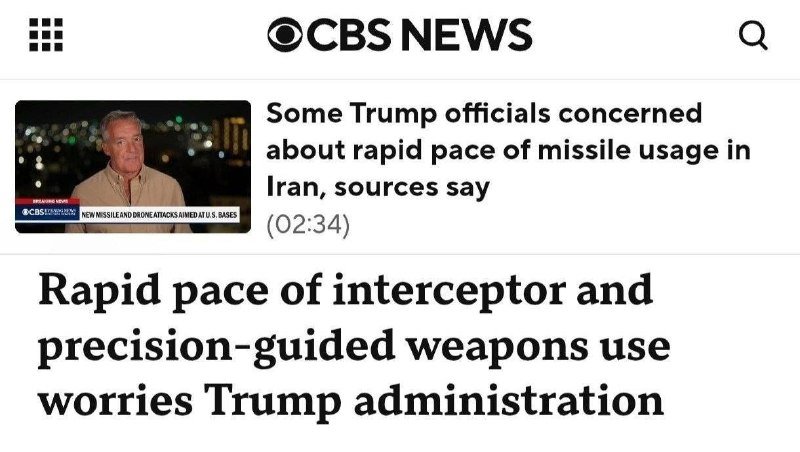
At 18:55 UTC on 9 July 2026, a senior US official told CNN what the Pentagon had spent the previous hours not saying out loud: American forces are not, at this moment, conducting military strikes against Iran. The line was picked up almost in real time by Iranian state outlets — Tasnim carried it at 18:55 UTC, Fars at 18:51 UTC — both crediting the US denial and amplifying it as if it were their own message to deliver. The architecture of the exchange, more than the content, is where the signal lives.
This is the third such episode in two years in which a US administration has allowed a carefully placed on-camera denial to defuse what looked, on paper, like a strike package. The pattern is now familiar enough to deserve a name: the non-strike. It is the diplomatic equivalent of a draw — neither side wanted the cost of escalation, and the press cycle was used to manufacture a face-saving off-ramp that did not exist 24 hours earlier.
What was actually in the air
The Iranian side of the story is that something was, indeed, moving south of the country. Tasnim reported, in a separate bulletin at 18:41 UTC, on "the activity of American aircraft in the south of Iran" — a phrasing vague enough to encompass routine surveillance, tanker repositioning, or something more aggressive. The ambiguity is the point. The pieces fit together: aircraft activity, silence from US Central Command, and then a friendly outlet being handed a denial that lands within minutes of the Iranian flag being raised.
The puzzle for an outside reader is that the US does not, as a rule, confirm or deny individual sorties. When it does, the act of confirmation is itself a piece of signalling — to Tehran, to Gulf states with US air bases, and to oil markets. A denial is, in this vocabulary, not the absence of action but a specific communicative act. The official's wording carried in the CNN report — present tense, "not currently," "in Iran now" — is calibrated to leave the future tense open and the past tense undefined.
The Iranian echo
What is striking is how swiftly Iranian state media converted the US denial into Tehran's own talking point. Fars and Tasnim, both read inside Iran and across the region as bellwethers of the security establishment's mood, did not rebut the American line or claim it as cover for a covert operation. They repeated it, with attribution. The framing inside Iran at 18:55 UTC was not "the US is lying" but "even the Americans admit they are not attacking."
That is a posture consistent with a regime that wants the moment to be read as deterrence holding. It is also consistent with a regime that knows the diplomatic channel matters more this week than the military one — both because the Strait of Hormuz tanker traffic was already jittery in regional trade press, and because Tehran is managing its own internal politics after the succession-and-security reshuffle earlier in the year.
Reading the American journalist line
The fourth item in the public thread is an American commentator's note that "the difference is perfectly clear," carried via a third-party X post at 18:32 UTC. Taken in isolation, the line is uninformative. Taken as part of the bundle — aircraft activity, then denial, then foreign-media amplification of the denial, then an English-language observer weighing in with a clarifying note — it suggests that the choreography was rehearsed across at least three time zones and at least two press ecosystems.
The most plausible read of the evidence, and it is the one the wire coverage is implicitly endorsing, is that the US moved air assets into a posture that Tehran noticed, considered its options, and chose a calibrated de-escalation. The non-strike is what both sides sell to their domestic audiences as a win. Washington can say it showed it could surge; Tehran can say it showed the US that force was not free.
What this leaves open
The sources do not name the American official CNN quoted, do not specify the aircraft type or the base of origin, and do not indicate whether the activity reported by Tasnim in the south of Iran was over Iranian airspace, the Persian Gulf, or international waters off the coast. They also do not address what the US was signalling to, or about, the negotiations in a third capital that have been rumoured for the past month. Those gaps are themselves the story: a deniable, reversible arrangement that works only as long as nobody is asked, on the record, to confirm the underlying facts.
The non-strike is the message. Treat it that way, and the lack of an explosion is the most informative data point of the week.
Desk note: Monexus read the Iranian state coverage of the denial as a counter-frame, not a quote source. Where Tasnim and Fars amplified the US line, the article treats that as the Iranian establishment's preferred reading, and weighs it against the operational reporting, rather than presenting either side as a stand-alone factual basis.
Wire provenance
This editorial synthesis draws on the following public wire/social posts:
- https://t.me/tasnimplus
- https://t.me/FarsNewsInt
- https://t.me/tasnimplus