Two legends exit, one question lingers: what now for the post-tournament reckoning?
Belgium ended the United States' home-soil World Cup run 4-1 in the round of 16, hours after Cristiano Ronaldo played his final World Cup match in a loss to Spain. The two exits leave a federation and a superstar with the same hard question.
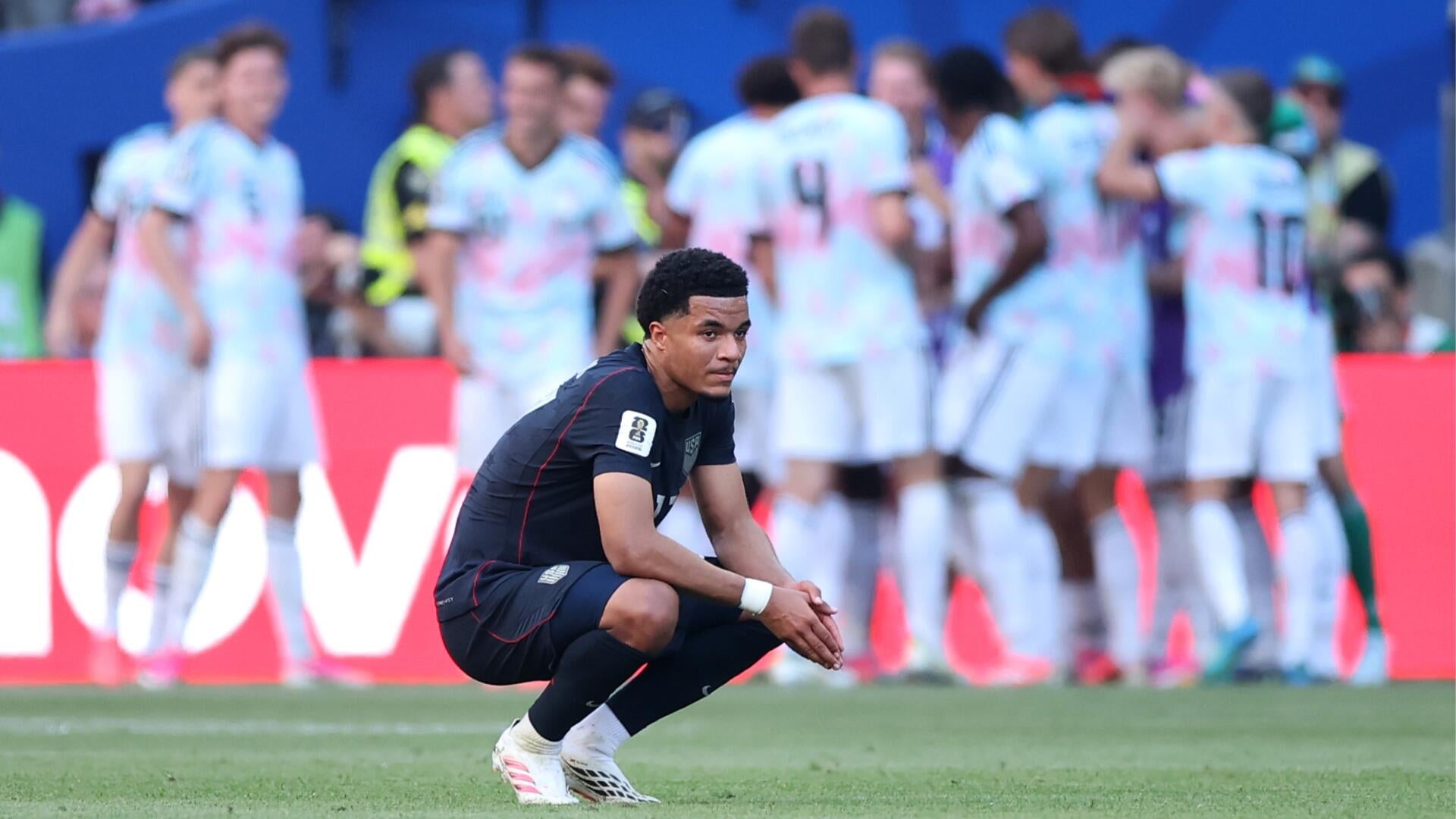
The United States men's national team walked off the pitch on 7 July 2026 with a 4-1 loss to Belgium in the World Cup round of 16, a defeat that ended the Americans' tournament on home soil and left a federation built around a generational talent base asking a question the next four years will not answer quietly. Malik Tillman's first-half strike had offered a brief opening, but Belgium's depth and clinical finishing turned the second half into a procession and, by the final whistle, into a referendum on what the U.S. project actually is.
The same evening, in a different stadium and on a different storyline, Cristiano Ronaldo said goodbye to the only World Cup stage he will ever know. The Portuguese forward, who had insisted before the tournament that this would be his last, lost to Spain and exited the competition with his country, closing a chapter that began in 2006. The 4-1 in the U.S. game and the loss to Spain are unrelated on the pitch. They are joined, however, by the same structural problem: when the marquee names drift away, the institutions that surround them are forced to define themselves.
What the night actually looked like
Belgium's victory was built on the kind of squad football the U.S. has spent a decade aspiring to. After Tillman gave the Americans an early lead, Belgium settled, absorbed pressure, and produced the second-half goals that turned a tight knockout game into a rout. CBS Sports, reporting from the U.S. camp, framed the result as a "golden generation" falling short of its World Cup moment, a phrase that captures both the talent on the field and the structural gap between individual quality and collective execution. The American roster, stocked with players at major European clubs, could not convert possession into chances at the rate Belgium's veterans could.
Portugal's match played out under a different gravity. Ronaldo's tournament had already been a study in late-career reinvention, with reduced minutes, defined roles, and the steady drumbeat of his pre-tournament declaration that this was the end. Spain, the kind of opponent that punishes transitional defending and rewards possession discipline, was simply the wrong draw at the wrong time. The ESPN recap captured the result with the bluntness a career-closing night deserves: the Ronaldo World Cup era, five tournaments across twenty years, is closed.
The structural gap beneath the scoreline
The U.S. problem is not talent. It is the connective tissue between the federation, the domestic league, the European pipeline, and a tactical identity that can survive against the world's best. For a decade, U.S. Soccer has chased the "golden generation" framing in marketing material and federation communications, with Christian Pulisic, Tillman, Timothy Weah, Gio Reyna, and Weston McKennie all developing abroad. That pipeline delivered moments, goals, and headlines. It did not, on this night, deliver a system.
Belgium's victory, by contrast, illustrated what a system looks like when the individual stars rotate. Kevin De Bruyne, Romelu Lukaku, and the supporting cast have grown into a defined structure across multiple tournaments. The U.S. has the names; it has not yet produced the identity that lets those names function as a unit against a top-eight opponent under knockout pressure. The home-soil factor made the gap more visible, not less: a stadium full of American fans watched their team pushed deeper and deeper into its own half as the second half wore on.
Counterpoint: the framing the U.S. camp will offer
The U.S. camp, and the federation apparatus around it, will not read the night as a collapse. The Americans topped a group, reached the round of 16 on home soil, and competed in a knockout game before a record television audience. The progress narrative has a defensible shape: from failing to qualify for 2018 in Trinidad to hosting and reaching the knockout rounds of 2026 is, on paper, the steepest eight-year climb the program has ever managed. The counter-argument is that progress of that magnitude is exactly the moment to set a higher bar, not to treat the round of 16 as the ceiling. Both readings are partially true. The honest version holds that the talent pipeline has matured faster than the tactical and structural ones.
Portugal's situation, similarly, will be read by Ronaldo himself and by the federation as a graceful exit. He left on his own terms, played in a fifth World Cup, and departed with the door open for a generation of Portuguese players that includes Rafael Leão, Gonçalo Ramos, and a midfield anchored by Vitinha. The structural read is the same: a superstar's exit creates a vacuum, and a federation that lets the vacuum harden into identity loss repeats the cycle of the next tournament.
What the next four years demand
The U.S. federation will be judged less on the round-of-16 exit than on what it does with the cycle that follows. Hiring decisions, the federation's relationship with MLS as a development league versus a destination league, the integration of dual-nationals from Mexico, Germany, and elsewhere, and the tactical philosophy installed by the next senior-team staff will all matter more than the result in this tournament. The home-soil advantage, for once, cuts both ways. It produced the largest crowd an American men's team has ever played in front of, and it produced a loss that will be replayed in federation boardrooms for years.
Ronaldo's exit carries a parallel lesson, more useful to federations than to clubs. The players who carry a national team for two decades become the story themselves, and when they leave, the federation must decide what the story is now. Portugal has the squad depth to find out. The United States has the talent base and the financial base to find out. Both will be defined by what they build between this World Cup and the next one.
The American players will go back to their clubs in the Bundesliga, Serie A, the Premier League, and Ligue 1. The next time they assemble, in a competitive match that matters, will be a window into whether anything has changed. Until then, the question is open: was this a golden generation that fell short, or a generation that has not yet learned how to play together.
This article was filed under the Monexus sports desk. The wire's framing centered on the scoreline; Monexus treated the two exits as a single structural question about post-superstar national-team identity.