Warhol Foundation's $5.1M Round Quietly Reshapes the U.S. Mid-Sized Museum Map
Seventy-eight organisations will share $5.1 million from the Andy Warhol Foundation this year. The list, more than the dollar figure, tells the story of where American institutional art is concentrating — and where it isn't.
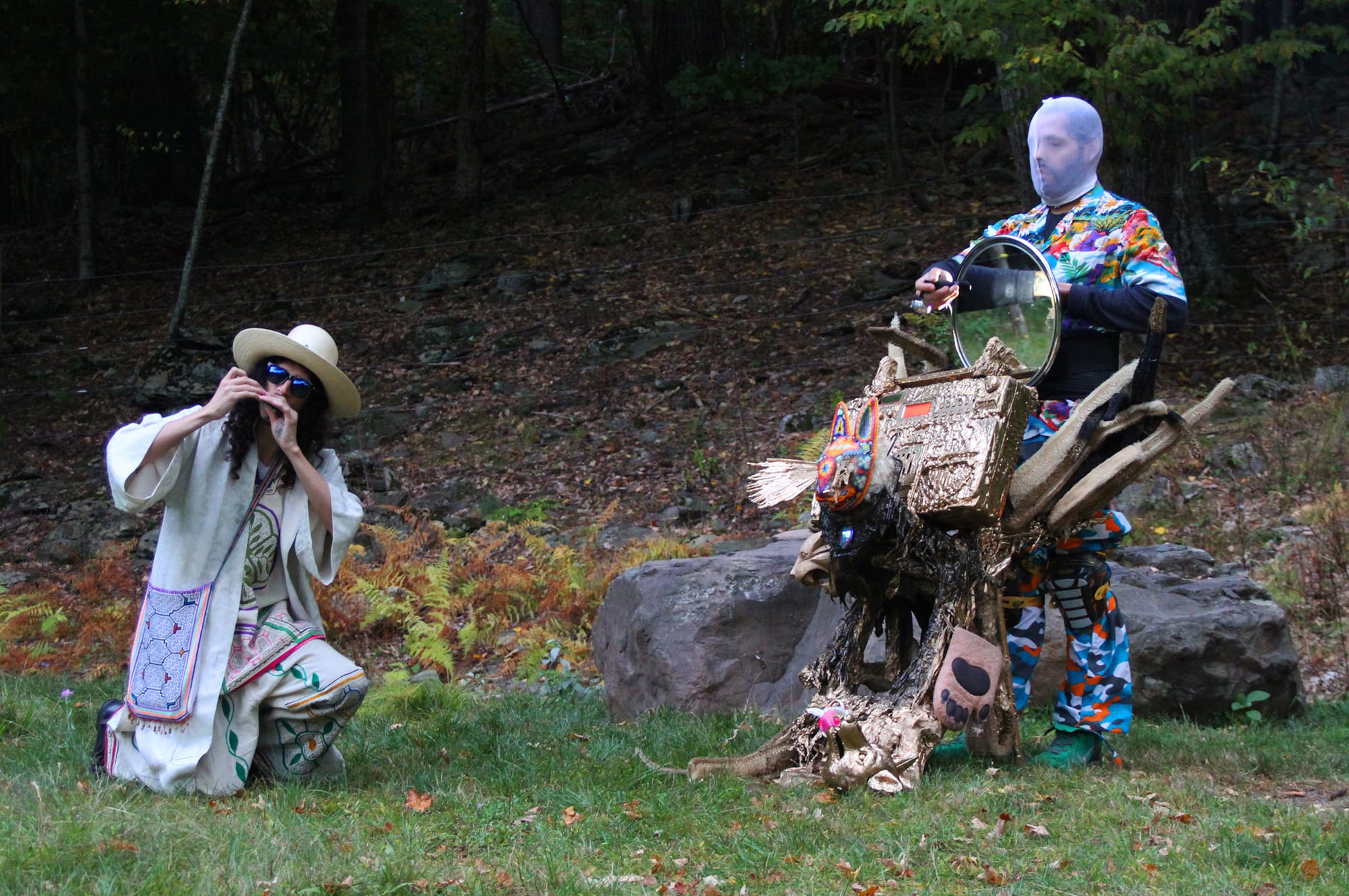
The Andy Warhol Foundation for the Visual Arts will distribute roughly $5.1 million across 78 American arts organisations in its 2026 grant cycle, Hyperallergic reported on 9 July 2026. The cohort — heavy on mid-sized regional museums, university galleries and artist-run spaces, light on the marquee Manhattan institutions that traditionally anchor foundation press releases — is the most granular signal yet of where post-pandemic cultural philanthropy is consolidating.
The round lands at a moment of structural stress in U.S. museum finances. Federal arts funding has tightened, several flagship institutions have laid off curators, and corporate sponsorship in the visual arts has thinned. Against that backdrop, the Warhol Foundation's annual disbursement has become less a philanthropic gesture and more a quiet subsidy for the institutional layer beneath the Guggenheim-and-MoMA tier. Reading the recipient list closely is, at this point, an exercise in mapping which American cities still have a working mid-sized art ecology.
What the dollars actually buy
The Foundation's programme, built on the residue of Warhol's estate, has historically tilted toward exhibitions of contemporary work and toward organisations whose programming would not survive on ticket revenue alone. The 2026 cohort continues that pattern. The dollar figure — $5.1 million across 78 grantees — works out to an average grant of roughly $65,000 per organisation. That is meaningful for a regional museum operating on a sub-$5 million annual budget, and almost incidental for a flagship New York institution. The arithmetic is the policy: the Foundation is underwriting the middle.
Hyperallergic's reporting also flagged two adjacent institutional notes that read as a single news cycle. The Metropolitan Museum of Art's recent sale of a late Raphael work — a Madonna and Child composition — set a new auction benchmark for the artist, an event whose proceeds flow into the Met's acquisition endowment rather than its operating budget but which nevertheless moves the institution's strategic position. Separately, the Honolulu Museum of Art has named a new director, a personnel change at a Pacific-rim institution that has historically punched above its programming budget. Read together with the Warhol list, these items sketch a sector in which capital, collections and curatorial leadership are being re-routed at the same time.
The geography of who got paid
The Foundation does not publish a single sortable list of its 78 grantees in a way that permits clean geographic aggregation, and Hyperallergic's reporting itemises only the most prominent recipients. But the editorial pattern is consistent with prior cycles: the Northeast Corridor collects a plurality, the Upper Midwest and Pacific Northwest take meaningful shares, and a long tail of single-grantee cities — from Albuquerque to Birmingham to Providence — anchors the rest. Sun Belt fast-growth metros are notably under-represented relative to their population weight, a distribution that reflects foundation governance as much as it reflects artistic output.
That distribution matters. American cultural philanthropy has spent two decades concentrating in three or four metropolitan corridors. A foundation with the Warhol's reach that chooses to fund an artist-run space in a mid-size Southern city is, in effect, making a counter-cyclical bet that the next decade of American art will be produced somewhere other than the existing nodes. Whether that bet pays off depends on whether the grantees can convert one-year operating support into durable institutional capacity — a conversion that historically has a poor batting average.
The structural frame, in plain prose
What is unfolding across U.S. arts philanthropy is a quiet rebalancing of who pays for culture and on what terms. Federal and state arts budgets have been squeezed for most of the past decade. Corporate sponsorship has retreated from anything that risks a controversy. The remaining load falls on a small number of large private foundations, each of which has a programmatic bias built into its mandate by the dead. The Warhol Foundation's bias — Warhol's own career, organised around the seam between commerce and avant-garde practice — translates, in 2026, into grants that privilege experimental and small-institution programming over marquee blockbusters. The sector is not being defunded so much as it is being re-priced, and the price-setter is no longer the museum board but a handful of foundation programme officers.
There is a counter-read. Critics of foundation-led arts funding argue that the Warhol model — and the Ford and Mellon and Bloomberg Philanthropies models alongside it — substitutes private taste for public accountability. A museum that derives a quarter of its programming budget from a single foundation grant is, functionally, a contractor to that foundation's mission. The Foundation's 2026 round does not change that dynamic; it confirms it. The 78 grantees will produce the programming the Foundation's reviewers believed in. That is the trade.
Stakes
If the current trajectory holds, the next five years of American institutional art will be visibly more stratified. A handful of well-funded flagship museums in New York, Los Angeles, Chicago and San Francisco will continue to programme at international scale. Beneath them, a funded layer of mid-sized museums and artist-run spaces will survive — but only the ones whose programming aligns with the priorities of the foundations underwriting them. The unfunded layer, the regional museums and community spaces without a foundation patron, will continue to hollow out. The Warhol Foundation's $5.1 million is not large enough to reverse that hollowing. It is large enough to make the map of who survives legible.
The uncertainty worth naming is whether foundation taste is a good proxy for public interest. The 2026 cohort is, by the Foundation's own framing, an editorial decision about what contemporary American art deserves support. The bet is that a programme officer's judgement, filtered through a board, will allocate capital more usefully than a market or a legislature would. Some years that bet pays off. The list of 78 organisations is the artefact the bet leaves behind.
Desk note: This piece leads with Hyperallergic's 9 July 2026 reporting on the Warhol Foundation's grant cycle and folds in the Raphael auction record at The Met and the Honolulu Museum of Art directorship change as adjacent institutional signals, rather than as separate stories. The framing — foundation capital substituting for shrinking public arts funding — is editorial; the facts are the source's.