Araghchi heads to Muscat: a Strait of Hormuz shuttle, with Tehran still keeping the cards
Iran's foreign minister travels to Muscat on 11 July for talks on the Strait of Hormuz and the wider regional situation, an Omani-mediated channel that has quietly become the default venue for US-Iran back-channeling.
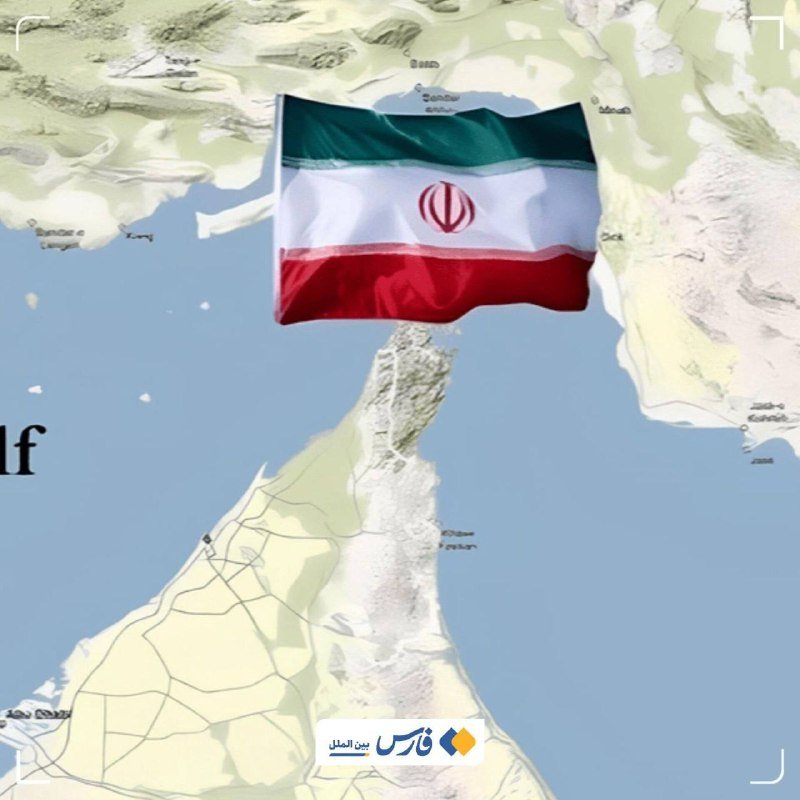
Iranian Foreign Minister Abbas Araghchi will land in Muscat on Saturday 11 July 2026, leading a delegation for talks framed by Tehran around the Strait of Hormuz and the wider regional situation, Iranian state media reported on Friday 10 July. The visit, confirmed separately by IRNA, The Cradle Media and the intelslava monitoring channel, places Oman's quiet diplomacy back at the centre of a Gulf security conversation that has otherwise drifted toward escalation.
The news is small in form and large in geography. A foreign minister travelling to a neighbour to discuss a waterway is, on paper, routine regional business. But the Strait of Hormuz carries roughly a fifth of global seaborne oil, abuts Iranian territorial waters, and sits inside an arc of recent incidents — seizures, drone attacks, and shadow-fleet confrontations — that have made the corridor the most surveilled stretch of sea on earth. A Muscat meeting is not a place where statements are made; it is a place where statements are withheld.
What we know, what we don't
IRNA, the official Iranian state news agency, said Araghchi would lead a delegation to Oman on Saturday for talks on the Strait of Hormuz and bilateral relations, the dispatch carried on Friday at 18:54 UTC by the @wfwitness Telegram channel and relayed through intelslava at 18:20 UTC. The Cradle Media, a Beirut-based outlet with extensive Iran-axis reporting, framed the trip as a discussion of "developments related to the Strait of Hormuz and the wider regional situation."
The thread does not specify who Araghchi will meet in Muscat, whether an Omani-hosted US-Iran channel will run in parallel, or which sub-track of the Hormuz dossier is on the table. Iranian state outlets typically disclose neither the agenda nor the counterpart delegation ahead of an Omani shuttle. That silence is itself the protocol: Muscat's value to both Washington and Tehran is that nothing leaks until both sides agree it should.
What can be inferred is the architecture. Oman has hosted discreet US-Iran exchanges on and off for the better part of two decades, most recently during the back-channel that produced the 2015 nuclear framework and during the 2023-24 de-escalation tracks around Houthi maritime activity. Sultan Haitham's government retains working ties with both the Iranian foreign ministry and the US State Department, and it has resisted — publicly and consistently — any framing of the Gulf as a US-Iran binary in which smaller littoral states are props.
The waterway, and what is being negotiated around it
The Strait of Hormuz is 21 nautical miles wide at its narrowest, with shipping lanes on either side of a two-mile buffer. Iran does not need to close it to weaponise it. The 2019 limpet-mine incidents, the 2021 capture of the MV St Nikolas, and periodic seizures of tankers in the approaches to Bandar Abbas have all demonstrated that friction inside the strait can be raised or lowered without crossing any red line that would trigger US retaliation.
For Tehran, the Hormuz file is therefore less about the waterway itself than about three adjacent negotiations: the pace of IAEA inspections, the unfreezing of assets held in third-country escrow, and the sanctions architecture that governs Chinese, Indian and Turkish refiners buying Iranian crude. A Muscat meeting that touches "the wider regional situation" — The Cradle's phrasing — is shorthand for that whole package. The strait is the venue; the sanctions regime is the subject.
For Washington, the incentive to keep a channel open is equally structural. A Hormuz crisis that lifts Brent above $120 a barrel would land hardest on the same Asian economies the administration is trying to lock into a broader containment posture, and would undercut the White House's argument that escalation is manageable. Quiet is cheaper than loud.
The mediator's leverage
Oman's role in this is not neutral in the passive sense; it is active. Muscat hosted the secret 2012-13 talks that produced the Joint Plan of Action, the interim nuclear deal that froze Iran's enrichment programme in exchange for partial sanctions relief. It hosted follow-up channels in 2022 and 2023. It is the only Gulf capital that has hosted an Israeli delegation, a Houthi delegation, and an Iranian foreign minister in the same calendar year without the meetings being treated as a single event.
That reputation is a strategic asset, and it is one Tehran has leaned into. Araghchi's choice of Muscat over Doha, Abu Dhabi or Baghdad signals a preference for a venue where outcomes — not photo-ops — are the deliverable. It also signals a preference for an interlocutor that does not read Tehran's moves through a Saudi or Emirati lens.
For Oman, the benefit is the inverse: hosting the channel keeps Muscat relevant in a Gulf order that has otherwise tilted toward the Riyadh-Abu Dhabi axis, and gives Sultan Haitham a seat at any table where the regional security architecture is being redrawn.
What to watch by Monday
Three signals will tell readers whether this was a working session or a holding pattern. First, the Iranian foreign ministry's read-out language: a joint statement, or the customary IRNA paragraph thanking the Omani side for "constructive" talks and pledging to continue consultations. Second, whether the US State Department confirms any parallel channel in Muscat — it typically does not, but the absence of a denial is itself data. Third, the price tape: any move in front-month Brent above two dollars on Saturday afternoon Asia time would suggest a market reading that the talks have either narrowed or widened an existing risk premium.
The thread as it stands does not yet permit a verdict. Four Telegram wires from Iranian, Beirut-based, and open-source-intelligence channels reporting the same travel notice is corroboration, not analysis. What is missing is the counterparty: who Araghchi meets in Muscat, whether the meeting is bilateral with Omani officials or a three-way with an American delegation, and which file is genuinely on the table.
What the sources do support is narrower and still consequential: as of 10 July 2026, the diplomatic channel that has historically carried US-Iran traffic is again in use, on Iranian terms, at the Omani end of the Gulf. The strait remains open. The conversation has not broken down. That is the news.
Monexus framed this as a shuttle-diplomacy story rather than a crisis-of-the-week piece; the wire line at midday UTC treated Araghchi's travel as a single-line bulletin, while the analytical interest is in the venue and the protocol around it.
Wire provenance
This editorial synthesis draws on the following public wire/social posts:
- https://t.me/wfwitness
- https://t.me/thecradlemedia
- https://t.me/intelslava
- https://en.wikipedia.org/wiki/Strait_of_Hormuz
- https://en.wikipedia.org/wiki/Abbas_Araghchi