Trump administration presses Iran for public declaration that Hormuz is fully open
Washington wants Tehran to publicly confirm that the Strait of Hormuz is open to all shipping with no tolls, framing the demand as a test of Iranian intentions after weeks of disruption.
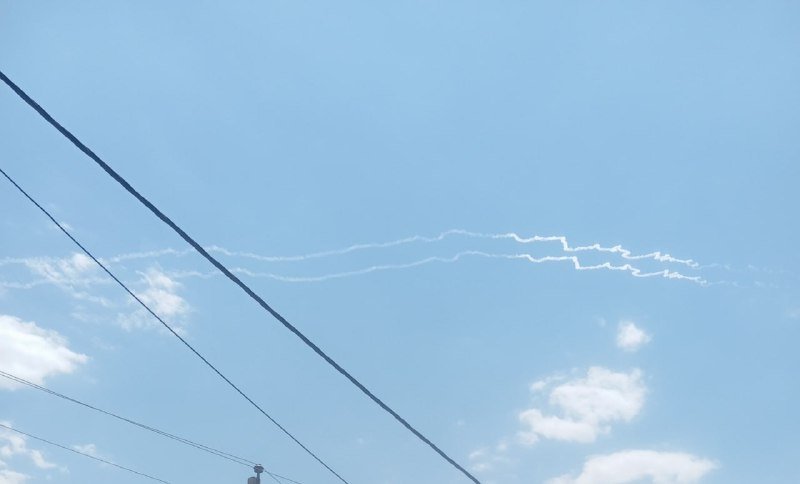
At 21:23 UTC on 10 July 2026, the Open Source Intel channel on Telegram reported that the United States is demanding that Iran publicly state it will stop attacks on ships in the Strait of Hormuz and that every lane in the strait will be open to shipping with no tolls. The framing, lifted from an Axios scoop circulated earlier the same day, converts a tactical question about vessel safety into a public-relations test of the Iranian regime.
Washington's ask is narrow on its face and wide in its implications. Officials want a statement Tehran can be quoted on — not a private assurance, not a back-channel commitment, but a public declaration that the waterway is open. The demand is the diplomatic equivalent of asking a counterparty to put its name on a contract: the value lies less in the words than in the political cost of breaking them.
What the demand covers
Two clauses sit at the centre of the request, both reported by Axios via state-aligned Telegram relays on 10 July. First, Iran must announce that it has stopped attacks on shipping in the strait. Second, Iran must confirm that all lanes are open to commercial vessels without tolls or selective restrictions. Axios, as relayed by the Tasnim-adjacent plus channel at 21:22 UTC, said American officials told reporters on Friday that the government had asked Iran to confirm the opening of the strait "by issuing a public statement on Saturday" — a calendar specificity that turns the demand into an overnight deadline.
The Middle East Spectator channel, reposting the Axios line at 21:11 UTC the same day, framed the request as a precondition for any de-escalation. None of the three Telegram items in the thread quote a named US official by name; the sourcing chain runs Axios → unnamed American officials → reporters → Telegram aggregation. That chain is real, but thin, and the specifics — number of officials, agency, exact wording of the ask — are not in the public items Monexus has on hand.
Why a public statement matters
A written ceasefire in a war is enforceable in court. A private assurance from a foreign ministry is enforceable in nothing. By demanding that the statement be public, Washington is trying to lock Tehran into a position its own media, parliament and Revolutionary Guard Corps hardliners cannot disown the next morning. A public declaration also gives maritime insurers, oil traders and the Lloyd's market a single document to underwrite against — the kind of unambiguous signal that war-risk premiums and tanker charter rates respond to within hours, not weeks.
The "no tolls" clause is the sharper of the two. Iranian authorities have, in past confrontations, signalled the possibility of charging transit fees or restricting passage by flag or cargo. The US demand forecloses that lever in advance. It also draws a line under any attempt to recast the strait as Iranian territorial sea subject to sovereign control — a long-running doctrinal argument in Tehran that would gain legal traction only if Iran could demonstrate a recognised right of transit levies.
What is missing from the public record
The three source items do not specify what Washington has offered in return. Demands of this kind rarely travel without reciprocity: sanctions sequencing, release of frozen funds, a deal on Iranian oil exports to China, a swap arrangement, or simply the withdrawal of a US carrier strike group. The Axios reporting as relayed does not enumerate any of those. It also does not say whether the demand was delivered through the Swiss protecting-power channel in Tehran, through Oman's back channel, or directly via the United Nations mission in New York.
There is also no Iranian counter-statement in the thread. Tasnim, the state outlet whose plus-channel carried the Axios relay, has not, on the basis of these items, published a reaction. Iranian state media historically replies within hours to American demands of this magnitude. The silence in the source set may be timing — it was still Friday evening in Washington when Axios briefed — or it may indicate that the Iranian side has not yet received the demand through a channel it recognises as authoritative.
Stakes over the next 72 hours
If Iran issues the statement by Saturday, the strait's commercial traffic — roughly a fifth of seaborne oil and a meaningful share of LNG — gets a working insurance market back, and the Brent-Dubai spread, already widened by recent disruption, compresses. If Iran refuses, or stalls past the implicit Saturday deadline, the US retains the diplomatic right to characterise any subsequent attack as a violation of a specific, public Iranian commitment rather than as a continuation of an existing pattern. That distinction matters in the Security Council, in EU foreign-policy councils, and in the domestic politics of any country whose tankers are hit.
The reading that fits the facts is straightforward: Washington is trying to move the Hormuz question from the realm of episodic violence — attacks investigated and counter-attacks calibrated — into the realm of contractual obligation, where breaches carry a cost Tehran must calculate in advance. The reading that does not quite fit is the optimistic one, in which a public Iranian statement is the first step toward a wider nuclear or regional settlement. Nothing in the three source items supports that larger claim, and Monexus does not assert it.
What remains genuinely uncertain is whether Tehran sees a public declaration as a step it can climb down from domestically. A regime under sanctions pressure may welcome the relief; a regime absorbing Israeli strikes on its proxies may treat any concession as capitulation. The next 24 to 48 hours of Iranian state-media coverage will be the leading indicator. Until then, the demand sits on the table, and the waterway sits in the gap between what was asked and what was said.
Desk note: Monexus framed this around the Axios scoop as carried by three Telegram channels, kept the attribution chain visible, and refused to fill in the reciprocal offer that the source set does not contain.
Wire provenance
This editorial synthesis draws on the following public wire/social posts:
- https://t.me/osintlive
- https://t.me/tasnimplus
- https://t.me/Middle_East_Spectator
- https://en.wikipedia.org/wiki/Strait_of_Hormuz
- https://en.wikipedia.org/wiki/Tasnim_News_Agency